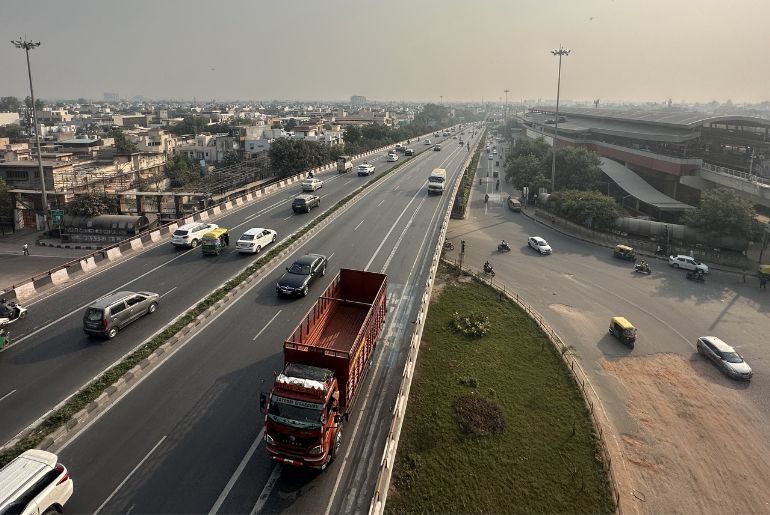
Delhi is preparing to rebuild or resurface more than one-fifth of its road network, with 3,298 kilometres identified for phased redevelopment under a capital-wide infrastructure review. The estimated ₹7,207 crore exercise links street repairs directly to air quality management, road safety and economic productivity in one of India’s most congested urban regions.
The proposed Delhi road redevelopment plan covers stretches across authorised and unauthorised colonies, arterial corridors and internal neighbourhood roads. Out of the city’s 15,598 km road network, over 2,200 km in planned colonies and roughly 1,000 km in unauthorised areas require structural renewal or major resurfacing, according to officials involved in the review. The Municipal Corporation of Delhi, which oversees the largest share of internal roads and market streets, accounts for the highest absolute length marked for repair. Nearly one-fifth of its network has been flagged. Meanwhile, more than half of the arterial roads maintained by the Public Works Department are listed for redevelopment an unusually high proportion that underscores the scale of surface deterioration on key traffic corridors.
Urban infrastructure specialists say ageing asphalt, repeated utility cuts and heavy vehicular loads have accelerated wear and tear. Broken carriageways and potholes do more than inconvenience commuters; they slow traffic flow, increase fuel consumption and generate road dust a major contributor to particulate pollution in the capital. A senior government official indicated that several projects were temporarily paused during peak pollution phases under the Graded Response Action Plan, which restricts construction to control dust. Extreme summer temperatures also affected timelines. Work has since resumed, with more than 150 km reportedly completed this year and hundreds of kilometres currently under execution.
The Delhi road redevelopment plan also includes smaller stretches maintained by agencies such as the development authority, industrial infrastructure body, irrigation and flood control department, and the national highways authority. However, roads under certain central and cantonment jurisdictions have not been included in the current proposal. For residents, the implications extend beyond smoother travel. Poor road conditions in dense neighbourhoods often obstruct ambulances, public buses and emergency services. In commercial zones, uneven surfaces deter footfall and disrupt local business activity. Planners note that equitable redevelopment across authorised and unauthorised colonies is critical to reducing spatial disparities in service delivery.
Environmental analysts argue that resurfacing must be paired with durable materials, mechanised sweeping and strict dust-control protocols during construction to avoid short-term pollution spikes. Integrating stormwater drainage upgrades and pedestrian-friendly design could also improve resilience against extreme rainfall events linked to climate change. As Delhi balances infrastructure renewal with air quality commitments, the coming phases will test whether large-scale road works can be executed without exacerbating pollution. If implemented with environmental safeguards and inclusive design, the programme could strengthen mobility, reduce dust emissions and support a more climate-resilient urban fabric.
Delhi road redevelopment plan spans 3298 km