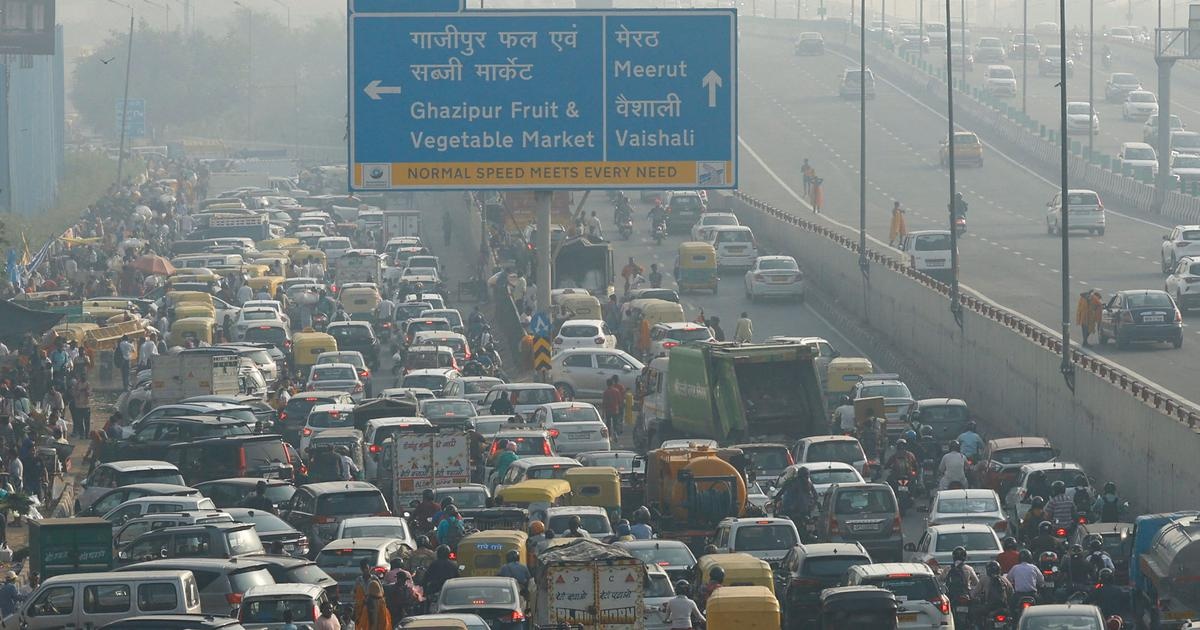
A detailed scientific assessment has identified deteriorating road conditions as a major driver of air pollution in Delhi, with dust from key arterial corridors contributing significantly to harmful particulate matter levels. The findings underscore the growing link between urban infrastructure quality and public health outcomes in one of the world’s most polluted capitals. The study, conducted across an 80-kilometre-plus stretch connecting industrial and transport-heavy zones, found that a majority of the corridor remains in suboptimal condition. Uneven surfaces, broken carriageways and unpaved shoulders were observed to generate large volumes of airborne dust under heavy traffic movement.
Researchers estimated that daily emissions of coarse particulate matter (PM10) and finer particles (PM2.5) from vehicular disturbance alone run into several tonnes, intensifying ambient pollution levels. Urban planners point out that road dust is often an under-recognised but persistent contributor to pollution, especially in dense metropolitan regions where traffic volumes are high. Unlike exhaust emissions, which are subject to regulatory controls, dust resuspension is linked to maintenance practices, construction activity and land-use management—areas where enforcement remains fragmented. The assessment further highlighted that dust accumulation is not evenly distributed across road surfaces. Instead, it concentrates along edges, medians and poorly maintained shoulders—areas frequently overlooked during routine cleaning operations. During peak traffic hours, the movement of heavy vehicles lifts these fine particles into the air, significantly increasing exposure risks for commuters, pedestrians and roadside communities. Experts note that particulate matter of this size can penetrate deep into the respiratory system, aggravating asthma, cardiovascular conditions and long-term health risks. In rapidly urbanising regions like Delhi, such pollution sources disproportionately affect vulnerable populations, including informal workers and residents living near transport corridors. The study also draws attention to systemic issues in urban road management.
Frequent excavation, inconsistent material quality and lack of coordination among civic agencies often lead to repeated degradation of road surfaces. This not only increases maintenance costs but also perpetuates a cycle of dust generation and air quality deterioration. To address the issue, researchers have recommended a shift towards preventive infrastructure management rather than reactive clean-up measures. Suggested interventions include paving unsealed shoulders, deploying mechanised sweeping systems, improving drainage networks to prevent dust accumulation, and using treated wastewater for dust suppression. Strategic plantation along medians and road edges has also been proposed as a way to stabilise soil and reduce particulate dispersion. Policy responses are beginning to align with these recommendations. A standardised framework for road asset management is being rolled out across the National Capital Region, with a focus on integrating engineering solutions into pollution control strategies. Local authorities have also outlined plans to upgrade thousands of kilometres of road networks to reduce dust generation over the next few years.
For cities grappling with both rapid growth and environmental stress, the findings reinforce a critical insight: air quality is not only an emissions problem but also an infrastructure challenge. As Delhi continues to expand, the effectiveness of its road design, maintenance and governance systems will play a decisive role in shaping a cleaner and more resilient urban future.