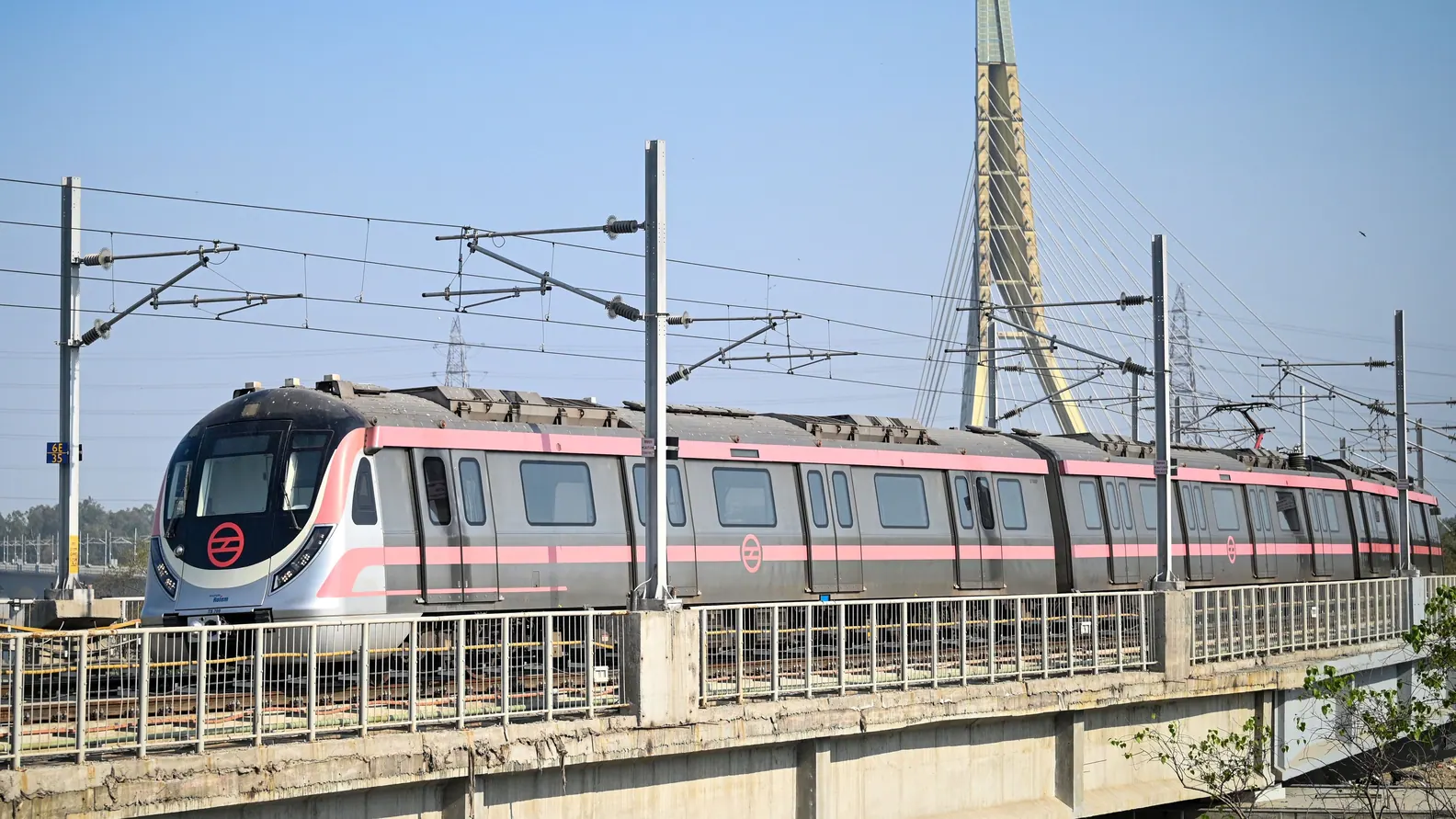
Delhi has added a major layer to its urban mobility network with the completion of the capital’s Ring Metro, a circular rapid transit corridor designed to improve cross-city connectivity and reduce pressure on existing transport routes. The development follows the opening of new metro extensions that close the loop of the Pink Line while expanding service to several northern and northeastern neighbourhoods.
Transport planners say the Ring Metro represents a strategic shift in how large metropolitan rail systems are designed. Unlike radial metro lines that run into city centres, circular corridors allow passengers to travel across districts without passing through central interchange stations, significantly reducing transfer congestion and journey times. The final stretch that completes the circular alignment adds more than 12 kilometres to the Pink Line network, connecting densely populated residential zones in the northern and northeastern parts of the capital. Several elevated stations have been introduced along the route, improving access for communities that previously depended largely on buses or private transport. Another extension has also been opened along the Magenta Line, adding close to 10 kilometres of elevated track in northwestern Delhi. This corridor strengthens connectivity between emerging residential clusters and existing metro interchange points, enabling commuters to move more efficiently across the wider metropolitan network.
Urban mobility experts say such infrastructure is critical in a city where millions rely on public transport each day. Delhi’s metro system has already become one of the largest in the world, and expansions like the Ring Metro are expected to improve network resilience by distributing passenger movement more evenly across lines. Officials also announced additional projects under the next phase of metro expansion, including new corridors linking central districts, southern neighbourhoods and the airport zone. Together these projects are expected to extend the network by more than 16 kilometres, reinforcing metro connectivity to key economic and transport hubs. Infrastructure investments associated with the announcements extend beyond rail lines. Authorities have also initiated redevelopment of government housing clusters in the capital, part of a broader plan to modernise public residential infrastructure while improving land use efficiency in central urban areas.
Urban development specialists note that transport corridors frequently reshape surrounding real estate markets. Areas located along new metro routes often experience increased residential demand, commercial activity and infrastructure upgrades, influencing the spatial growth of cities. At the same time, planners emphasise that expanding metro networks is one of the most effective strategies for reducing urban emissions and traffic congestion. High-capacity rail systems enable cities to move large numbers of passengers using significantly less energy than private vehicles, making them central to climate-responsive transport planning. For Delhi, the operationalisation of the Ring Metro could also change commuting patterns across the metropolitan region.
By linking outer districts directly, the circular line allows travellers to bypass central nodes, potentially easing overcrowding at some of the network’s busiest interchange stations. As new corridors move from planning to construction, the capital’s metro network is expected to continue expanding into emerging residential zones and economic clusters. Urban transport experts say the challenge ahead will be integrating these systems with buses, regional rail and pedestrian infrastructure to create a fully connected and sustainable mobility ecosystem.
Delhi Ring Metro Completed With New Corridors