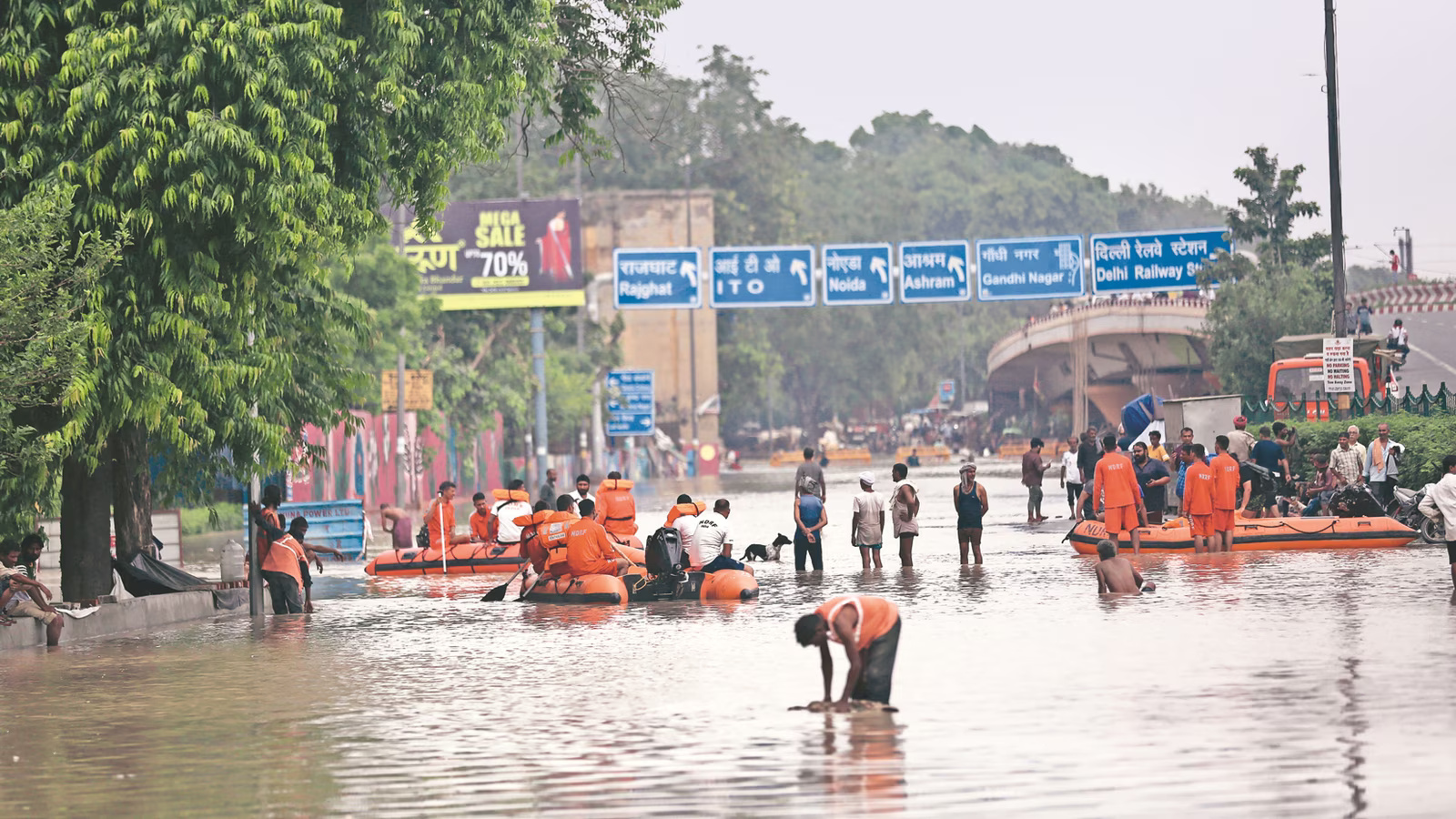
Delhi Ridge Water Bodies Plan Targets Flood Relief
Delhi is set to expand its use of nature-based solutions to manage urban flooding, with plans to create a network of small water bodies across the Ridge to capture excess rainwater during the monsoon. The initiative, led by the forest department, aims to reduce waterlogging in surrounding neighbourhoods while strengthening ecological systems in one of the city’s most critical green zones. The proposal involves developing eight water retention sites—distributed across the southern and central Ridge—designed to intercept runoff and store rainwater. Officials indicate that tenders for most of these locations have already been issued, signalling a transition from planning to implementation. The approach relies on natural topography rather than heavy engineering, using slopes and contouring to guide stormwater into designated pockets.
Urban planners view the Delhi Ridge water bodies initiative as part of a broader shift towards climate-resilient infrastructure. Instead of relying solely on conventional drainage systems, the project seeks to integrate blue-green solutions that address both flooding and groundwater depletion. By slowing and storing rainwater, these systems can reduce peak runoff while contributing to aquifer recharge over time. The selected sites include areas in the southern Ridge such as Devli, Chhattarpur, Bhatti and Ayanagar, alongside locations in the central Ridge near key arterial roads. Several of these zones have historically experienced seasonal water accumulation, particularly during intense rainfall events. Redirecting this runoff into managed water bodies could alleviate pressure on nearby roads and built-up areas. Experts note that the success of the Delhi Ridge water bodies plan will depend on careful execution. Ensuring that only rainwater enters these systems is critical, as contamination from untreated sewage could undermine ecological benefits and harm biodiversity. The Ridge, which supports diverse flora and fauna, is considered environmentally sensitive, requiring minimal intervention and strict monitoring.
The initiative also reflects an evolving policy direction that prioritises low-impact infrastructure. By leveraging existing stormwater drains and natural land gradients, the project avoids large-scale construction while delivering functional benefits. This aligns with global urban strategies that emphasise restoring natural hydrological cycles within cities. From a socio-economic perspective, reducing waterlogging can improve mobility, lower infrastructure repair costs, and enhance quality of life for residents in adjacent areas. Flood-prone roads often disrupt daily commutes and economic activity, making preventive measures an important component of urban resilience. However, analysts caution that long-term outcomes will depend on sustained maintenance and inter-agency coordination. Managing sedimentation, preventing encroachments, and monitoring water quality will be essential to ensure that these water bodies remain functional assets rather than degraded sites.
As Delhi faces increasing climate variability, projects like the Delhi Ridge water bodies network highlight the growing role of ecological infrastructure in urban planning. If implemented effectively, the initiative could offer a scalable model for combining flood management with environmental restoration in dense metropolitan regions.