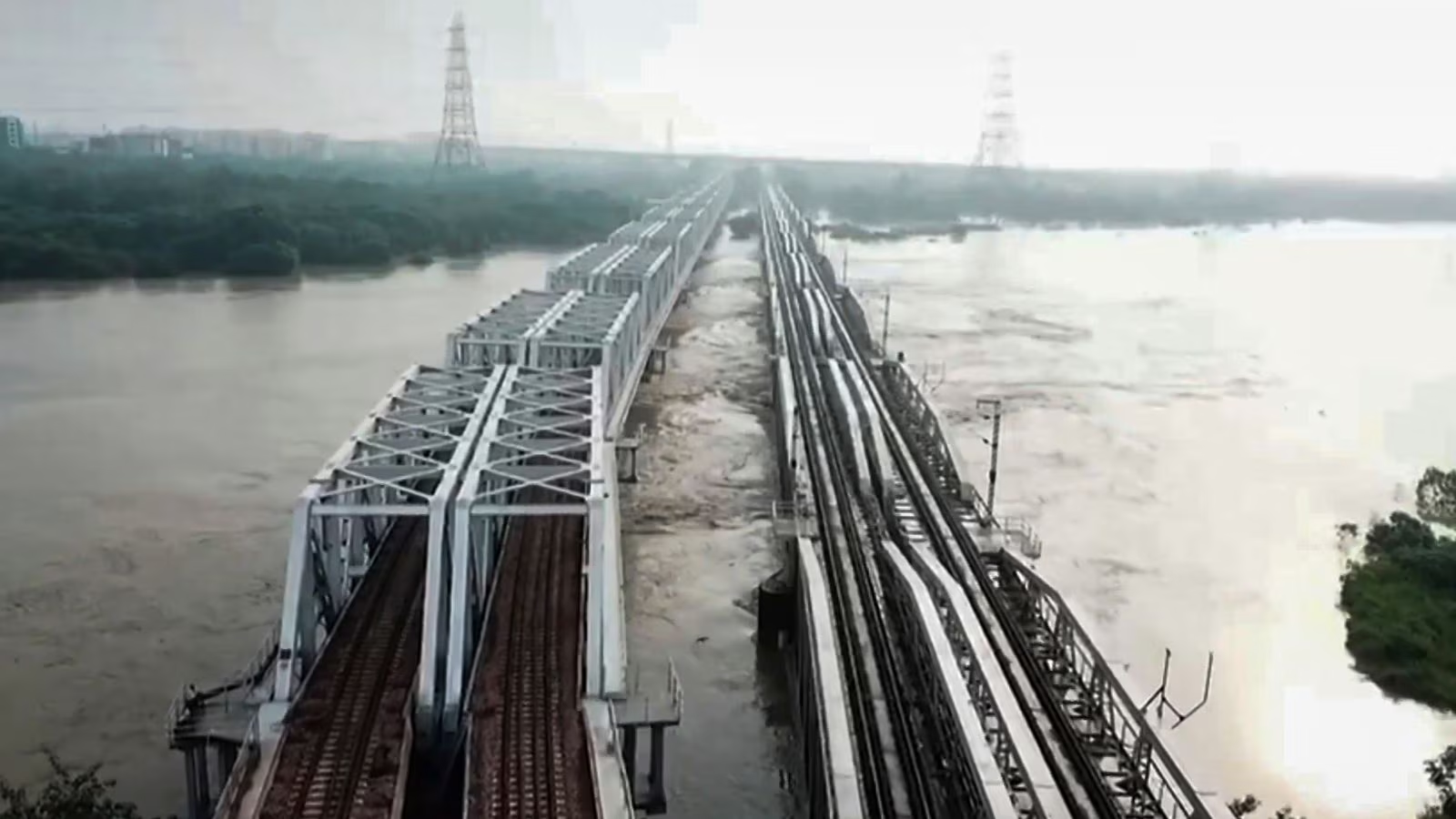
Delhi’s transport planners are reassessing how the city crosses the Yamuna as mounting traffic pressure converges around the Ring Road and eastern gateways. The state government has begun examining options for a new Yamuna river bridge near the Signature Bridge or a comprehensive replacement of the ageing Old Iron Bridge, signalling an early-stage but potentially consequential shift in how north and east Delhi are connected.
The proposal has emerged amid growing concern that existing river crossings may not be equipped to handle the next phase of infrastructure-led growth. Multiple expressways and regional rail projects now funnel traffic towards the same corridor near Sarai Kale Khan, a zone that already experiences daily congestion. Urban transport officials say that without additional river capacity, bottlenecks could intensify even as new roads and rail lines become operational.
At present, planners are weighing two broad approaches. One involves building an entirely new Yamuna river bridge close to the Signature Bridge to distribute traffic more evenly across the network. The other looks at replacing or significantly upgrading the Old Iron Bridge, a historic double-decker structure that carries road vehicles below and rail traffic above. Its limited width and structural age have long constrained traffic flow, particularly during peak hours. Delhi has roughly 25 road and rail bridges across the Yamuna, but transport experts note that demand has grown faster than capacity in the last decade. The eastern districts, in particular, have seen rapid residential densification, while employment hubs remain concentrated in central and southern parts of the city. This imbalance has translated into longer commutes and heavier dependence on private vehicles for cross-river travel.
The renewed review is also tied to the changing geography of regional mobility. The Delhi–Meerut and Delhi–Dehradun expressways already terminate close to the Ring Road, while upcoming links to the Delhi–Mumbai Expressway and new RRTS stations are expected to draw additional traffic. Planners argue that adding downstream capacity without strengthening river crossings risks shifting congestion rather than resolving it. From an urban development perspective, a new Yamuna river bridge could have implications beyond traffic movement. Infrastructure specialists point out that well-designed crossings can unlock economic activity on the eastern bank, support more balanced real estate growth, and reduce travel inequality between neighbourhoods. However, they caution that bridge design must account for flood resilience, ecological sensitivity of the river, and integration with public transport to avoid car-centric outcomes.
Environmental considerations are also likely to shape the final decision. Any new crossing will require careful alignment to protect the river’s floodplain and comply with evolving sustainability norms. Urban planners increasingly emphasise that future bridges should prioritise buses, pedestrians, and cyclists alongside private vehicles to align with low-carbon mobility goals. For now, the proposal remains exploratory, with no confirmed alignment or timeline. The next steps are expected to involve traffic modelling, environmental assessments, and coordination between multiple agencies. As Delhi continues to expand its transport footprint, the choices made at the Yamuna could determine whether the city’s next growth phase eases movement or simply redistributes congestion.
Delhi Reviews Yamuna Bridge To Relieve Ring Road