Delhi reopens 17 Yamuna ghats for Chhath amid pollution concerns
Delhi’s Yamuna riverbanks are once again witnessing the return of Chhath Puja celebrations after a four-year hiatus, as the city government reopens 17 ghats for devotees. The move, though welcomed by Purvanchali communities, has reignited an intense debate over the capital’s environmental readiness and public health safeguards.
Under clear skies and festive fervour, workers are racing against time to prepare the ghats at ITO, Sonia Vihar, and Vasudev for thousands of devotees who will offer prayers to the Sun God. Officials said that the decision to reopen the ghats was taken after water quality indicators from recent samples showed improved dissolved oxygen levels, aided by rainfall and the release of fresh water from Haryana’s Hathnikund barrage.
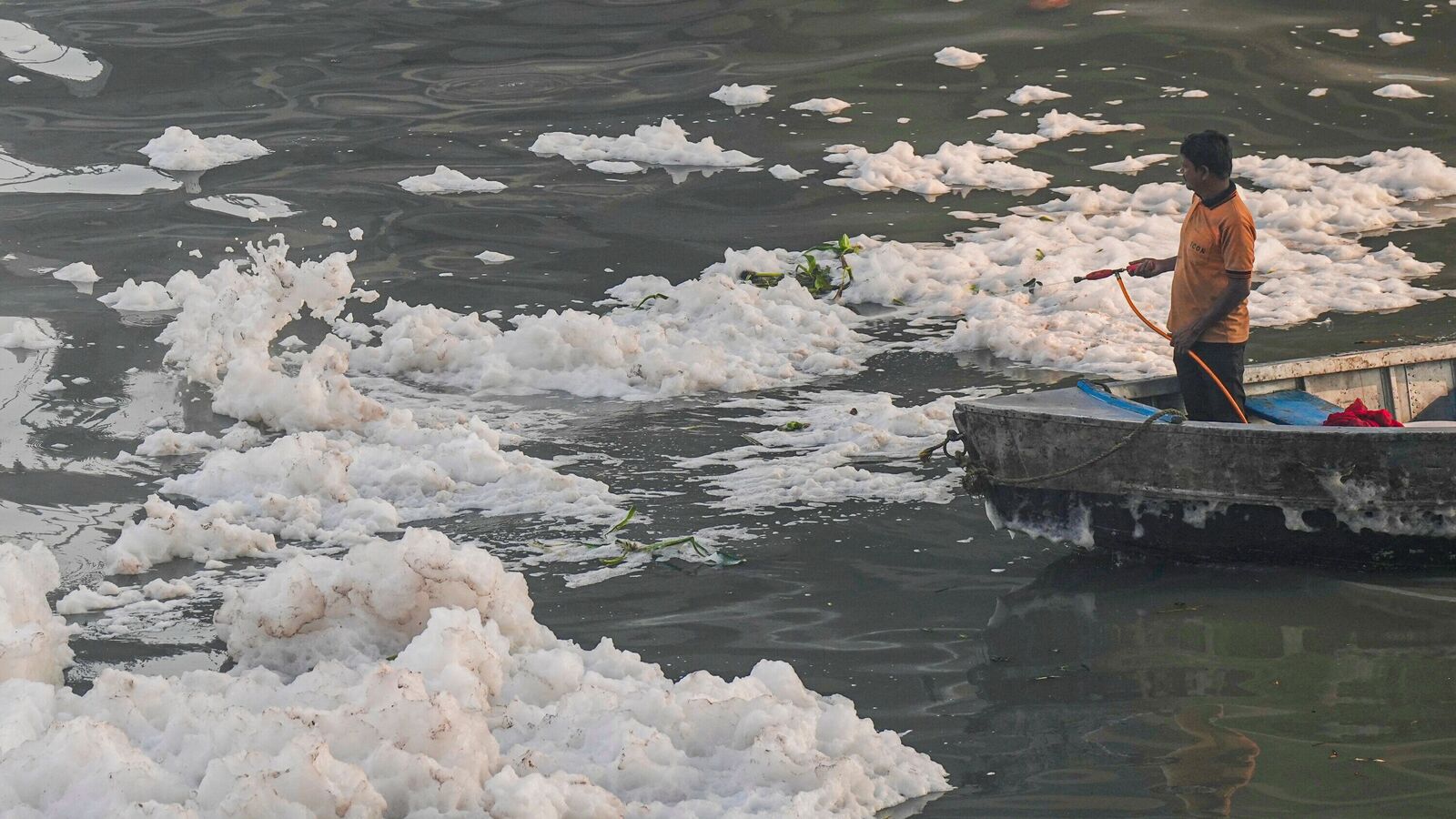
However, environmentalists remain deeply sceptical. Experts from leading water and environmental think tanks warn that the Yamuna’s water, despite temporary dilution, continues to carry dangerous levels of pollutants. They caution that exposure during rituals may cause skin and respiratory ailments due to high bacterial and chemical concentrations.Data from the Delhi Pollution Control Committee (DPCC) underscores the concerns. The latest monitoring reports indicate that faecal coliform levels at the ISBT bridge just downstream of the Najafgarh drain surged from 3,500 MPN/100ml in September to 21,000 MPN/100ml in October. Similarly, Biochemical Oxygen Demand (BOD), which indicates organic contamination, rose sharply from 13 mg/l to 37 mg/l, over twelve times the permissible limit for bathing water. Dissolved oxygen vital for aquatic life has dropped to zero downstream of the city.
Officials from the Delhi Jal Board (DJB) insist that temporary water inflows and intensive clean-up measures have improved local conditions at designated ghats. They point to dredging, bamboo barricades, and medical camps as part of a wider effort to ensure safe and hygienic worship spaces. Still, the visual contrast of shimmering water and the lingering smell of effluents paints a complex picture of faith meeting environmental neglect.Experts say the decision to reopen ghats, while politically resonant, must be seen within the framework of sustainable river management. The Yamuna continues to receive untreated sewage and industrial effluents from 22 city drains and several upstream channels in Haryana. Without a long-term strategy to eliminate these inflows, they warn, any short-term improvement risks being cosmetic.As Chhath Puja begins, Delhi stands at a symbolic crossroads between the spiritual sanctity of the festival and the harsh ecological reality of the Yamuna. The river’s revival, experts argue, demands more than ceremonial clean-ups. It requires structural reforms, cross-border collaboration, and a collective civic will to restore the river to life not just ritual.