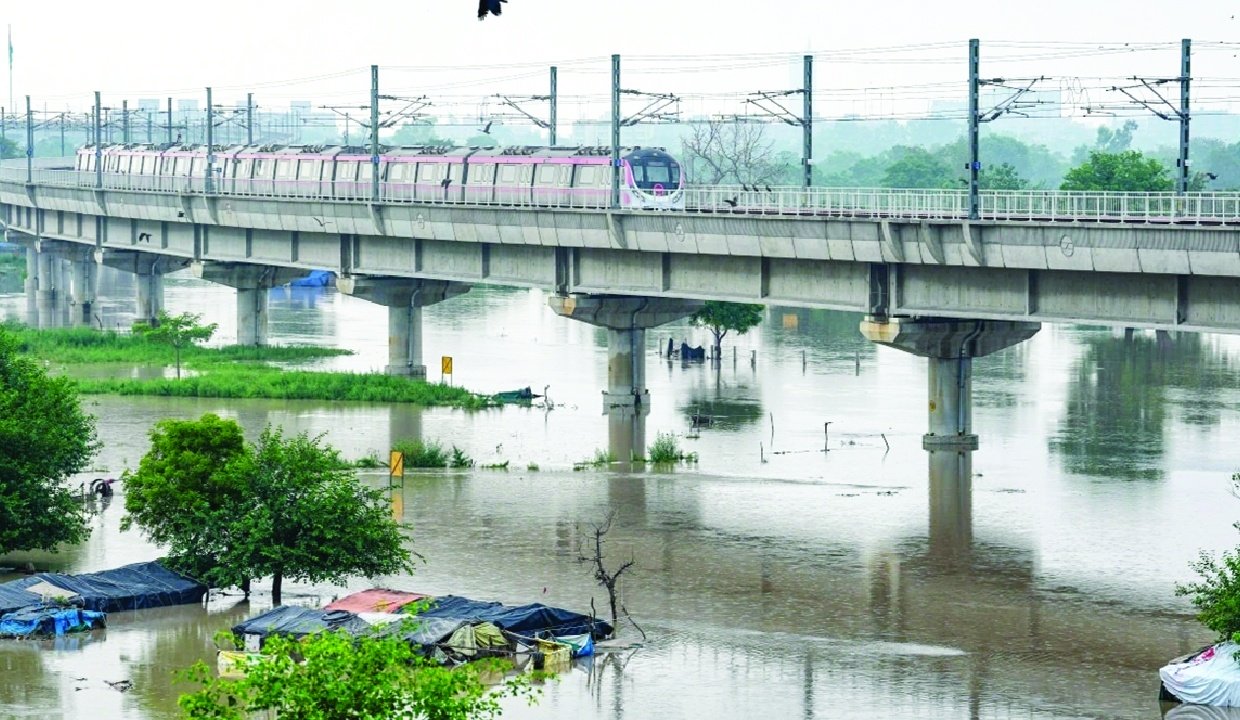
Delhi Reinforces Yamuna Embankment To Strengthen Flood Defences
Authorities in Delhi have begun reinforcing critical stretches of the Yamuna embankment strengthening corridor between ITO and Sarai Kale Khan as part of a broader strategy to improve flood resilience and drainage performance in the capital. The work focuses on stabilising vulnerable riverbank sections and upgrading supporting infrastructure to reduce the risk of erosion and waterlogging during periods of intense rainfall. Officials associated with the city’s irrigation and flood management department confirmed that engineering teams have initiated structural reinforcement of the riverbank using a process known as stone pitching. The method involves placing layers of stone along the sloping edges of embankments to protect soil from being washed away by strong water currents, a common cause of riverbank degradation.
The Yamuna embankment strengthening project also includes improvements to key access routes used for drain maintenance and emergency response operations. In particular, approach roads near Drain No. 12 are being upgraded to allow maintenance vehicles to reach critical points quickly, ensuring that desilting and flood-control measures can be carried out efficiently during the monsoon season. Another important component of the initiative involves reinforcement works along the Millennium Bund located near Sarai Kale Khan. This embankment functions as a protective barrier separating the river from surrounding urban areas. Strengthening the bund is intended to prevent erosion and maintain the structural integrity of flood defences during high river flow conditions. Urban water management experts note that the condition of river embankments plays a crucial role in protecting cities located along major waterways. When embankments weaken due to erosion or lack of maintenance, even moderate increases in river levels can lead to flooding in nearby neighbourhoods. Strengthening these structures is therefore an essential part of urban climate adaptation strategies. The Yamuna embankment strengthening work follows previous flooding events that exposed vulnerabilities in Delhi’s flood control infrastructure. During a major monsoon episode in 2023, river levels surged significantly, causing prolonged flooding in several low-lying areas along the Yamuna floodplain.
Emergency interventions, including the placement of temporary sandbag barriers, were required to contain rising water levels near critical drainage points. In response to these challenges, authorities have been focusing on improving drainage channels and eliminating structural bottlenecks that restrict water flow. Recent works include large-scale desilting operations, widening and deepening of stormwater drains, and the removal of encroachments that had obstructed natural drainage pathways. Infrastructure planners emphasise that projects like Yamuna embankment strengthening are becoming increasingly important as cities face more unpredictable weather patterns linked to climate change. Intensifying rainfall events can overwhelm ageing drainage systems, making proactive flood management infrastructure essential for protecting urban populations and critical transport corridors. For Delhi, where millions live in neighbourhoods located near drainage channels and floodplains, strengthening riverbanks and improving stormwater networks remains a key element of long-term urban resilience planning.
Authorities say continued monitoring and maintenance of embankments and drainage networks will be necessary to ensure that flood protection systems remain effective as the city continues to expand and confront more extreme weather events in the future.