


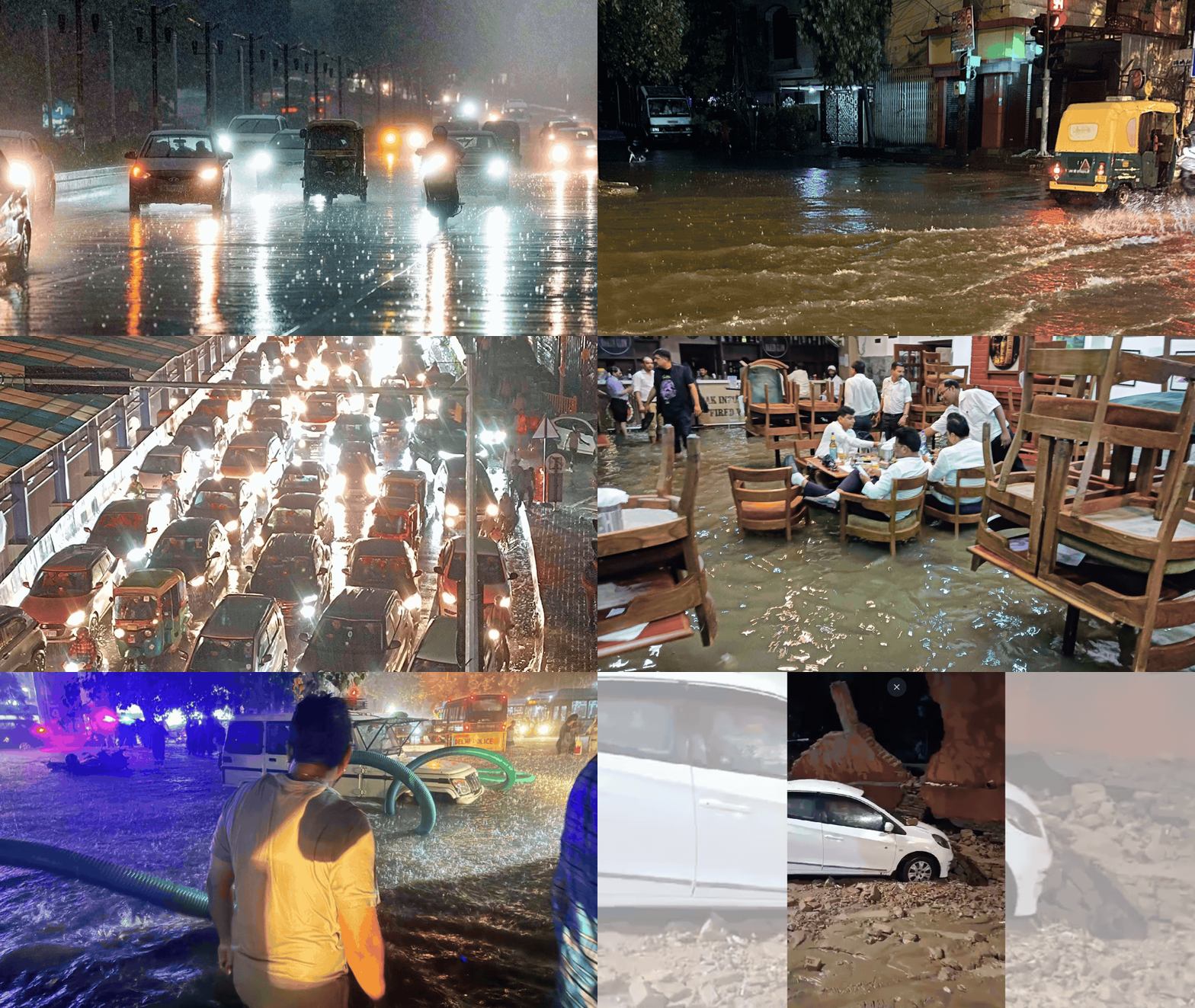
An intense overnight thunderstorm battered Delhi over the weekend, leaving the city struggling with knee-deep water, traffic standstills, and massive civic disruption.
The sudden weather event exposed severe cracks in the city’s pre-monsoon preparedness, with several arterial roads and underpasses turning into water reservoirs and countless commuters left stranded in the early hours of Sunday. According to the India Meteorological Department (IMD), the city received a staggering 81.22mm of rain between 11.30pm Saturday and 5.30am Sunday—classified as “very heavy rainfall”, and highly unusual for May. Accompanying gusts of wind reaching 82 kmph uprooted trees, damaged public infrastructure, and complicated emergency responses.
Transport across Delhi was severely affected. Roads leading to the Indira Gandhi International Airport’s Terminal 1 were completely submerged, with stranded passengers forced to navigate flooded underpasses and stalled vehicles. Buses and private cars were caught mid-flood in multiple locations, including the notorious Minto Bridge underpass and Azadpur crossing, once again raising concerns about Delhi’s chronic inability to manage urban flooding. Authorities had earlier identified nearly 165 flood-prone zones, promising desilting of drains, installation of new pumping equipment, and inter-agency coordination. However, on-the-ground conditions painted a vastly different picture. Sites that were flagged and reportedly prepared—including Minto Bridge, Zakhira underpass, and Ashok Vihar—were among the worst hit.
Officials from the city’s Public Works Department (PWD) stated that over 117 complaints related to waterlogging were received at their control centre. These included overlapping alerts from multiple zones, many of which were passed on to other civic agencies such as the New Delhi Municipal Council (NDMC) and the Municipal Corporation of Delhi (MCD). Despite advance warning from IMD, authorities were clearly unprepared for the sheer volume and speed of the rainfall. On Sunday morning, visuals from across the Capital revealed submerged vehicles, uprooted electric poles, and tree debris blocking major intersections. Particularly alarming were images of a submerged car near Minto Bridge and a flooded bus near Delhi Cantonment—both in zones that have been historically marked as flood-sensitive and supposedly upgraded.
City traffic was thrown into complete disarray. The Delhi Traffic Police issued a series of advisories throughout the morning, warning of road closures and diversions. Key stretches such as GTK Road near Jahangirpuri Metro Station, Azad Market underpass, and Majnu ka Tila on the Outer Ring Road experienced prolonged blockages, disrupting connectivity from north to central Delhi. Traffic diversions were implemented on Rani Jhansi Road, Barf Khana, and Idgah, with vehicles rerouted via Vir Banda Bairagi Marg and Old Rohtak Road. Despite the quick issuance of advisories, the lack of on-ground traffic regulation worsened congestion and caused long delays, particularly for early morning commuters and those headed to railway stations and the airport.
The New Delhi Municipal Council reported five cases of waterlogging, mainly from the Lutyens’ Zone, including Teen Murti Road, Tughlak Road, and Nyaya Marg. It also confirmed that strong winds uprooted at least 34 trees along key routes such as Shahjahan Road and Akbar Road, with teams working through the morning to clear the debris. Meanwhile, a political blame game unfolded as the disruption became the focal point of civic outrage. While opposition leaders questioned the absence and effectiveness of the city’s Public Works leadership, representatives of the ruling administration claimed that response measures had been timely and effective.
An official from the city’s governing agency defended the administration, stating that emergency teams were deployed before dawn and that most water had been cleared by mid-morning. “This was an extreme weather event—an intense downpour in a short time—and all agencies worked together to restore normalcy,” the official claimed. However, residents and urban planning experts questioned the adequacy of Delhi’s flood preparedness strategy. Civic bodies had earlier released monsoon action plans and flood mitigation strategies, but the real-time response suggests that coordination among agencies remains weak. “There is a systemic failure in how Delhi handles rain-induced flooding,” noted an infrastructure policy expert based in the city. “It’s not the rainfall but the planning paralysis that drowns Delhi every year.”
The Municipal Corporation of Delhi’s monsoon control room reported isolated complaints from Moti Bagh, West Patel Nagar, and the Patparganj region, while NDMC’s monitoring unit confirmed rapid clearance operations in Lutyens’ Delhi. Yet, the city’s outlying areas bore the brunt of the storm with delayed responses and significant traffic disruption lasting well into Sunday afternoon. Environmental observers have flagged the increasing incidence of such off-season weather events as a symptom of climate volatility. Unseasonal heavy rainfall in May, typically one of Delhi’s driest months, signals a worrying trend in the city’s shifting climatic patterns. Experts say that urban centres like Delhi must integrate climate resilience into their infrastructure plans—moving beyond reactive responses and investing in long-term flood mitigation.
As Delhi braces for the actual monsoon season expected to begin in mid-June, the weekend’s storm is an early and urgent warning. Without structural reform in stormwater drainage systems, inter-agency coordination, and climate-adaptive urban design, the Capital risks recurring paralysis every time the skies open. While immediate damage may have been mitigated due to the storm occurring on a weekend, the deeper impact on public trust in civic planning and urban safety continues to run deep—much like the water that submerged the Capital’s streets.
Also Read : Delhi Sees 180 Trees Collapse and Power Outages
