


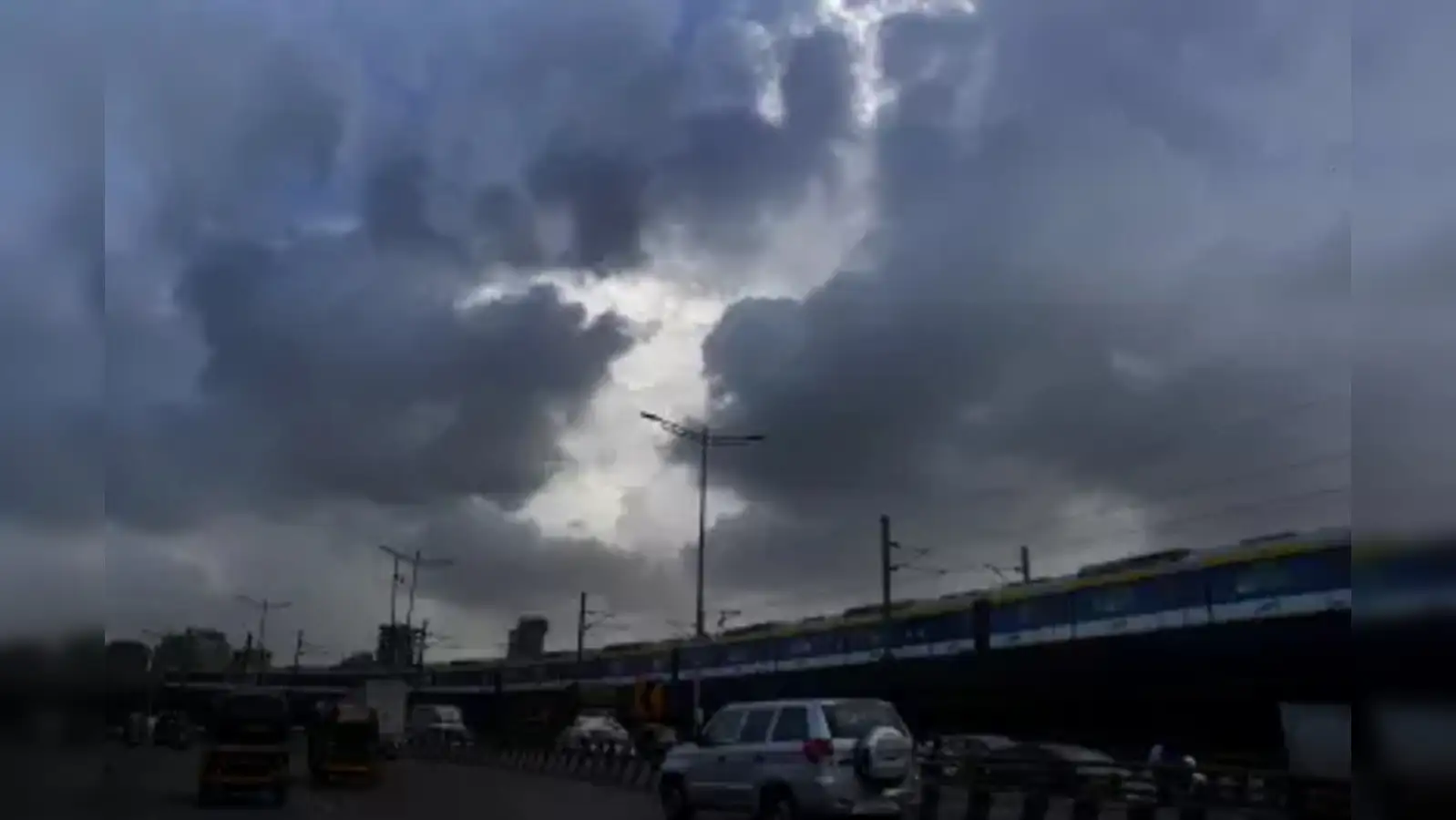
Delhi experienced a brief but significant rainfall on Sunday afternoon (June 22), prompting the India Meteorological Department (IMD) to issue a yellow alert amid intermittent downpours, lightning, gusty winds and temperatures dipping below seasonal averages. Several sectors across south, south‑east and west Delhi recorded light showers. According to IMD surface station data, Safdarjung logged 2.6 mm rainfall, Palam 0.4 mm, Ayanagar 0.4 mm and Lodhi Road 0.2 mm between mid‑afternoon and early evening.
The rain arrived alongside storm‑bound cloud systems linked with a monsoon advance expected in the next few days. IMD forecasts identify the city under a yellow alert for Sunday, with potential for moderate to heavy rain, thunderstorms, lightning and gusty winds ranging between 30–40 km/h, occasionally reaching 50 km/h. A surface-level bulletin confirms the alert remains valid until at least Wednesday, aligning with monsoon dynamics . These showers brought immediate relief from recent heat: the city recorded a maximum of 34.5 °C, two degrees below normal, and a minimum of 26.8 °C—also slightly below average. Relative humidity oscillated between 61% and 88%.
Delhi’s air quality remained in the ‘satisfactory’ range, with an AQI near 85, indicative of good visibility and minimal vehicular emissions—helped by the day’s showers. This year’s June rainfall has already exceeded its monthly quota. With around 87.8 mm recorded by mid‑month—18% above the long‑period average of 74.1 mm—Delhi stands ahead of the usual monsoon start, typically around June 27. The city also marked an unusually early monsoon onset, with IMD predicting full monsoon coverage by June 24, three days ahead of schedule. Urban planners welcome the rain for temporarily cooling the city, reducing peak energy demand and enhancing road‑safety conditions. However, they warn that without sufficient stormwater infrastructure, such intermittent rainfall may lead to flash‑flooding, waterlogging, and commuter disruption—issues common in Delhi’s narrow lanes and limited drainage areas.
Transport experts point out that watering activities signal downtime in traffic, particularly where water accumulates in under‑drains near Metro stations and arterial roads. With expected gusty winds, there is also potential for fallen branches and minor power outages, underscoring the need for resilience and coordination among civic agencies. Public‑health leaders note that such brief rains help cleanse the air, reducing particulate matter temporarily. Yet, stagnant humidity beneath cloud cover may foster moderate discomfort and set the stage for fungal outbreaks in enclosed residential spaces. Community advisories are encouraging residents to ventilate homes and leverage rainwater for urban greening measures such as rooftop gardens.
Climate specialists highlight that this year’s early and abundant June rains reflect a shifting monsoon pattern—possibly linked to global climate shifts. While not alarming, the early onset raises hope for Delhi’s groundwater recharge prospects, provided the city improves stormwater harvesting and resists excessive runoff into drains . Looking ahead, the IMD expects a steady stream of pre‑monsoon showers through June 27, with max temperatures holding near 35 °C and no heatwaves anticipated through the week. For city residents, the forecast suggests a cautious approach: carry an umbrella, heed wind‑warnings, avoid travel during thunderstorms, and expect intermittent power or mobile‑tower disruptions. Urban authorities are urged to deploy water‑logging response teams and closely monitor drainage hotspots in low‑lying localities.
This weather shift highlights the necessity of resilient urban infrastructure—comprising green corridors, upgraded drainage systems, and integrated weather alerts—to help Delhi adapt to intensifying monsoonal rhythms while reducing heat stress and carbon emissions. As monsoon gears up to fully arrive, Sunday’s rain and yellow alert underscore both the city’s recurring vulnerabilities and the opportunities climate‑aware planning presents. With early rains potentially shaping Delhi’s monsoon trajectory, policymakers must prepare for fluctuations in precipitation, combining short‑term response with long‑term investment in climate‑resilient urban design.
Also Read : DPRs Finalised for New Satellite Town and Metro Network
