


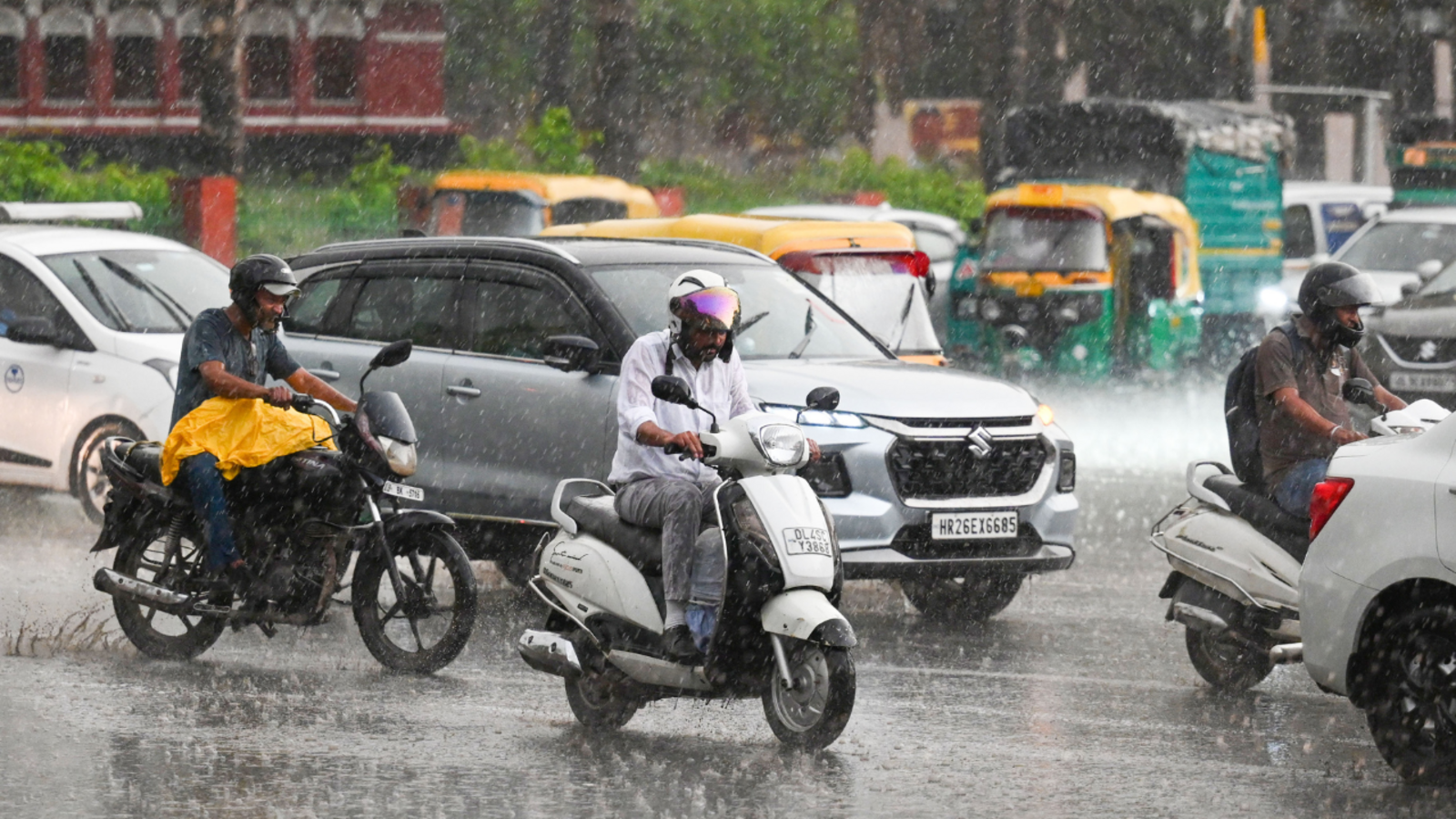
New Delhi woke up to chaos on Sunday as an intense thunderstorm, the fourth major one this May, battered the capital and surrounding areas with heavy downpours and squalling winds.
Over 80mm of rain fell in under six hours, paralysing the city’s infrastructure, grounding flights, and flooding roads.By 5:30am, the Safdarjung weather station recorded 81.4mm of rain, part of a record-breaking 186.4mm received so far this month, making it the wettest May in over a century. Known waterlogging hotspots, including Minto Bridge, ITO, Azadpur, and areas near Terminal 1 of Delhi Airport, went underwater. Several vehicles and buses were stranded in waterlogged underpasses, including at Minto Bridge, triggering emergency responses and causing early morning commuter distress.
Air travel was severely impacted. Winds gusting up to 82 kmph forced the diversion of at least 49 flights, while more than 400 others faced delays at the Indira Gandhi International Airport. Power outages were reported in several neighbourhoods, while the NDMC alone logged 34 complaints of trees being uprooted due to the high winds.The Indian Meteorological Department (IMD) attributed the severity of the weather to the interaction of three active systems: a western disturbance over north Punjab and Jammu and Kashmir, and two cyclonic circulations over northwest Uttar Pradesh and west Rajasthan. This combination pulled in a high volume of moisture, fuelling intense convection and widespread rainfall.
The impact was dramatic. Within little more than an hour between 1:15am and 2:30am, Delhi experienced a sudden drop of 10–11°C in temperature as gusty winds ripped through the city. Sunday’s maximum temperature settled at 31.6°C, nine degrees below normal, while the minimum plunged to 19.8°C, a full seven degrees lower than usual.The capital’s vulnerable infrastructure buckled under pressure. Drainage systems failed to cope with the rapid accumulation of rainwater, exposing the capital’s chronic unpreparedness for extreme pre-monsoon events. Urban mobility was throttled, emergency workers were stretched, and yet, this marked the fourth time this month Delhi has experienced such severe disruption from a rainstorm.
With further rain and thunderstorms expected in the coming week, albeit without a colour-coded IMD alert, questions have resurfaced over the city’s resilience to increasingly frequent extreme weather. In earlier storms this May, at least 12 lives were lost in incidents ranging from house collapses to electrocution.While the immediate focus remains on restoring services, the larger challenge lies in creating an urban ecosystem that can withstand such climate shocks. The repeated failures of civic infrastructure highlight the urgent need for eco-sensitive drainage planning, resilient public transport design, and a climate-resilient urban development strategy that aligns with Delhi’s zero-carbon and sustainability goals.
Meanwhile, the city’s air quality remained moderate, with an AQI of 108 on Sunday compared to 141 a day earlier. As the skies cleared, residents were left grappling with yet another reminder that extreme weather is no longer the exception — it is the new normal.
Also Read : Pune cracks down on illegal hoardings after rains
