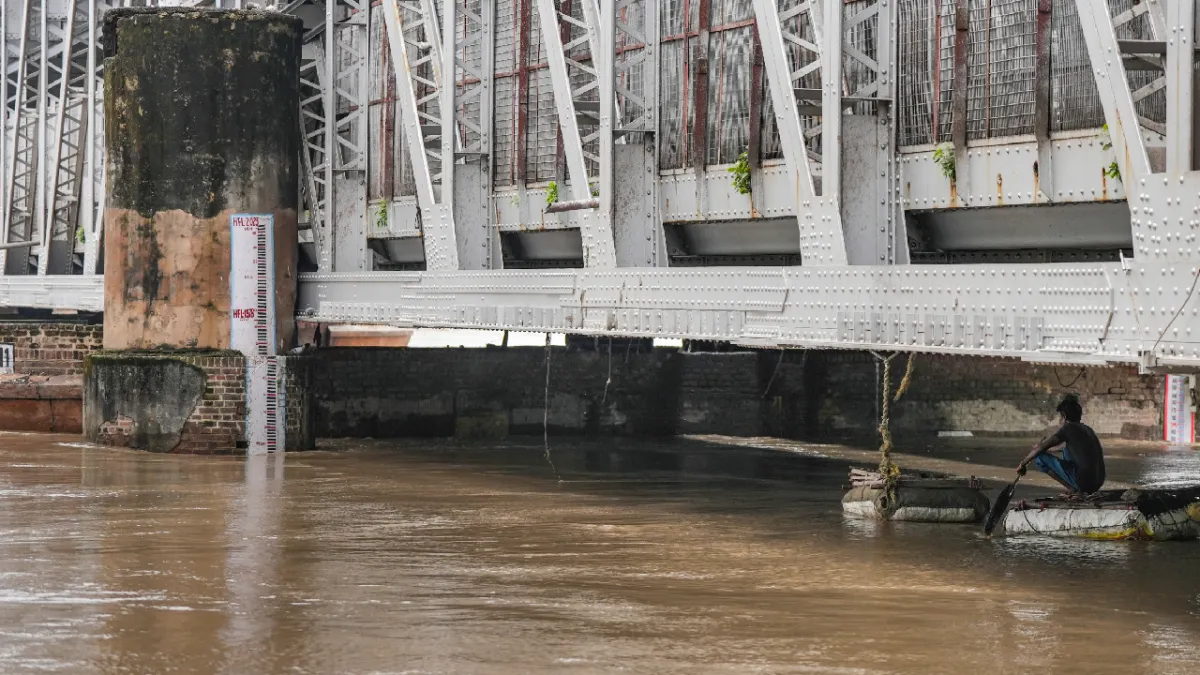
Delhi Rain Alert As Yamuna Floods Low Lying Areas Again
Delhi braces for another spell of heavy rain even as the Yamuna river continues to flow above the danger mark, flooding low-lying neighbourhoods and paralysing mobility across the capital.The weather department has forecast moderate rainfall for Friday with temperatures hovering between 33°C and 23°C, while thunderstorms are likely to follow on Saturday. With schools shut for Eid-e-Milad-un-Nabi, commuters are bracing for yet another day of disrupted roads and gridlocked traffic in the city.
For Delhi, the deluge is more than a seasonal inconvenience. The Yamuna has breached the 207-metre mark for the fifth time since 1963, compelling precautionary evacuations and halting public functions along the riverbank. Cremations at Nigambodh Ghat and gatherings at Geeta Colony Ground have been suspended after floodwaters entered the facilities. Experts highlight that while emergency pumps and sandbags offer temporary relief, the city’s larger vulnerability lies in its dependence on concrete-heavy development with little room for ecological buffers.
Neighbourhoods such as Kashmere Gate, Civil Lines, Yamuna Bazaar and Monastery Market remain waterlogged, with residents and traders rushing to higher ground. Families have been seen wading through waist-deep water, carrying salvaged belongings, while shopkeepers battle to save their inventories. The official overseeing traffic in central Delhi confirmed that stretches around ISBT Kashmiri Gate and the Outer Ring Road were submerged, with two lanes still underwater, slowing vehicular movement despite diversion plans.
The flooding has again raised uncomfortable questions about the city’s readiness for climate extremes. Hydrologists argue that uncontrolled urbanisation along the Yamuna’s floodplains has reduced the river’s carrying capacity. Without the restoration of wetlands, catchment areas, and natural drainage corridors, they warn that each monsoon will exact a heavier toll. Environmental advocates further stress that sustainable, carbon-neutral urban planning is not a luxury but a necessity for a city where infrastructure and livelihoods collapse each time the river swells.
Although officials indicated that the Yamuna’s water level receded marginally to 207.42 metres by Thursday evening, the relief remains tenuous. A fresh spell of rain could quickly reverse the trend and force wider evacuations. Commuters are being advised to avoid Old Wazirabad Bridge, which has already been closed, and be prepared for diversions via Signature Bridge if water levels climb further.
Delhi’s crisis underscores the urgency of climate-resilient infrastructure that prioritises drainage, permeable surfaces, and green cover over unchecked expansion. Unless these measures are integrated into the city’s growth agenda, episodes like this week’s will remain recurring reminders of the capital’s fragile relationship with its river and its monsoon.