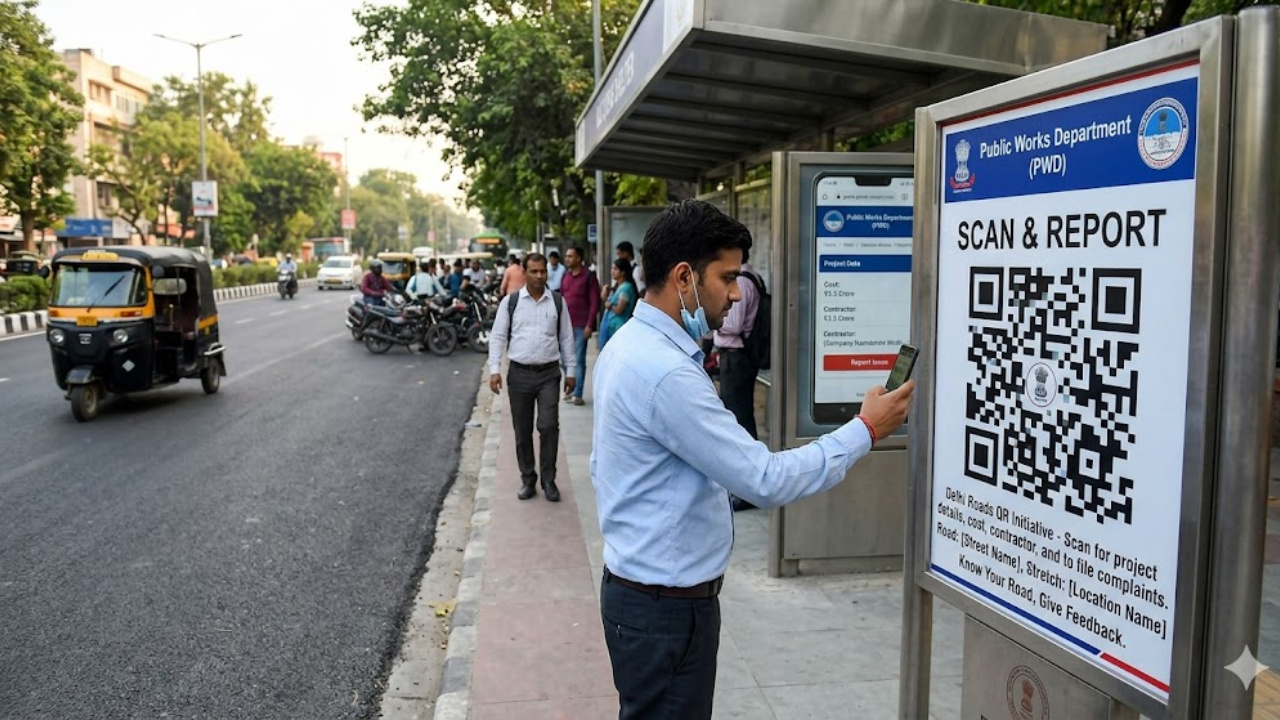
Delhi QR Road Feedback System Improves Transparency
Delhi’s public works authority has rolled out a digital monitoring initiative that allows residents to directly evaluate road construction and maintenance projects, marking a shift towards data-driven governance in urban infrastructure. The QR road feedback system enables citizens to access project details and share real-time responses on quality and execution. Under the initiative, scannable codes are being installed at locations where road strengthening and resurfacing works are undertaken. These codes link to a digital interface that provides key information such as project scope, cost, executing agency and maintenance obligations. Users can also submit complaints or suggestions, creating a direct communication channel between residents and the administration.
Urban governance experts say the QR road feedback system reflects a broader move towards participatory infrastructure management. By allowing citizens to monitor public works, authorities can potentially improve oversight and reduce gaps in execution. Real-time inputs from users may also help identify defects early, reducing long-term maintenance costs. Officials indicate that the system will be standardised across the city, with uniform display boards placed in high-visibility areas including major intersections and public transport points. A defined compliance mechanism requires departments to update project information regularly and ensure that boards remain functional and accessible. The initiative also introduces a structured reporting framework within the public works department. Field units are expected to document completion timelines and upload updates within a fixed period, while zonal offices will monitor adherence. Industry observers note that such digital tracking systems can strengthen accountability in large urban administrations, where project monitoring often remains fragmented.
For citizens, the QR road feedback system provides greater transparency into how public funds are utilised. Access to data such as sanctioned costs and contractor details allows for more informed engagement, potentially encouraging civic participation. In cities facing rapid expansion, such tools can help bridge the gap between planning and on-ground implementation. From a sustainability perspective, improved road quality has indirect environmental benefits. Well-maintained surfaces reduce vehicle wear and fuel consumption, contributing to lower emissions. Early detection of defects can also prevent repeated construction cycles, which are resource-intensive and disruptive. However, urban planners caution that the effectiveness of the system will depend on responsiveness. Collecting feedback alone may not yield results unless departments act promptly on complaints and integrate insights into future planning. Ensuring digital accessibility across socio-economic groups will also be critical to achieving inclusive participation.
As cities increasingly adopt technology to manage infrastructure, initiatives like the QR road feedback system signal a transition towards more transparent and responsive governance models. The long-term impact will hinge on consistent implementation, data utilisation and the ability to translate citizen input into measurable improvements in urban services.