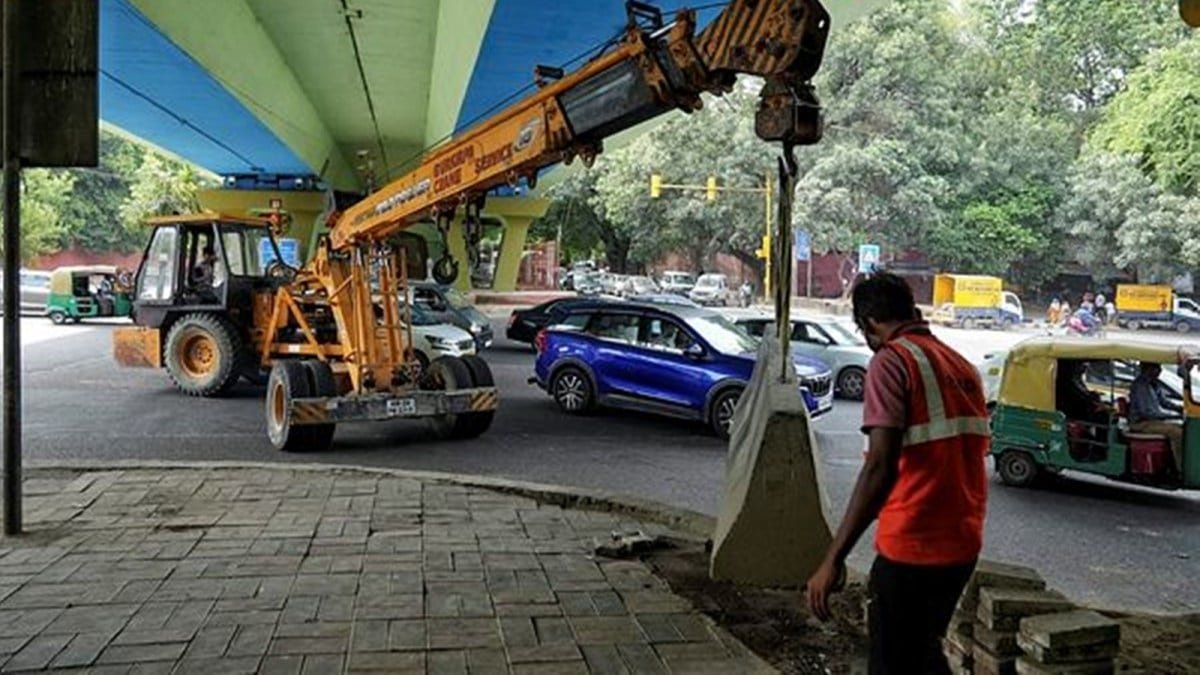
Delhi’s public works authority is preparing to introduce an internal testing framework for construction materials, a move that could reshape how road quality is monitored across the capital. The initiative is aimed at reducing delays in verification while strengthening oversight in a sector often criticised for inconsistent execution and premature road deterioration. At present, material testing for road projects relies heavily on external laboratories, including government-backed research institutes and engineering colleges. While these facilities provide technical validation, the process can be time-intensive, often slowing project timelines and delaying corrective action. By establishing an in-house road testing system, officials expect to accelerate decision-making and bring greater accountability into the execution cycle.
The proposed framework will initially focus on core parameters such as bitumen quality, surface strength, and durability—key factors that determine how well roads withstand traffic loads and extreme weather conditions. Equipment procurement is already being planned, with tools designed to extract and analyse on-site samples forming a central part of the system. Engineers will be able to conduct real-time assessments, allowing for quicker identification of substandard materials or construction practices. Infrastructure experts suggest that in-house road testing could significantly improve compliance if implemented with strong technical standards and independent auditing safeguards. While decentralising testing offers speed, maintaining credibility will depend on transparent protocols and periodic cross-verification with accredited external institutions. The move comes as the city prepares to undertake extensive road repair and rehabilitation works, covering hundreds of kilometres within a compressed timeframe. With rising traffic volumes and increasing climate stress—particularly heat and heavy rainfall—urban roads are under growing strain. Frequent resurfacing not only raises maintenance costs but also contributes to higher emissions due to repeated construction cycles.
From a sustainability perspective, better quality control at the construction stage can extend road life and reduce resource consumption over time. Durable roads require fewer repairs, lowering both material use and disruptions to traffic. Urban planners also highlight that improved road conditions have a direct impact on safety, fuel efficiency, and commuter experience, particularly for public transport users and non-motorised traffic. Contractors are already required to maintain basic testing equipment at project sites, enabling preliminary checks during construction. The new system is expected to complement these measures by adding a more structured and technology-driven layer of verification. Officials indicate that findings from the initial phase could inform broader procedural reforms in how infrastructure projects are monitored and evaluated.
As cities like Delhi grapple with balancing rapid infrastructure expansion and long-term resilience, institutional capacity building is emerging as a critical factor. The success of this initiative will depend not only on equipment and processes but also on how effectively it embeds a culture of quality assurance within the public works ecosystem.