


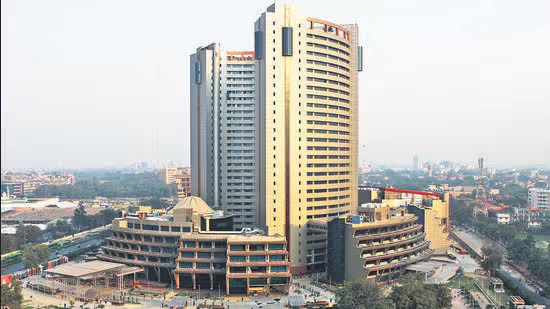
Delhi’s municipal finances have received a significant boost this financial year, with the city’s civic administration recording its highest-ever property tax collections, signalling improved compliance and a gradual strengthening of urban revenue systems. By the end of December in FY26, property tax receipts had crossed Rs 2,700 crore, marking a sharp year-on-year rise and reinforcing the growing role of local taxation in funding essential city services.
Officials tracking the data said collections were nearly 45 per cent higher than the same point last year, a gain attributed to both policy measures and a widening of the taxpayer base. The number of registered property taxpayers increased substantially over the past year, reflecting a shift toward greater formalisation in one of India’s largest urban property markets. Urban finance experts note that expanding the tax net is often more sustainable than raising rates, particularly in cities grappling with infrastructure deficits. A key driver behind the improved figures has been a time-bound amnesty programme introduced for the current financial year. The scheme allowed property owners to regularise past liabilities by paying outstanding dues for a limited number of years while receiving relief from accumulated interest and penalties. Civic administrators said this approach encouraged voluntary disclosure, especially among owners who had previously underreported property values or paid taxes irregularly. Data available with the corporation indicates that a significant share of the incremental revenue came from taxpayers opting into the amnesty framework, including a notable number of newly registered property owners. This influx has helped broaden the tax base, which is critical for a city where municipal expenditure requirements are rising due to population growth, climate adaptation needs and ageing infrastructure.
Despite the improved performance, officials acknowledge that compliance gaps remain. A sizeable number of properties listed in civic records are yet to fully meet their tax obligations. The administration has indicated that enforcement mechanisms under existing municipal laws will be activated once the amnesty window closes, signalling a transition from incentive-led compliance to stricter regulation. Urban planners point out that stronger property tax collection has implications beyond balance sheets. Predictable municipal revenues allow cities to plan longer-term investments in public transport, drainage, waste management and neighbourhood-level amenities. In the context of climate resilience, such fiscal stability is increasingly important for funding heat mitigation, flood control and energy-efficient public infrastructure. The extension of the amnesty scheme until the end of January 2026, albeit with a modest penalty, suggests the civic body is still prioritising participation over punitive action. Payments continue to be routed through digital platforms, reflecting a broader push toward transparency and ease of compliance.
As Delhi continues to evolve as a dense, mixed-use metropolis, the challenge will be to sustain this momentum. Experts argue that regular updates to property records, fair valuation practices and visible reinvestment of tax revenues into local services will be essential to maintaining public trust. If managed well, the current surge in Delhi property tax collection could mark a turning point in how India’s cities fund their own growth.
Also Read: Delhi NCR infrastructure surge reshapes property markets
