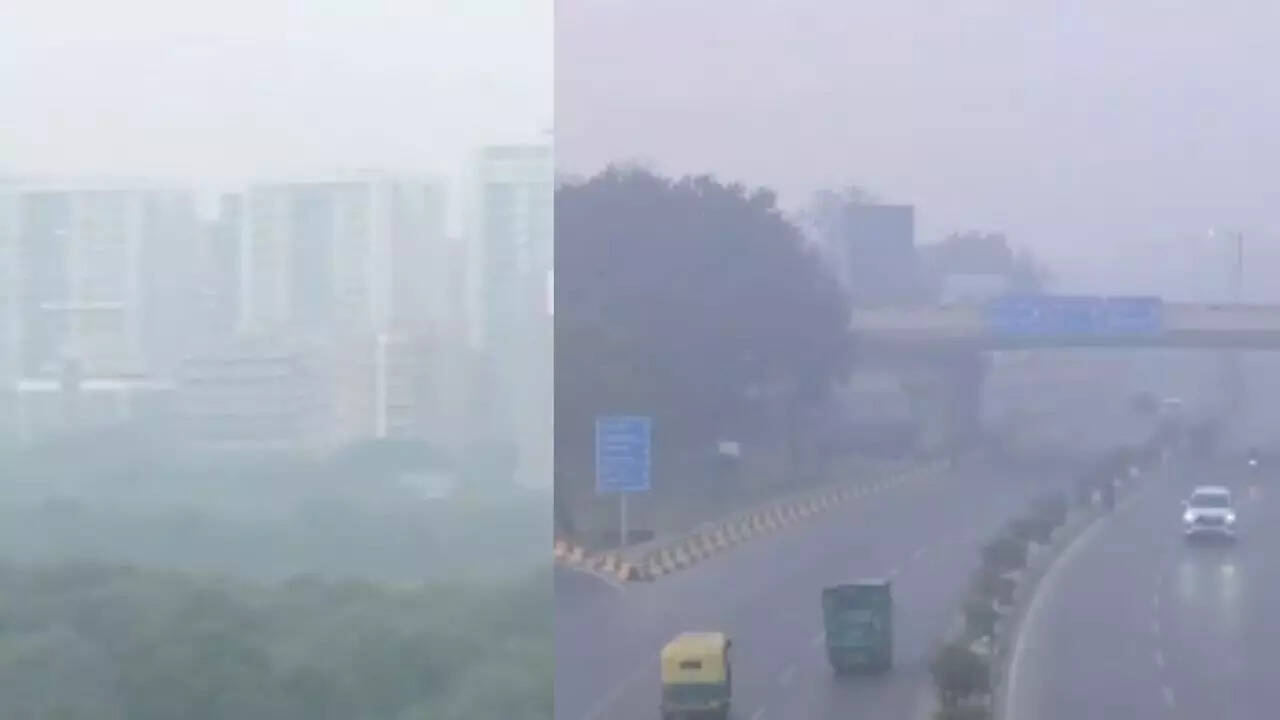
Delhi’s air quality deteriorated sharply on Sunday as the city experienced a dense blanket of smog, pushing the Air Quality Index (AQI) to 391, placing the metropolis firmly in the ‘severe’ category. Several areas recorded readings exceeding 400, raising serious health concerns and prompting authorities to enforce stricter pollution control measures under the Graded Response Action Plan (GRAP).
Visuals from landmarks such as the Akshardham Temple highlighted the thick haze, significantly reducing visibility. Key areas like AIIMS registered AQI levels of 340 (‘very poor’), while ITO and surrounding localities crossed the 400-mark, confirming the severity of pollution across the national capital. Officials have implemented Stage III GRAP interventions, which restrict construction and industrial activities, alongside enforcing the ‘No PUC, No Fuel’ rule to curb vehicular emissions. A senior environmental official noted, “The combination of calm winds, dense fog, and cold weather traps pollutants close to the surface, worsening air quality.”
In contrast, Mumbai experienced moderate air conditions. The Bandra Kurla Complex recorded an AQI of 123, with a light layer of fog but comparatively lower pollution levels. Experts attribute the stark difference between the two cities to local weather patterns, industrial concentration, and vehicular density. Health authorities have urged vulnerable populations, including children, the elderly, and individuals with respiratory conditions, to limit outdoor exposure and use masks when venturing outside. Industry experts emphasised the importance of continued monitoring and long-term mitigation strategies, including expansion of green cover, promotion of clean energy, and stricter emissions control, to break the recurrent cycle of severe air pollution.
Urban planners highlight that Delhi’s winter pollution episodes reflect systemic challenges in urban air management, including high vehicular density, industrial emissions, and delayed waste management. “Sustainable urban policies, improved public transport, and citizen awareness are critical to reducing winter smog events,” a senior urban planner said. The Commission for Air Quality Management stressed that without consistent regulatory interventions and adoption of cleaner technologies, such severe pollution events are likely to recur annually. Residents are advised to rely on real-time AQI updates and follow official health advisories until conditions improve.
Delhi Pollution Reaches Severe Levels Across Key Areas