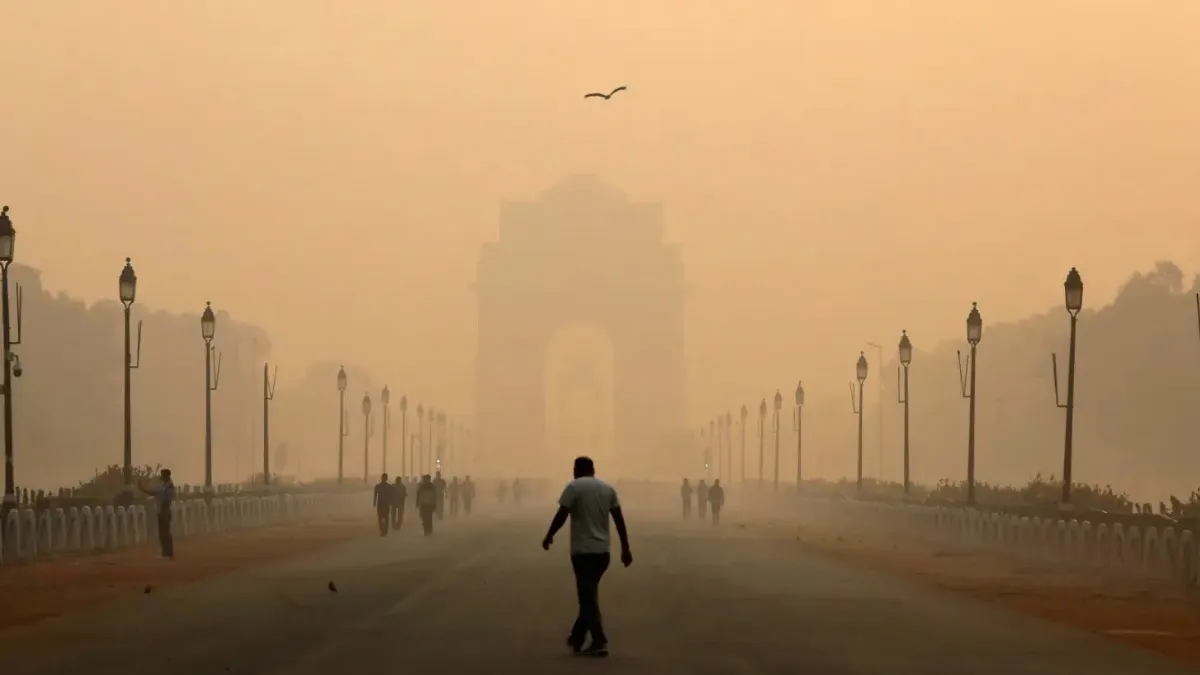
Delhi Pollution Crisis Worsens As Weak Infrastructure Fuels Toxic Air
Delhi’s worsening pollution is no longer just about policy lapses but an indictment of decades of flawed infrastructure. The Capital, which slipped 25 places in the Centre’s latest Swachh Vayu Sarvekshan 2025 rankings to 32nd among large cities, is battling a structural crisis that extends beyond smog alerts and seasonal firefighting.
Experts stress that Delhi’s crumbling systems choked roads, unchecked construction, overflowing landfills, and shrinking green cover are fuelling the toxic haze that hangs over the city each winter. Even as funds for pollution control remain underutilised, lives, livelihoods, and heritage stand threatened.One stark example is the Red Fort, where recent international research has shown that toxic particles are eating into the sandstone walls, leaving dark crusts that corrode its historic façade. The monument’s decline is a reminder that pollution is not only destroying lungs but also dismantling centuries of culture.
The city’s transport grid is another chronic contributor. Vehicular emissions remain a major source of PM2.5 levels, with nearly 1,000 new vehicles hitting Delhi’s roads daily. Despite a world-class metro, weak bus fleets, patchy feeder services, and poor pedestrian facilities ensure private cars and two-wheelers dominate. Experts insist that until Delhi invests in 20,000 buses, last-mile connectivity, and safe walking and cycling infrastructure, traffic fumes will keep choking the city.
Construction dust adds another thick layer of pollutants. Large-scale projects often flout basic dust-control measures, with uncovered trucks and unbarricaded sites turning roads into dust corridors. Outdated building codes, weak monitoring, and lack of deterrent penalties make matters worse.Delhi’s landfills Ghazipur, Bhalswa, and Okhla are perhaps the most glaring symbol of neglect. These mountains of waste, some taller than city monuments, frequently catch fire and spew toxic gases. Experts warn that without scientific waste management, modern waste-to-energy plants, and proper segregation, these sites will remain permanent gas chambers poisoning residents.
Industrial zoning failures further compound the problem. Polluting factories sit dangerously close to residential clusters, exposing lakhs to hazardous emissions. Despite repeated relocation drives, lax enforcement leaves mixed land-use zones a public health time bomb.At the same time, the Capital’s green lungs are shrinking. Trees continue to be sacrificed for widening roads and new projects, stripping the city of its natural air filters. The loss of canopy intensifies heat islands and worsens secondary pollutants. Experts argue that urban forests and green belts must be treated as essential infrastructure rather than ornamental projects.Delhi’s pollution crisis, experts note, is not inevitable but a product of misaligned priorities and policy paralysis. Without decisive infrastructural reforms better roads, efficient buses, dust control, scientific waste systems, and green expansion the Capital risks choking its people and eroding its history. Whether Delhi chooses incremental fixes or bold reinvention will determine not just its air, but its future.