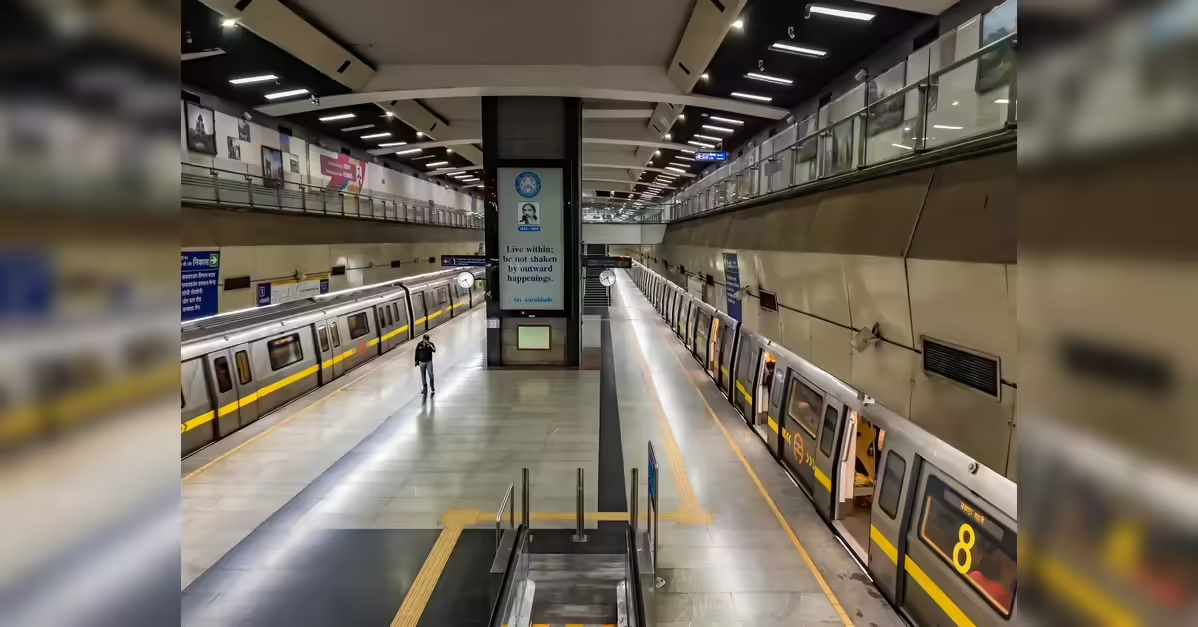
Urban planners in Delhi are now exploring extensive underground metro corridors following the operational success of Mumbai’s fully subterranean Metro 3 line, which connects Colaba to SEEPZ. Officials and urban transport experts believe the move could address growing population pressures while reducing surface congestion and preserving urban space.
During the Late BG Deshmukh Memorial Lecture Series hosted by the Maharashtra Chapter of the Indian Institute of Public Administration (IIPA), Ashwini Bhide, Additional Chief Secretary to the Maharashtra Chief Minister and Managing Director of Mumbai Metro Rail Corporation, highlighted the technical and social achievements of the Metro 3 project.Constructing a fully underground line in a densely populated city required not only engineering expertise but extensive public engagement and meticulous planning,” she said.According to an official involved in metro planning, Mumbai Metro 3 demonstrated how rigorous coordination between agencies, transparent communication with residents, and careful attention to environmental approvals can lead to successful urban infrastructure delivery. Over five years of construction, not a single major safety incident occurred, underscoring the effectiveness of safety protocols and project oversight.
Delhi faces similar pressures as its population grows and existing surface transport networks become increasingly congested. Experts suggest that building new metro lines underground can safeguard heritage sites, reduce land acquisition challenges, and improve the efficiency of city-wide transit. “Lessons from Mumbai show that well-planned underground projects can be both socially and economically viable,” an urban transport analyst said.Bhide also cited the broader context of integrated urban development in Mumbai, referencing projects such as the Coastal Road, Bandra-Versova corridor, and the Virar-Alibaug multi-modal link. These demonstrate how combining subterranean transport with strategic infrastructure planning can enhance connectivity, reduce travel times, and improve quality of life for urban residents.
Delhi authorities are now considering adopting similar approaches, prioritising underground alignments for new lines to limit disruption to residential and commercial zones. The government aims to ensure that future metro expansion complements sustainable urban development goals, including reducing carbon emissions, preserving green spaces, and enhancing inclusive mobility options for all citizens.Urban planners emphasise that implementing underground metro systems requires careful stakeholder engagement and robust regulatory frameworks. Delhi’s emerging plans reflect a growing recognition that modern transport solutions must balance technical feasibility with social and environmental considerations.The success of Mumbai Metro 3 offers a roadmap for Indian cities seeking resilient, low-impact transit systems, demonstrating that underground metro lines can support sustainable urban growth while maintaining public trust and operational safety.
Delhi Plans Underground Metro Expansion After Mumbai Project Demonstrates Successful Urban Transit Model