


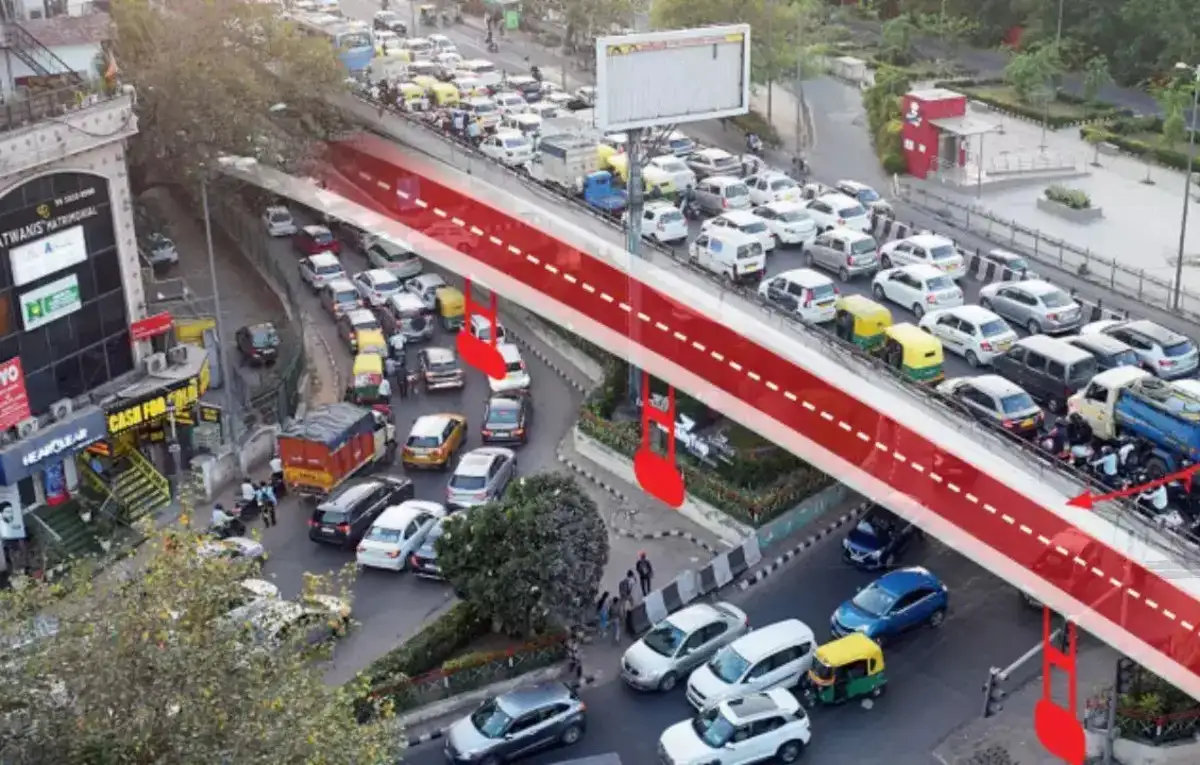
Delhi government sets in motion a new phase of road infrastructure projects aimed at relieving traffic bottlenecks and enhancing local movement.
These interventions, being designed for neighbourhoods in South West, North East, and West Delhi, are part of a broader push toward a more sustainable, equitable, and connected urban ecosystem. According to senior government officials, the upcoming initiatives are expected to act as pivotal game changers in Delhi’s mobility framework. Targeted at areas frequently plagued by snarling traffic, inadequate pedestrian infrastructure, and limited last-mile connectivity, these projects are being shaped with a view to promoting sustainable travel while meeting the mobility demands of a growing urban population.
At the core of the effort is a conscious shift in planning priorities — from car-centric infrastructure to inclusive, people-friendly road design. The Public Works Department (PWD), which has been entrusted with executing these works, is focusing on creating roadways that are not just wider and better surfaced, but also designed to improve safety and movement for all users, including cyclists, pedestrians, and public transport commuters. In South West Delhi, where commercial activity and residential density have surged over the past decade, authorities are planning several corridor upgrades. These include signal-free stretches, improved junctions, better bus stop designs, and dedicated pathways for non-motorised transport. Officials said the intention is to ease the pressure on arterial roads while making it safer for schoolchildren, the elderly, and women to navigate the area on foot or by bicycle.
Meanwhile, North East Delhi — often cited as one of the least connected parts of the city — is receiving special attention for its poor road geometry and lack of multimodal integration. Urban planners have flagged the urgent need for interventions that link isolated colonies to major transit points such as metro stations and bus terminals. The new projects will reportedly include the creation of feeder corridors, revamp of poorly lit underpasses, and reorganisation of traffic-prone intersections. In West Delhi, the focus will be on decluttering existing roads that double up as both commercial and commuter corridors. Civic experts point out that many of the roads in this zone suffer from chronic congestion due to unregulated street vending, haphazard parking, and insufficient pedestrian crossings. As part of the new initiative, the government will implement a phased plan to reengineer key junctions, install smart traffic signalling systems, and enhance stormwater drainage to reduce monsoon-induced road damage.
Officials involved in the planning process noted that these projects are being informed by new design standards that prioritise climate resilience and environmental sustainability. “There is a growing realisation that roads cannot be just for cars. These upgrades are being undertaken to future-proof the city — with permeable pavements, bioswales, and shading elements to reduce urban heat,” a senior PWD official said. Furthermore, the road network upgrade aligns with Delhi’s commitment to reduce greenhouse gas emissions under its climate action goals. By improving the efficiency of vehicular movement and encouraging low-emission alternatives such as walking, cycling, and public transport, the government hopes to cut back on fuel use and air pollution — two chronic issues afflicting the capital.
Equity in access is also a central theme. Officials emphasise that the road works are not limited to high-income neighbourhoods but will also address long-neglected pockets where basic connectivity remains a challenge. A senior urban mobility expert associated with the project said, “In a city like Delhi, infrastructure has to bridge gaps, not widen them. Road design must serve the needs of all communities — especially low-income and informal settlements that rely heavily on walking and public transport.” To ensure transparency and citizen engagement, the Delhi government has initiated consultations with local RWAs, urban design experts, and civil society groups. This participatory approach is expected to produce more context-specific designs and reduce project delays due to community opposition or design flaws.
However, challenges remain. One of the critical bottlenecks that officials are anticipating is the coordination between multiple agencies — from traffic police and power utilities to drainage and metro departments. Previous infrastructure projects in Delhi have suffered due to poor inter-agency communication, leading to incomplete works or repeated road cutting. Moreover, planners will need to factor in the upcoming monsoon season, which traditionally slows down road works across the city. Experts suggest that clear implementation timelines, night shifts for construction, and use of pre-fabricated components could help mitigate such seasonal setbacks.
Civil engineers working on the ground also point out the need to overhaul the city’s ageing underground utilities alongside the roadworks to avoid repetitive digging. “No road project can be considered complete if we don’t simultaneously upgrade the water pipelines, sewer lines, and power conduits beneath. This is the moment to think comprehensively, not in silos,” said a consultant engineer working with the project management unit. If implemented as planned, the current batch of road upgrades could significantly reshape the way Delhiites experience their city — making daily commutes less stressful, reducing pollution exposure, and encouraging more eco-conscious travel behaviour.
Yet, public policy watchers caution that success will depend on long-term maintenance, enforcement of road use norms, and continued investment in non-motorised transport infrastructure. Without these, even the most well-designed projects risk being reduced to short-lived cosmetic improvements. As Delhi positions itself as a modern, liveable capital committed to a low-carbon urban future, these road infrastructure upgrades may well mark the beginning of a wider movement towards sustainable and inclusive city-building. Whether they translate into genuine transformation or remain isolated patches of good design will depend on the government’s ability to deliver with vision, speed, and empathy.
Also Read : Delhi Targets 12 Key Choke Points for Decongestion
