


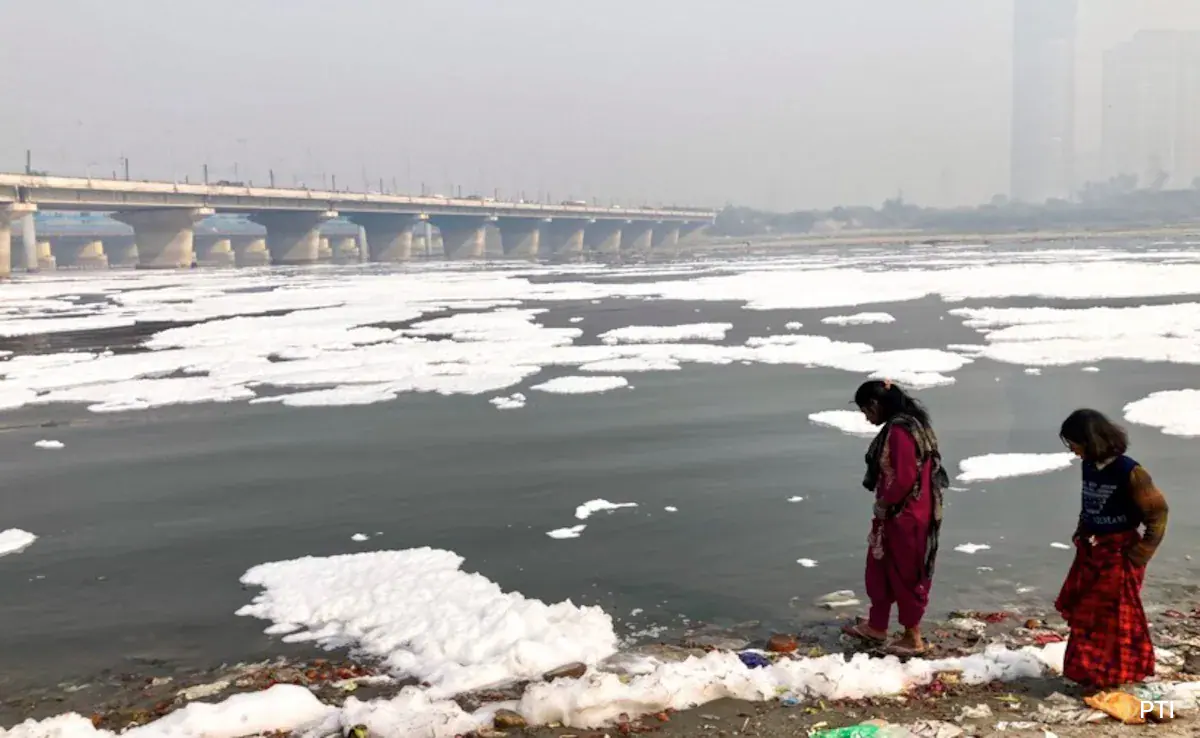
The central and Delhi governments have charted a 30-point action roadmap to revive the heavily polluted Yamuna River.
The initiative, finalised after a high-level policy review held in mid-April, aims to restore the river’s environmental flow, rehabilitate its floodplains, and upgrade sewage and waste management systems across the capital. The roadmap, developed through inter-agency collaboration, assigns specific responsibilities and delivery timelines to key stakeholders including the Delhi Development Authority, Delhi Jal Board, National Mission for Clean Ganga, Central Pollution Control Board, and the Municipal Corporation of Delhi. These agencies have until 2029 to execute transformative tasks across wastewater treatment, encroachment removal, and riverfront development.
One of the plan’s central pillars is enhancing the river’s environmental flow — the volume, quality, and timing of water necessary to sustain aquatic ecosystems. By September 2026, treated water from major sewage treatment plants at Coronation Pillar and Yamuna Vihar will be released downstream of Wazirabad. A new dedicated pipeline system is expected to carry approximately 773 million litres per day, or nearly 9 cumecs, into the river. Further downstream, another 6.23 cumecs of treated water from the Okhla sewage treatment plant will be redirected into the Yamuna via the Yamuna canal. This is aimed at boosting the low flow levels that have rendered large stretches of the river into stagnant, polluted channels unfit for aquatic life or community use.
To address floodplain degradation, a Special Task Force will oversee the removal of illegal settlements and constructions along the river’s embankments. The task force has been asked to complete the clearance by September 2026. In parallel, the city’s civic authorities will begin work on ten eco-restoration projects. These include the rehabilitation of nature parks, water bodies like Hindon Sarovar, and designated areas for eco-tourism — all aimed at creating green public spaces while protecting the river’s ecological buffer. The roadmap aligns with the political vision of turning the Yamuna into a revitalised urban lifeline. A special funding mechanism titled “Yamuna Kosh” is proposed to finance activities such as tapping and treating major drains — including those at Barapullah, Shahdara, and Ghazipur — before they discharge into the river. This fund will also support scientific monitoring and community-led conservation initiatives.
Another priority is expanding Delhi’s sewage treatment infrastructure. The plan sets a target of adding 500 million litres per day of additional treatment capacity by March 2029. To reduce direct discharge of waste into stormwater drains, 1,799 unauthorised colonies are to be connected to the central sewerage system over the same period. New sewage treatment plants are being proposed at key locations such as Delhi Gate, Kailash Nagar and Shastri Park to close the infrastructure gap. In a move to integrate sustainability, the plan promotes decentralised waste treatment models. Dairy waste from unauthorised farms will be diverted to biogas plants, while septage from non-sewered areas will be treated through faecal sludge management systems.
Over the next quarter, civic bodies have been tasked with clearing tonnes of plastic and solid waste from urban drains — a short-term measure that feeds into a long-term goal of zero untreated discharge into the Yamuna. Several major drains including those at Maharani Bagh, Mori Gate, Sonia Vihar, and others will be tapped and channelled into treatment systems. The action plan also has a broader urban vision. Inspired by the Sabarmati Riverfront in Gujarat, officials are exploring the feasibility of developing commercial, cultural and recreational spaces along the Yamuna’s banks. This would include interactive installations, public plazas, and performance spaces, aimed at reconnecting citizens with the river.
The initiative comes against a backdrop of longstanding criticism of the capital’s river management. Previous efforts, spanning over a decade and involving reported investments of over ₹8,500 crore, have failed to significantly reduce pollution levels. Despite numerous sewage infrastructure projects, high levels of biological and chemical contaminants persist across nearly 22 kilometres of the Yamuna in Delhi. The new roadmap’s emphasis on clearly defined outcomes and timelines represents a departure from previous ad hoc measures. With a cross-agency governance model and central oversight, it seeks to build momentum for long-term ecological and civic transformation.
Experts argue that the plan’s success will hinge not just on engineering solutions, but on enforcement, inter-agency coordination and community engagement. The challenge, they say, is as much about governance as it is about infrastructure. If implemented as designed, the Yamuna River could emerge not only as a cleaner waterway but also as a vibrant urban commons that redefines how Delhi interacts with its natural resources.
Also Read : Delhi Development Authority Welcomes New Leadership
