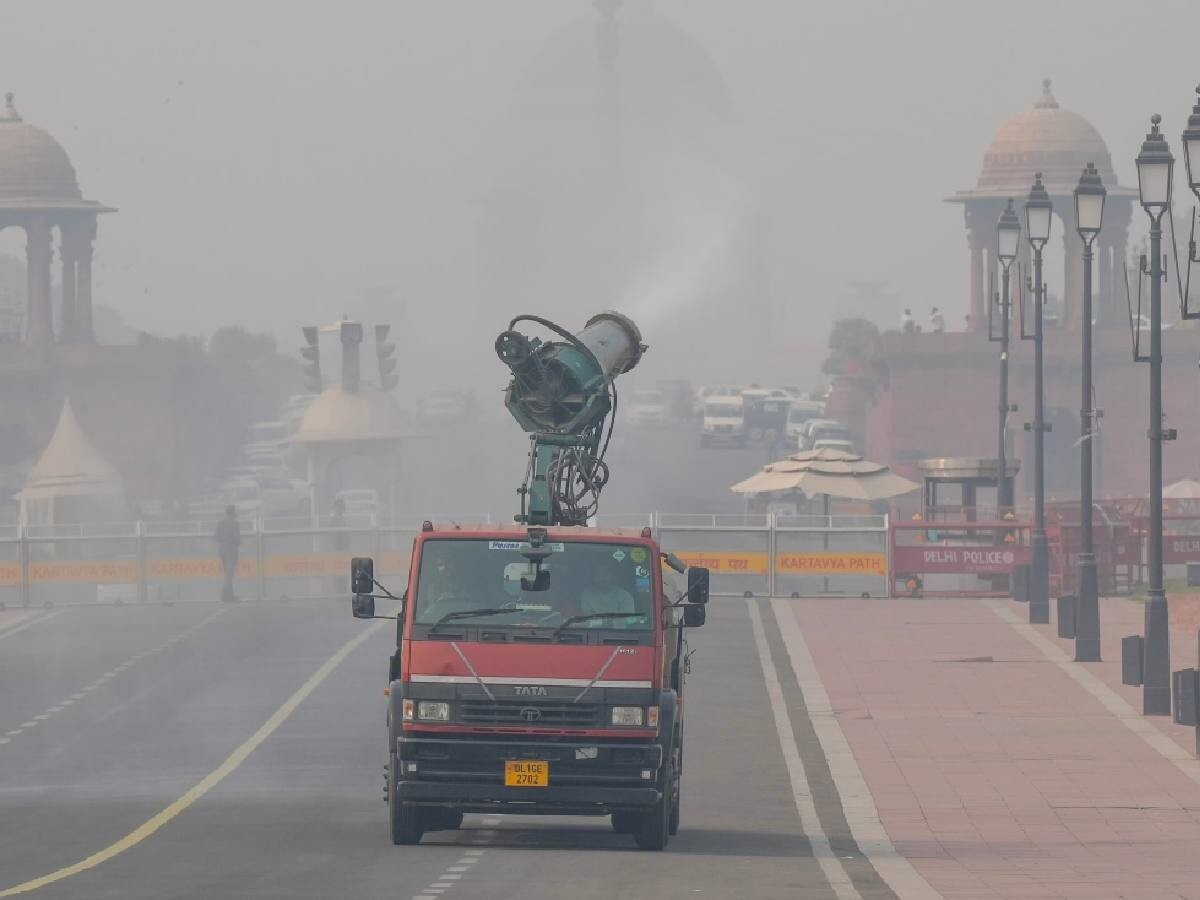
Delhi has initiated field-level trials of an emerging material technology aimed at reducing urban air pollution, marking a shift towards science-led interventions in city management. The Delhi photocatalytic coating initiative, being evaluated in collaboration with a leading technical institution, seeks to assess whether treated road surfaces can actively neutralize harmful pollutants in high-traffic corridors. The technology relies on a specialized coating embedded with titanium dioxide, a compound known for its catalytic properties. When exposed to sunlight, the material triggers chemical reactions that break down pollutants such as nitrogen oxides and volatile organic compounds into less harmful by-products. In dense urban environments like Delhi, where vehicular emissions are a primary contributor to air pollution, such passive systems could complement existing control measures.
Urban environmental experts describe the Delhi photocatalytic coating trials as part of a broader shift towards integrating climate-responsive materials into infrastructure design. Unlike conventional pollution control strategies that focus on emission reduction at the source, this approach attempts to treat pollutants already present in the atmosphere. If proven effective, it could open up new pathways for embedding air purification capabilities into roads, pavements, and building facades. The trials are particularly relevant for areas with high traffic density, where pollution concentrations tend to be elevated. By applying the coating to road surfaces, authorities aim to create continuous interaction between pollutants and the catalytic material. This could offer a low-maintenance, decentralized solution for improving air quality at the micro level, especially in zones where conventional interventions face logistical constraints.
However, researchers caution that the long-term performance of such coatings in real-world conditions remains under evaluation. Factors such as dust accumulation, wear and tear, and varying sunlight exposure could influence effectiveness. There are also questions around scalability, cost efficiency, and the frequency of reapplication required to maintain performance levels over time. From an urban planning perspective, the initiative reflects a growing emphasis on multi-functional infrastructure—where roads and public spaces are designed not only for mobility but also for environmental benefits. Integrating such technologies could align with broader goals of building low-carbon and climate-resilient cities, particularly as traditional approaches struggle to deliver sustained improvements in air quality. The move also intersects with Delhi’s ongoing efforts to address photochemical smog, a form of pollution driven by sunlight-induced reactions between vehicle emissions and atmospheric compounds. By targeting these reactions at the surface level, photocatalytic materials could potentially reduce the formation of secondary pollutants that contribute to haze and respiratory health risks.
As trials progress, policymakers and researchers will need to assess measurable outcomes and cost-benefit implications before considering wider deployment. While not a standalone solution, innovations like photocatalytic coatings may become part of a layered strategy to tackle urban air pollution, combining technological, regulatory, and behavioural interventions to improve environmental conditions in the capital.