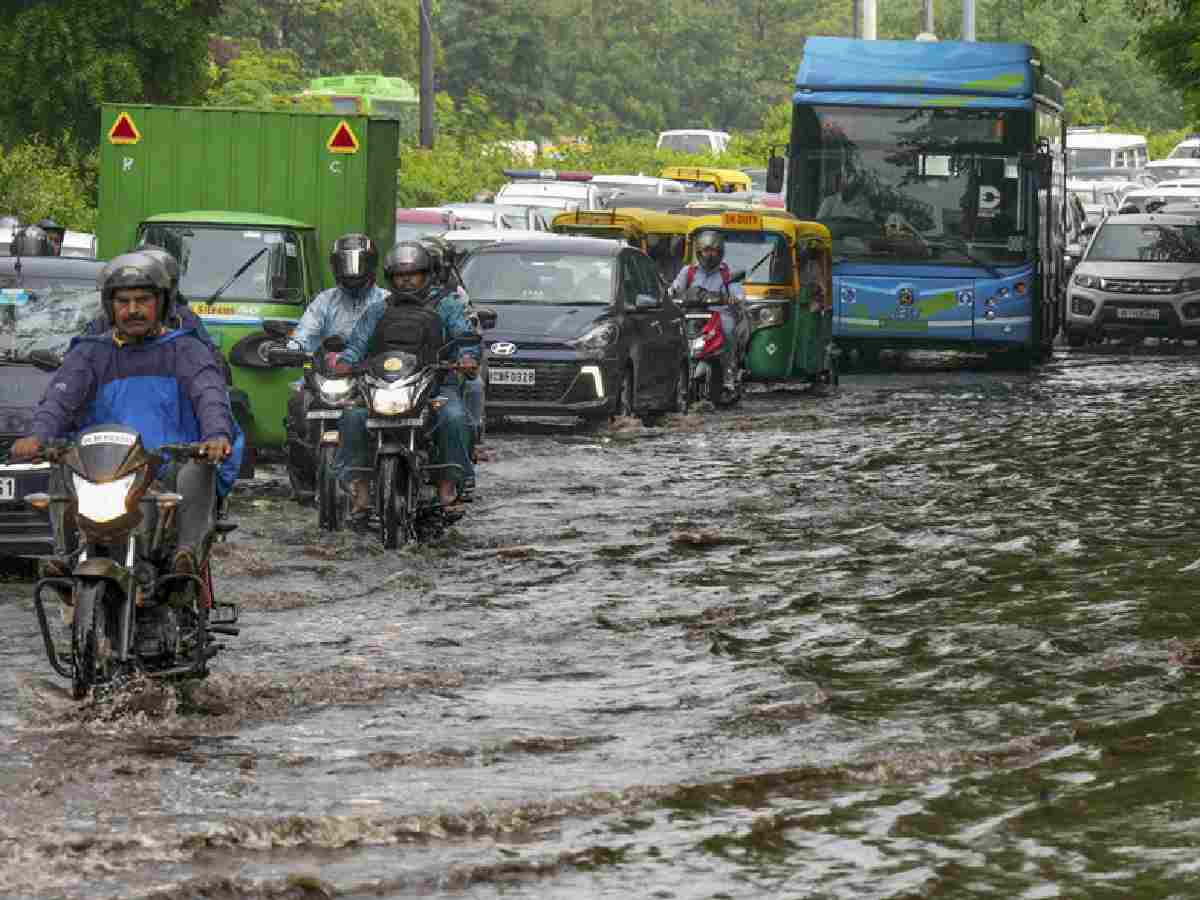
Delhi paralysed by rain as Supreme Court slams poor toll roads
Delhi came to a standstill after just two hours of rainfall, prompting the Supreme Court to question the fairness of toll charges on crumbling highways. Highlighting both Delhi’s fragile infrastructure and Kerala’s prolonged gridlocks, the court criticised the National Highways Authority for collecting fees despite unsafe and congested roads, warning that citizens cannot be made to pay for dysfunction.
The remarks came during a hearing over a controversial toll plaza in Kerala, where a high court had suspended collections after persistent traffic chaos and dangerous road conditions. The apex bench underlined that it was unreasonable to demand motorists pay full charges for journeys that stretch into half a day due to mismanagement and unsafe road design.During the proceedings, officials representing the highway authority attributed delays to unforeseen events, describing a 12-hour traffic jam as an “act of God” following a truck overturning. Judges, however, dismissed the argument, stating the accident was a result of potholes and neglected infrastructure.
The court further remarked that even ambulances struggle to pass during such gridlocks, turning basic travel into a public safety issue.At the heart of the debate lies the question of accountability. If commuters are made to pay ₹150 to travel a 65-kilometre stretch designed for one hour but instead spend up to 12 hours stranded, the value proposition of toll roads collapses. Legal experts following the case note that the court is effectively questioning whether India’s highway financing model can sustain itself without stronger transparency and enforcement.The case also threw light on Delhi’s long-standing struggle with urban flooding. The bench noted that the capital city grinds to a halt whenever rain persists for even a short duration, exposing the inadequacy of drainage systems and the failure to integrate sustainable infrastructure into urban planning. For a city aspiring to global stature, the inability to withstand seasonal rainstorms undermines both economic productivity and public trust.
Transport analysts argue that India’s approach to road development remains excessively focused on expansion rather than resilience. With climate change intensifying monsoon patterns, experts stress that future highways and urban mobility systems must prioritise green design, sustainable drainage, and equitable accessibility. Otherwise, the cycle of disruption, litigation, and public frustration will continue. While the Supreme Court has reserved its final order in the Kerala toll case, its broader observations resonate nationwide. From commuters stuck in monsoon chaos to businesses losing hours in transit, the message is clear: infrastructure cannot be monetised unless it delivers safe, reliable, and sustainable mobility.