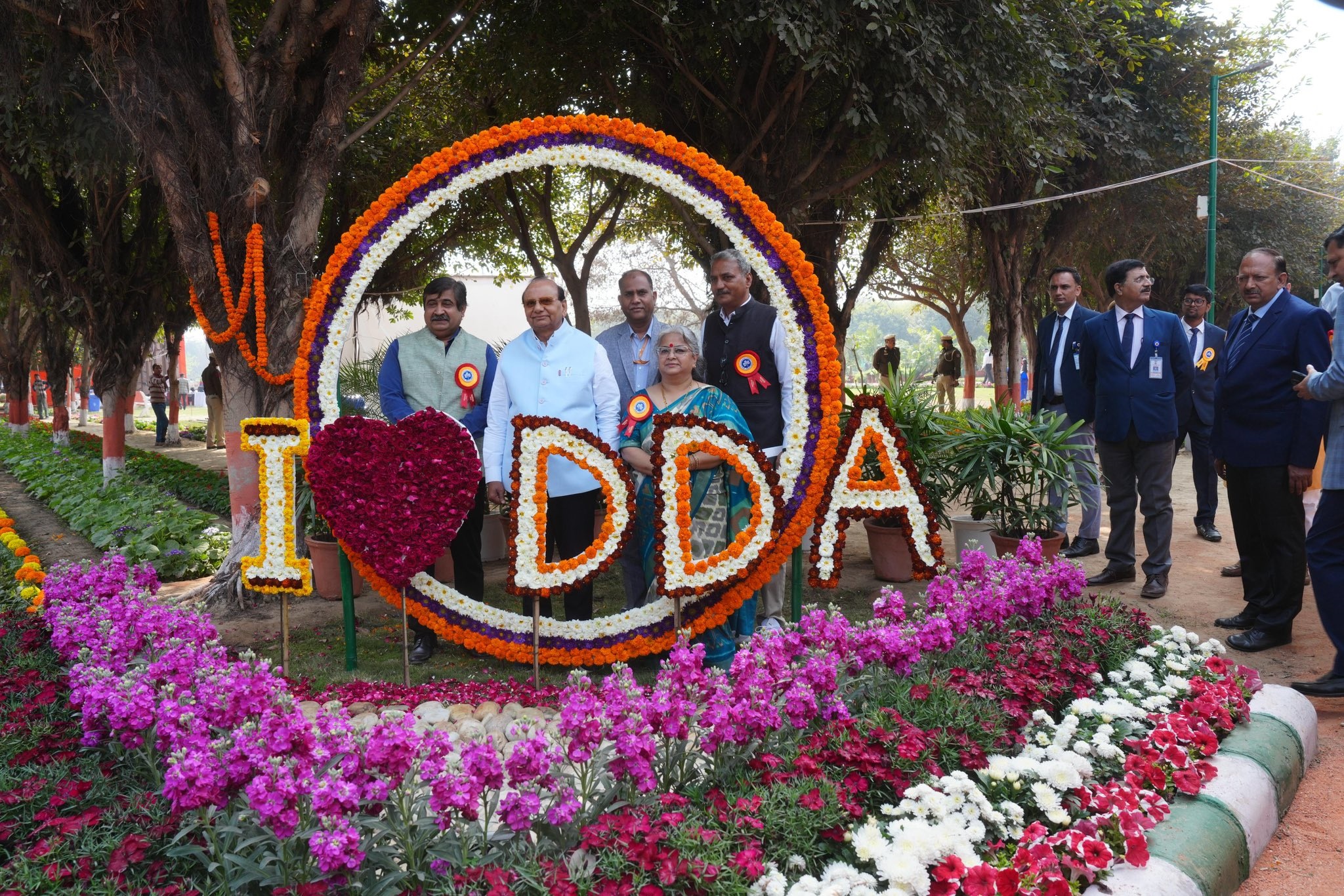
Delhi’s public parks turned into vibrant ecological showcases this week as the Delhi Development Authority rolled out the Palaash Flower Festival 2026 across four locations simultaneously, marking a broader push to position urban green spaces as civic and environmental assets rather than ornamental backdrops.
The three-day event is being held at Bansera Park, Ashok Vihar, Jasola and Narela a decentralised format introduced for the first time since the festival’s inception in 2023. By dispersing the programme geographically, planners aimed to widen public access and encourage participation beyond central districts.
The Palaash Flower Festival features themed gardens, curated floral installations and biodiversity-focused displays designed to highlight native species and ecological landscaping practices. Officials involved in organising the event indicated that the multi-venue model is intended to strengthen neighbourhood-level engagement with Delhi’s green infrastructure.
Urban planners observe that such festivals serve a dual purpose. While they draw visitors and generate community activity, they also reinforce the importance of maintaining parks, wetlands and urban forests as buffers against air pollution and heat stress. In a city grappling with rising temperatures and fluctuating air quality, accessible green spaces play a measurable role in climate resilience. The Palaash Flower Festival coincides with renewed public attention on ecological restoration projects in Delhi, including riverfront redevelopment and biodiversity parks. Experts note that sustained investment in horticulture and urban forestry can improve microclimates, support pollinator populations and enhance mental well-being for residents in high-density areas.
Attendance at all four venues has been reported as strong, reflecting growing public appetite for open-air cultural and environmental programming. For local economies, footfall at such events often benefits small vendors, nurseries and community groups involved in plant cultivation and landscape design. The festival was inaugurated by the city’s constitutional head over the weekend, underscoring institutional backing for environmental outreach initiatives. Administrative officials highlighted that the objective is not limited to display gardens but extends to encouraging responsible stewardship of public landscapes.
Landscape architects say the emphasis on biodiversity in the Palaash Flower Festival aligns with a gradual shift away from water-intensive ornamental lawns towards native, climate-adaptive planting schemes. Such approaches reduce irrigation demand and maintenance costs while improving ecological balance.
For Delhi’s expanding urban footprint, the challenge lies in scaling these principles beyond festival settings into everyday planning norms.
Integrating biodiversity corridors into residential developments, commercial hubs and transport infrastructure remains critical for long-term sustainability.
As the Palaash Flower Festival concludes its 2026 edition, its success will ultimately be measured not only by visitor numbers but by whether it deepens civic understanding of green infrastructure as essential urban capital supporting health, equity and resilience in a rapidly evolving metropolis.
Delhi Palaash Flower Festival Expands Citywide