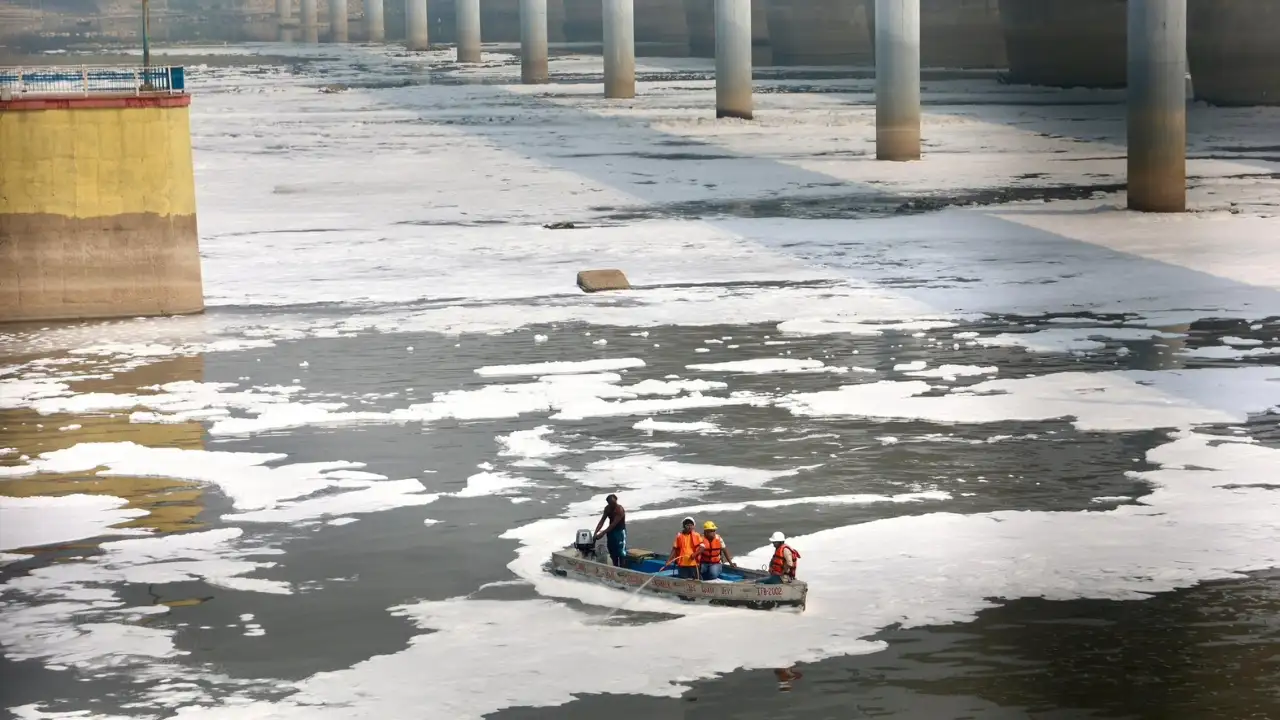
Delhi Outlines Three-Phase Plan to Curb Sewage Flow Into Yamuna
Delhi is moving to tackle the worsening sewage crisis in its stormwater network, with the Delhi Jal Board unveiling a phased action plan to prevent untreated waste from reaching the Yamuna River. A three-pronged strategy—short-term, medium-term, and long-term—targets the Barapullah drain, a major source of contamination. The plan includes mapping sewage entry points, building decentralised treatment facilities, and extending sewer networks across unauthorised colonies to ease the burden on the river system and prevent monsoon backflows.
A key part of Delhi’s water pollution problem stems from the Barapullah drain, which stretches 16 kilometres through densely populated areas before draining into the Yamuna River. According to the Delhi Jal Board’s recent submission to the National Green Tribunal, only two of the seven major contributing constituencies currently have proper sewer infrastructure. The rest—including several unauthorised colonies—rely on makeshift or absent systems, causing untreated sewage to flow freely into stormwater drains. The short-term strategy includes identifying illegal or untrapped sewage outfalls within six months. In the medium term, the board proposes modular decentralised sewage treatment plants (STPs) and complete sewer coverage in unregulated settlements. Meanwhile, several colonies already fitted with networks still lack last-mile household service connections. With peak monsoon season approaching, experts warn that without immediate interventions, sewage backflow may continue flooding streets and residences, as seen last year in both southern and central Delhi.
The DJB’s long-term plan centres on connecting all unregulated drains to five major STPs, including Okhla and Ghitorni, while setting up new decentralised plants in key catchments. Locations such as Chhatarpur, Maidangarhi, Satbari, and Fatehpur Beri have been identified for future DSTPs to serve over 30 unauthorised colonies and nearby villages. Additionally, authorities intend to redirect treated effluent from existing STPs for horticulture use, instead of discharging it into the Barapullah drain. Civic bodies came under criticism last year when record rainfall triggered widespread backflow and sewage flooding, particularly across Lutyens’ Delhi and south Delhi. Experts argue that infrastructure upgrades alone won’t suffice without timely maintenance, de-silting, and community awareness on illegal sewage disposal. The multi-phase roadmap aims to integrate environmental protection with public health, as rising urban density and erratic rainfall patterns increasingly strain Delhi’s drainage ecosystem and threaten the Yamuna’s ecological future.
Delhi’s sewage crisis, exacerbated by ageing infrastructure and rapid urban sprawl, has turned stormwater drains into carriers of untreated waste. With the Barapullah drain playing a key role in polluting the Yamuna, the Delhi Jal Board’s comprehensive three-phase plan offers a structural path toward reform. However, successful implementation hinges on coordination between civic agencies, timely approvals, and on-ground execution. As parts of the city brace for monsoon-related flooding, experts stress the urgency of converting plans into action. Only with sustained intervention and community participation can Delhi restore its waterways and move closer to a sewage-free urban environment.