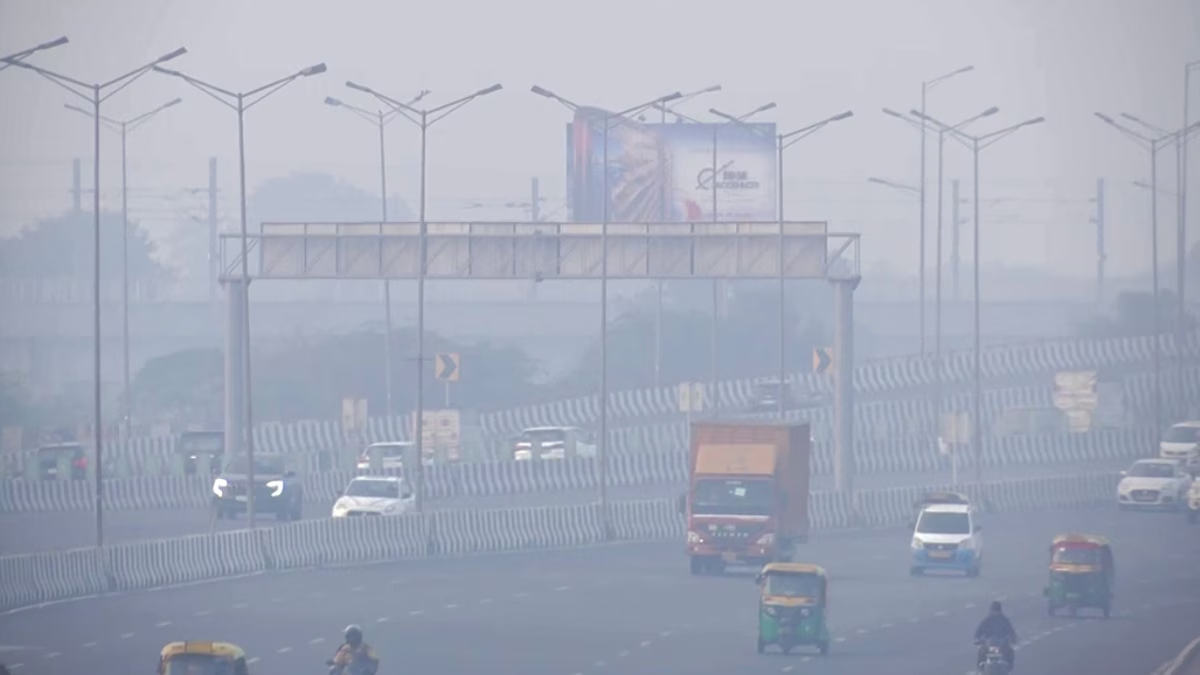
Delhi’s worsening air quality has prompted the Union Environment Ministry to intensify its directives across the National Capital Region (NCR), ordering more than 2,000 industrial units to install emission monitoring and pollution control systems by December. The review, conducted under the supervision of the Supreme Court, marks a renewed push for systemic improvements as the region battles prolonged periods of ‘very poor’ to ‘severe’ air pollution.
At a high-level meeting attended by central and state authorities, officials assessed the immediate steps needed to stabilise air quality. These include rapid repair of damaged roads, sealing potholes, completing overdue infrastructure upgrades and deploying a citizen-enabled mobile monitoring platform. Authorities have also flagged 62 congestion-prone traffic hotspots in Delhi that require smart traffic management to reduce emissions from idling vehicles.A senior official noted the need to accelerate the shift towards electric public transport, especially as the existing fleet continues to lag behind earlier targets. Delhi currently operates around 3,400 electric buses, with a projected increase to 5,000 by March 2026. This number remains well below the benchmark earlier set for the capital’s transport utility, underscoring the gap between ambition and implementation.
The urgency of the crisis is reinforced by recent health data. Over 204,000 cases of respiratory distress were recorded in the emergency departments of six major central hospitals in Delhi between 2022 and 2024, with more than 20,000 requiring hospitalisation. In stark contrast, Mumbai and Chennai recorded around 3,000 such emergency visits over two years, with fewer than 900 admissions a comparison that highlights the disproportionate health burden borne by NCR residents.
Experts emphasise that industries, waste burning, dust emissions, transport, and household fuels remain critical contributors to the capital’s air pollution. With nearly 2.97 crore vehicles registered across NCR half of them in Delhi and only modest growth in personal electric vehicle adoption, the region faces a steep path towards decarbonisation. Between January and October 2025, only 17,942 personal EVs were registered, compared to over 1.27 lakh fossil-fuel cars.
A climate policy specialist observed that reduced farm fire activity this winter removes one of the common external explanations for Delhi’s air crisis. “The consistently poor air quality mirrors the impact of local emissions sources,” the expert said, stressing the need for structural action rather than seasonal firefighting.
The environment ministry has instructed 2,254 high-polluting industrial units including metal, textile and food processing manufacturers to set up continuous emission monitoring systems. Authorities have also directed agencies to expand dust control measures through road repair, pavement development and extensive greening of open spaces.These interventions, while immediate, are part of a broader shift toward building cleaner, resilient and equitable cities. The challenge now lies in sustained coordination, transparent monitoring and ensuring that air-quality gains are evenly distributed across communities.
Delhi Orders Industries To Install Monitoring Devices And Expedite Pollution Control Measures