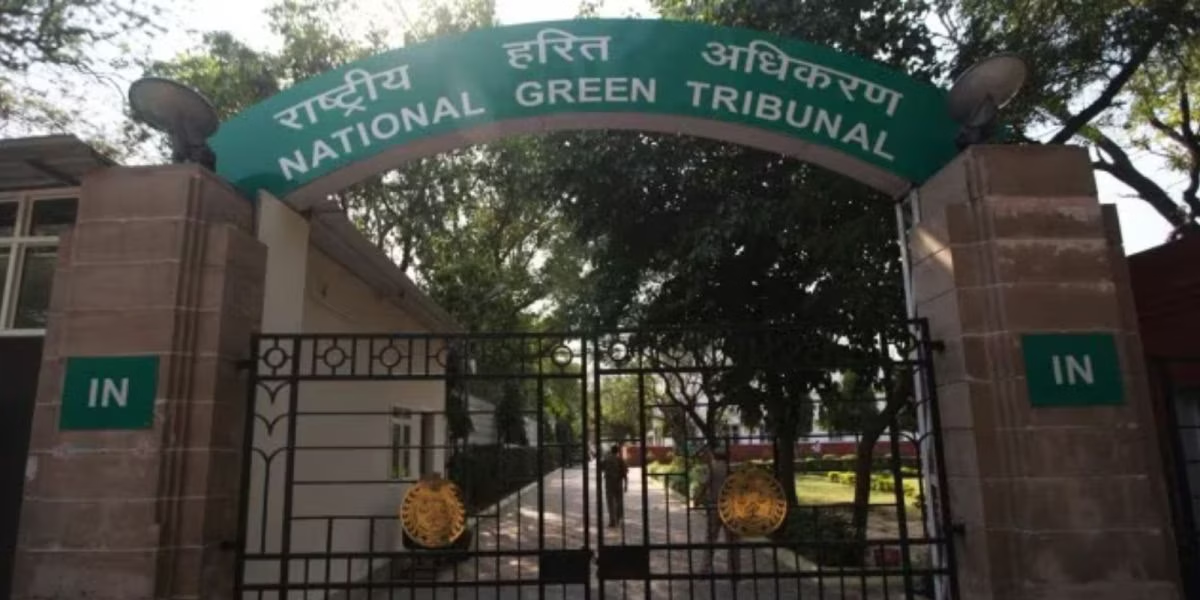
Delhi’s environmental court has directed civic and pollution control authorities to urgently review operations at a sewage treatment facility in East Delhi, following complaints from residents about persistent odour and potential health risks. The intervention places renewed scrutiny on how the capital manages its wastewater infrastructure at a time when urban expansion is intensifying pressure on essential services.
The National Green Tribunal (NGT) has asked the city’s water utility and the state pollution regulator to conduct a detailed inspection of the plant and ensure compliance with environmental standards within a defined timeframe. The order follows a petition filed by a local residents’ association that alleged poor maintenance practices had led to the release of foul-smelling gases, affecting daily life in surrounding neighbourhoods. Officials familiar with the proceedings indicated that the tribunal expects both immediate corrective action and a longer-term plan to prevent recurrence. The pollution regulator has been tasked with assessing operational performance, emission controls and adherence to prescribed effluent norms. The water utility has conveyed that remedial measures will be implemented without delay.
The case underscores the growing importance of decentralised and well-managed wastewater systems in dense urban areas. Delhi generates thousands of millions of litres of sewage each day, and treatment plants are central to preventing contamination of the Yamuna river and local groundwater. However, ageing infrastructure, capacity gaps and uneven maintenance standards continue to pose risks. Urban planners note that sewage treatment plants are often located close to residential developments as cities expand. Inadequate odour control, improper sludge handling and malfunctioning aeration systems can result in the emission of hydrogen sulphide and other gases. While not always toxic at low concentrations, prolonged exposure can cause discomfort and respiratory irritation, particularly for children and elderly residents.
Environmental compliance experts argue that regulatory oversight must evolve alongside capacity additions. As Delhi invests in upgrading and expanding sewage treatment infrastructure to meet river rejuvenation targets and climate resilience goals, operational transparency and community engagement are becoming critical. Periodic third-party audits, real-time monitoring of emissions and publicly accessible performance data are increasingly viewed as essential tools.
The NGT’s intervention also highlights the intersection between public health and infrastructure governance. Reliable wastewater treatment supports property values, reduces disease burden and strengthens investor confidence in urban districts. Conversely, lapses can erode trust and trigger legal and financial liabilities.
With authorities now under judicial direction to complete inspections and corrective steps within weeks, the outcome may set a precedent for how similar complaints are handled across the National Capital Region. For a city striving to balance rapid growth with environmental sustainability, the episode serves as a reminder that clean water and air begin with disciplined management of invisible but indispensable urban systems.
Delhi NGT sewage plant probe ordered