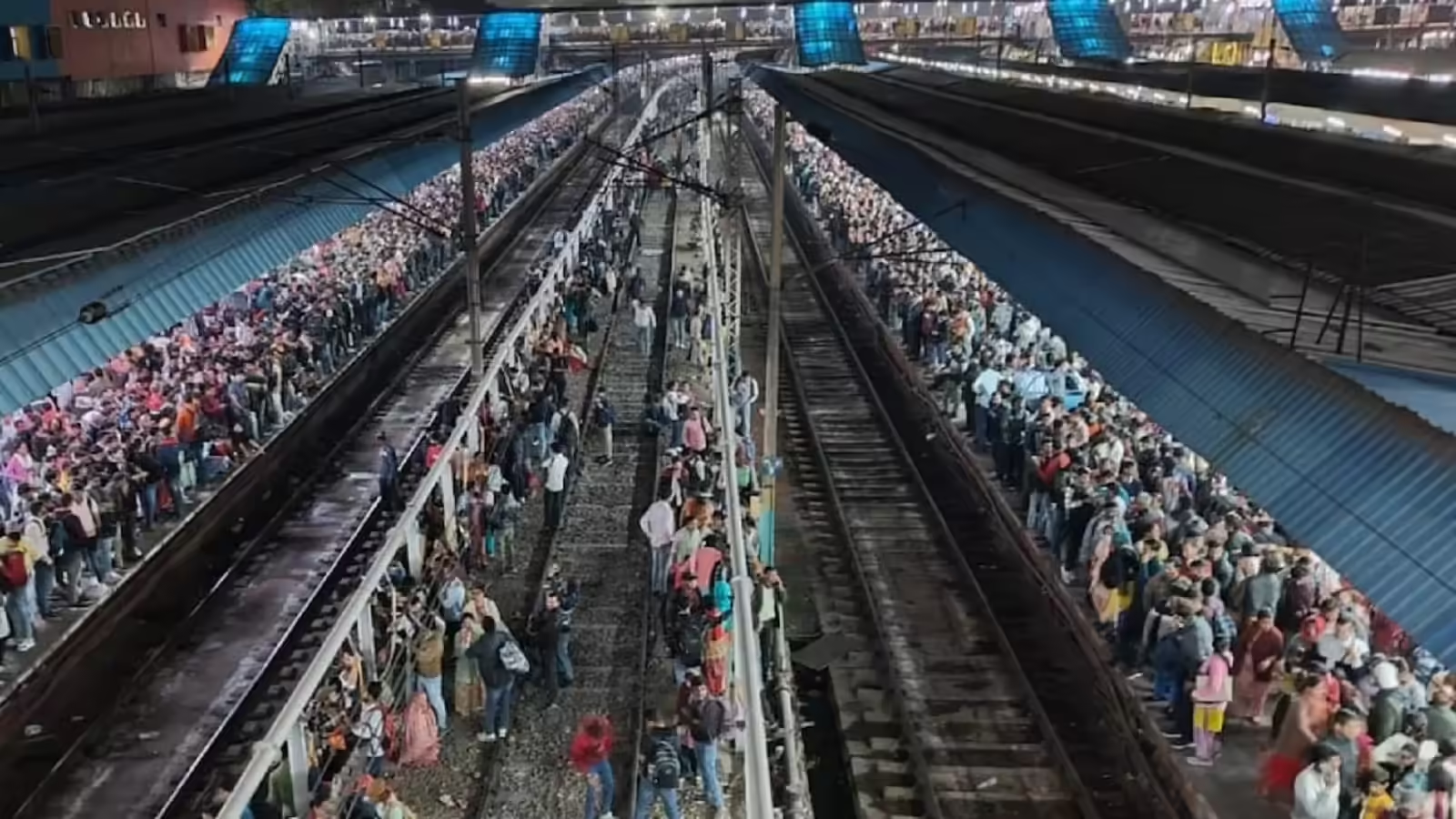
Traffic circulation around New Delhi Railway Station is set to remain constrained for the next two weeks as civic and redevelopment works narrow key carriageways on the Paharganj and Ajmeri Gate sides. The Delhi Traffic Police have issued diversion advisories, warning that road access to one of India’s busiest rail hubs will be partially restricted through early March. On the Paharganj side, excavation along Chelmsford Road has begun to restore a settled sewer line, following approvals secured by the Delhi Jal Board. Officials indicated that digging operations are expected to continue until March 5, with traffic
Traffic movement likely to be partially restricted on connecting stretches including Munjia Chowk. Simultaneously, a separate closure affects the carriageway of Asaf Ali Road towards Ajmeri Gate, as construction linked to the railway station redevelopment advances near Turkman Gate. The restrictions are expected to remain in place until March 12, narrowing one of the principal east-west connectors in central Delhi. According to the Delhi Traffic Police, commuters heading towards Delhi Gate and adjoining commercial districts are being advised to use alternate corridors such as Minto Road, Deen Dayal Upadhyay Marg and Bahadur Shah Zafar Marg. Traffic volumes are anticipated to increase on parallel routes, including Chaman Lal Marg, during peak hours.
The disruption underscores the logistical challenge of upgrading ageing urban infrastructure within dense, mixed-use neighbourhoods. New Delhi Railway Station handles hundreds of thousands of passengers daily, with surrounding roads serving hotels, wholesale markets and small businesses. Even temporary bottlenecks can ripple into missed train departures, delivery delays and extended travel times for workers. Urban planners note that sewer rehabilitation and station-area redevelopment are essential components of climate-resilient city building. Ageing underground utilities, if left unattended, pose risks of flooding, road subsidence and public health hazards during the monsoon. Integrating utility repairs with transport upgrades can reduce long-term maintenance cycles, though it demands careful traffic management.
The ongoing station redevelopment aims to modernise passenger facilities, improve multimodal integration and enhance safety standards. However, infrastructure specialists argue that communication and phased execution are critical to limit economic disruption in heritage precincts and high-footfall transit zones. From a real estate perspective, improved station infrastructure can lift property values and commercial viability in adjacent neighbourhoods over time.
Yet, in the short term, traders and hospitality operators often bear the brunt of reduced accessibility. Authorities are expected to review traffic flow patterns daily and adjust diversions if congestion intensifies. As central Delhi undergoes incremental renewal, the episode highlights a broader urban tension: balancing essential infrastructure repair with uninterrupted mobility in one of the world’s most densely used city centres.
Delhi New Railway Station Roads Disrupted