


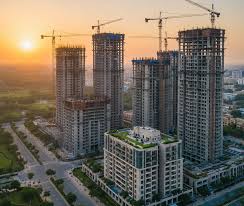
A new institutional funding platform aimed at unlocking near-completion real estate projects is taking shape in the Delhi–NCR region, signalling a growing shift in how stalled housing and mixed-use developments are being revived. The initiative brings together a local developer with on-ground execution capabilities and a private capital manager focused on structured last-mile financing.
The platform targets residential and mixed-use projects that are largely constructed but have remained delayed due to liquidity constraints, weak execution frameworks, or governance gaps. Such developments represent a significant portion of NCR’s stalled housing inventory projects where most regulatory approvals are in place, but final capital and coordination have been missing. Under the arrangement, execution responsibility will remain with the regional developer, covering construction management, compliance oversight, and delivery scheduling. Institutional capital will be deployed selectively to fund finishing works, services integration, and completion-linked milestones rather than land acquisition or speculative expansion. Urban development analysts note that this distinction is critical, as last-mile funding is increasingly viewed as a delivery tool rather than a growth lever. The initial capital commitment is expected to be deployed in phases, beginning with a smaller tranche that will be scaled up as projects reach predefined execution benchmarks. Over time, the platform is designed to mobilise up to ₹500 crore across multiple sites in the NCR, depending on project readiness and absorption visibility.
Delhi–NCR has been one of India’s most affected regions when it comes to delayed housing delivery, with prolonged construction cycles driven by developer over-leverage, tightening credit conditions, and fragmented project management. These delays have had broader urban consequences partially occupied neighbourhoods, underutilised infrastructure, and prolonged financial stress for households servicing both rent and home loans. In recent years, regulators and courts have increasingly emphasised project completion over liquidation. Within this context, last-mile capital platforms are emerging as a pragmatic market response, offering a bridge between stranded assets and liveable homes. By combining capital with execution control, such structures aim to reduce the risk of further slippage that has historically plagued revival attempts. From an urban planning perspective, completing existing housing stock is also seen as more sustainable than continuous outward expansion. Bringing near-finished projects to occupation improves land-use efficiency, strengthens local service ecosystems, and limits additional carbon and material costs associated with new construction elsewhere. Market observers suggest that if executed with transparency and discipline, such platforms could become a replicable model for other stressed urban markets. However, success will depend on strict governance, realistic timelines, and coordination with local authorities to ensure compliance and timely handovers.
As NCR’s housing market moves into a more calibrated growth phase, the emphasis is clearly shifting from launching new projects to restoring confidence through delivery. For thousands of homebuyers waiting on near-complete developments, that shift could determine whether stalled concrete structures finally turn into functioning urban homes.
Also Read: Delhi NCR Housing Projects Move Toward Completion
Delhi NCR TREVOC Canonicus Back Project Completions
