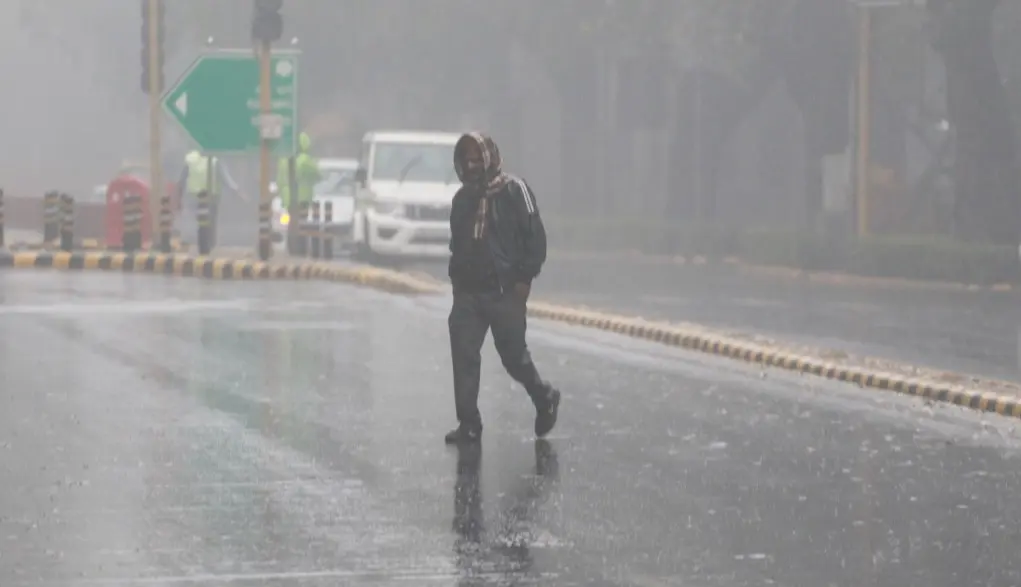
Delhi-NCR witnessed a modest improvement in air quality on Thursday morning, offering temporary relief to residents after several days of elevated pollution levels. Despite the marginal dip, air quality across much of the region continued to remain in the ‘poor’ category, underlining the fragile nature of winter pollution control in India’s largest urban agglomeration and its implications for public health, mobility, and urban productivity.
Early morning data from national air quality monitoring networks showed the regional Air Quality Index (AQI) easing from very poor levels recorded earlier in the week. The improvement coincided with shifting weather patterns, including increased wind activity and light rainfall in parts of the capital and surrounding districts. Urban climate experts note that such meteorological changes often provide short-term dispersion of pollutants but rarely lead to sustained improvements without structural emission reductions.
Several pollution hotspots across Delhi continued to report unhealthy air. Industrial and high-traffic zones in east, west, and north Delhi recorded AQI readings edging into the ‘very poor’ range, reflecting the cumulative impact of vehicular emissions, industrial activity, and resuspended road dust. In contrast, a handful of southern and peripheral areas showed comparatively lower pollution levels, with one northern zone briefly touching the ‘moderate’ category an exception rather than the norm for this time of year.
Meteorological officials have forecast intermittent rainfall and gusty winds over Delhi-NCR in the coming days, conditions that could help dilute surface-level pollutants. However, environmental planners caution that weather-driven relief should not be mistaken for systemic progress. Seasonal pollution episodes continue to disrupt daily life, affecting outdoor labour, school attendance, construction timelines, and healthcare demand particularly among vulnerable groups such as children, the elderly, and informal workers.
From an urban economics perspective, persistent poor air quality carries tangible costs. Reduced workforce efficiency, higher healthcare spending, and project delays in real estate and infrastructure sectors collectively strain the region’s growth potential. Industry observers point out that recurring pollution alerts also undermine investor confidence in long-term urban liveability, a key factor for global firms evaluating NCR as a business destination. Policy analysts argue that while emergency responses and short-term mitigation measures remain necessary, long-term air quality management must be embedded within urban planning and transport policy. Expanding clean public transport, accelerating electrification of vehicle fleets, controlling construction dust, and strengthening regional coordination across state boundaries are seen as critical levers for durable improvement.
As Delhi-NCR moves toward the seasonal transition from winter to early spring, the immediate outlook hinges on weather variability. Yet the broader challenge remains unchanged: translating episodic relief into lasting air quality gains. For residents and city managers alike, the coming weeks will test whether incremental improvements can be consolidated or whether the cycle of temporary respite and renewed deterioration continues to define the region’s air.
Delhi NCR Smog Lingers Despite Rain