


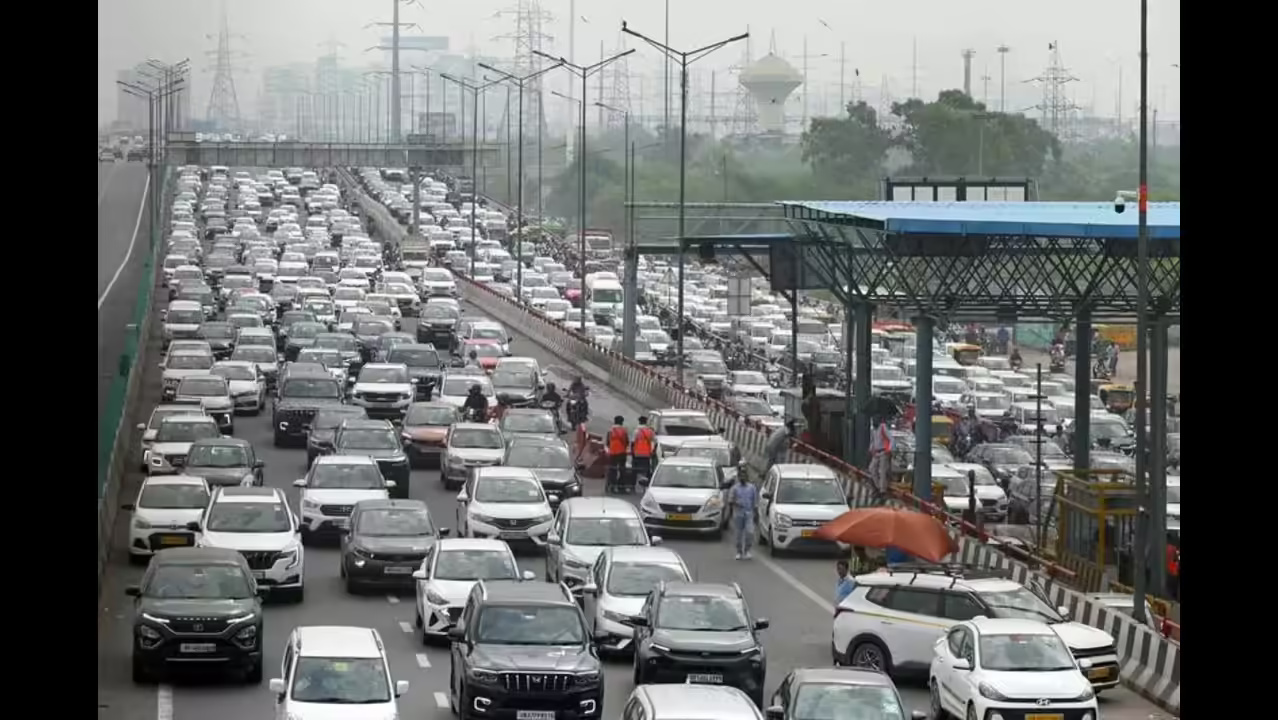
Widespread traffic snarls across Delhi NCR have left commuters stranded for hours on major central and south city routes as complex traffic control measures and event-linked restrictions converge.
Long queues of vehicles, crawling speeds and extended delays were reported across arterial stretches on Wednesday evening, creating frustration among daily travellers and logistics operators alike. Vehicles near prominent landmarks such as India Gate and the Bharat Mandapam exhibition zone experienced near-standstill conditions, with some commuters describing scenarios where traffic “choked” roads and movement became exceptionally slow. Officials attributed the gridlock to a combination of planned route diversions, lane closures and heightened security protocols over a high-profile summit underway in the capital, which has necessitated additional traffic management arrangements.
The Delhi Traffic Police issued detailed advisories ahead of peak hours, urging motorists to avoid specified stretches and plan journeys in advance amid evolving traffic patterns caused by security measures and VIP movement linked to the summit. While authorities have mobilised additional personnel to manage flow and implement alternate routes, the scale of the event has prompted partial restrictions and temporary diversions that contributed to congestion on principal roads. The snarls underscore persistent mobility challenges facing India’s most populous urban region, where rapid vehicle growth, mixed traffic flows and episodic event-related disruptions frequently collide. Commuters navigating central corridors reported lengthy delays, with many forced to adopt secondary routes or wait in slow-moving queues. Public transport options such as metro services were recommended by traffic officials to alleviate pressure on road surfaces, particularly during peak evening travel.
This episode follows a familiar pattern in Delhi’s evolving urban fabric, where major events — whether international summits, large cultural gatherings or official visits — regularly necessitate extraordinary traffic protocols. The confluence of such planning with everyday transportation demand highlights systemic stress points in the region’s road network. For freight carriers and inter-city travellers entering or exiting the capital from adjoining satellite cities, similar bottlenecks on key entry points have compounded travel uncertainty. Urban transport analysts contend that ad-hoc diversions and temporary enforcement measures, even when necessary for security and public safety, can inadvertently shift congestion into peripheral corridors and feeder roads, diluting mobility efficiency. They point to the need for dynamic traffic management systems that better integrate predictive modelling, real-time monitoring and responsive signal control — especially in metropolitan areas that regularly host large-scale events.
For daily commuters and commercial operators alike, the current gridlock not only extends travel times but also carries economic costs in terms of fuel consumption, productivity loss and wear on vehicle fleets. As authorities continue to monitor conditions, Delhi NCR’s traffic control strategy for the summit period will remain under scrutiny, particularly in balancing mobility, security and urban resilience.
Also Read: Air Quality Improvement Leads To GRAP Stage II Rollback
Delhi NCR Roads Choked As Long Queues Disrupt Peak-Hour Travel
