


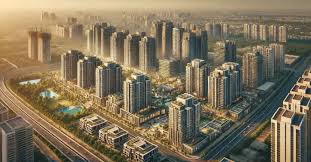
Delhi-NCR’s residential property market closed 2025 with a sharp surge in new housing supply, underscoring the growing influence of infrastructure-led development on urban expansion. A strong quarter-on-quarter rise in housing launches during the final quarter of the year reflected renewed developer confidence and sustained end-user demand, particularly across emerging peripheral corridors that are reshaping how the region grows.
Over the full year, residential additions in the region crossed 41,000 units, marking a solid annual increase and highlighting a decisive shift away from saturated city cores. New supply was largely concentrated along transport-led growth zones such as the Dwarka Expressway, New Gurgaon and the Yamuna Expressway belt. Urban planners note that these locations are benefiting from a combination of improved road capacity, expanding metro networks and proximity to major employment nodes, allowing housing to follow infrastructure rather than precede it. The composition of new supply also reveals a notable recalibration of developer strategy. Mid-income housing accounted for more than half of all new launches during the year, emerging as the dominant segment across NCR. Industry experts attribute this to a gradual stabilisation in borrowing costs and a widening pool of salaried buyers seeking well-connected but relatively affordable homes. For cities grappling with housing accessibility, this tilt towards the mid-segment carries broader implications for inclusive urban growth and workforce housing availability. Higher-priced segments, including premium and luxury homes, continued to play a meaningful but more selective role. While absolute volumes in these categories remained significant, their share of total supply was lower compared to previous cycles. Analysts suggest this reflects a more mature market where demand for high-end housing is increasingly concentrated in specific micro-markets with strong social infrastructure, rental demand and long-term capital appreciation potential.
Price trends during the year remained measured. Average launch prices moderated on an annual basis, largely due to the increased share of mid-segment projects entering the market. However, select sub-markets in Gurugram and Noida recorded stronger capital appreciation, supported by sustained end-user demand and infrastructure upgrades. Rental values across NCR also edged upward, particularly in established employment hubs, signalling steady absorption and limited stress in the leasing market. From a sustainability perspective, the shift towards peripheral corridors presents both opportunity and risk. Well-planned growth along expressways and transit corridors can reduce congestion in older urban areas and enable more energy-efficient housing formats. At the same time, urban experts caution that without coordinated land-use planning, rapid expansion could strain water resources and public services. Integrating mass transit, mixed-use zoning and climate-responsive design will be essential to ensure long-term resilience.
Looking ahead, Delhi-NCR’s housing cycle appears increasingly driven by infrastructure readiness, micro-market selection and affordability alignment rather than speculative momentum. As the region continues to expand outward, the quality of planning and execution will determine whether this phase delivers balanced urban growth or reinforces existing spatial inequalities.
Also Read: Patiala Infrastructure Push Reshapes Housing And Land Demand
Delhi NCR Residential Launches Accelerate In Growth Corridors
