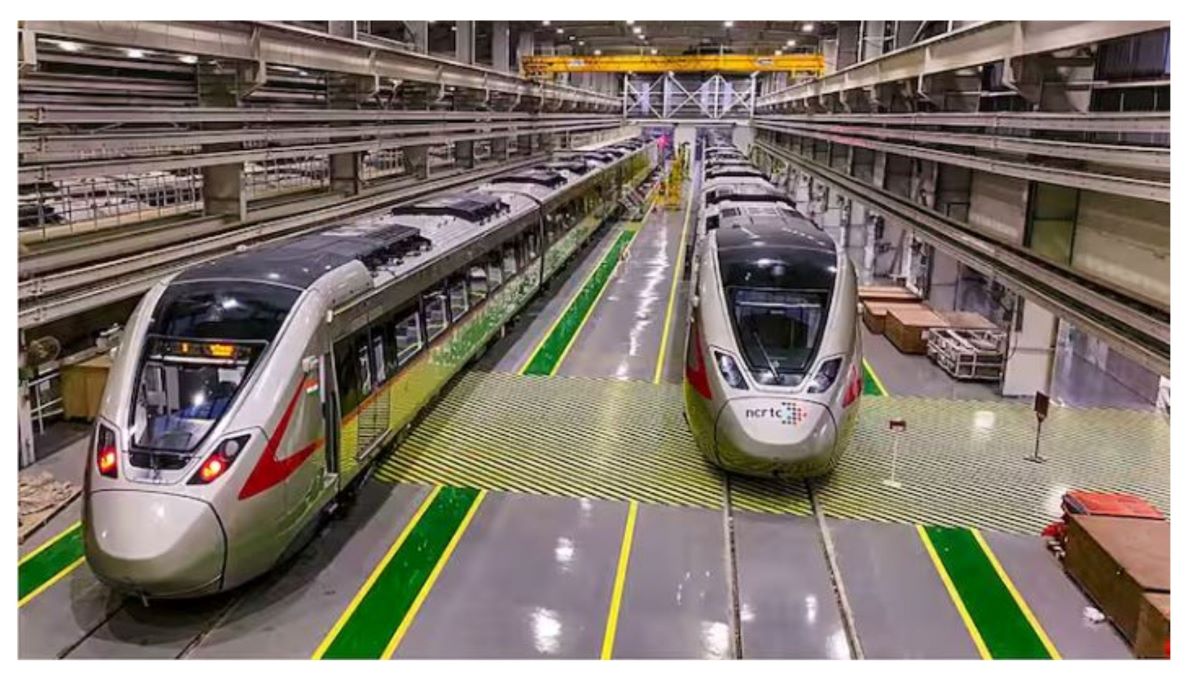
The Delhi–Meerut Regional Rapid Transit System (RRTS) has entered a new planning phase with the initiation of design work for a major stabling and operations facility in South Delhi, signalling steady progress in NCR’s largest intercity rail project. The National Capital Region Transport Corporation has invited bids to appoint a detailed design consultant for the Jangpura stabling yard and associated station infrastructure, a critical element for scaling high-frequency regional services.
Located within Delhi’s urban limits, the proposed Jangpura facility is expected to support the operational backbone of the Delhi–Meerut RRTS corridor. Transport planners note that stabling yards play a decisive role in ensuring punctuality, maintenance efficiency and service expansion, particularly for high-speed regional systems that operate at short intervals. The move reflects a shift from corridor construction to long-term operations planning within NCR’s emerging regional rail network. The Delhi–Meerut RRTS corridor spans over 80 kilometres across Delhi, Ghaziabad and Meerut, forming the first operational link in a wider NCR rapid rail framework. More than half of the corridor is already functional, connecting East Delhi with Meerut’s southern edge and sharply reducing travel time for daily commuters. Officials involved in regional transport planning say the next phase of work focuses on strengthening depots, yards and system resilience to support rising ridership.
Urban mobility experts view the Jangpura stabling yard as strategically significant for South and Central Delhi, areas that have historically relied heavily on road-based intercity travel. By anchoring operations closer to the city core, the RRTS network can reduce dead-heading distances for trains, improve service reliability and lower energy consumption all essential for a climate-conscious transit system. The tendered design assignment includes planning of the yard layout, station structures and supporting facilities in the first phase. Industry analysts point out that such design contracts often shape long-term land use outcomes, as rail yards influence surrounding development patterns, logistics access and last-mile connectivity. If integrated carefully, these assets can catalyse transit-oriented development while minimising disruption to existing neighbourhoods.
From a regional perspective, the project underlines NCR’s gradual transition towards rail-led growth. With Delhi’s road network under severe strain and air quality remaining a persistent concern, high-capacity electric rail systems are increasingly viewed as economic infrastructure rather than mobility add-ons. Faster intercity links are also reshaping labour markets by expanding feasible commuting distances without proportionate environmental costs. As NCRTC moves ahead with design appointments and execution timelines, the focus will remain on timely delivery, coordination with city agencies and alignment with broader urban plans. The success of the Delhi–Meerut RRTS and facilities such as Jangpura will ultimately be measured not just by speed, but by how effectively they support a more balanced, accessible and low-carbon National Capital Region.
Delhi NCR Regional Rail Builds New Operations Hub