


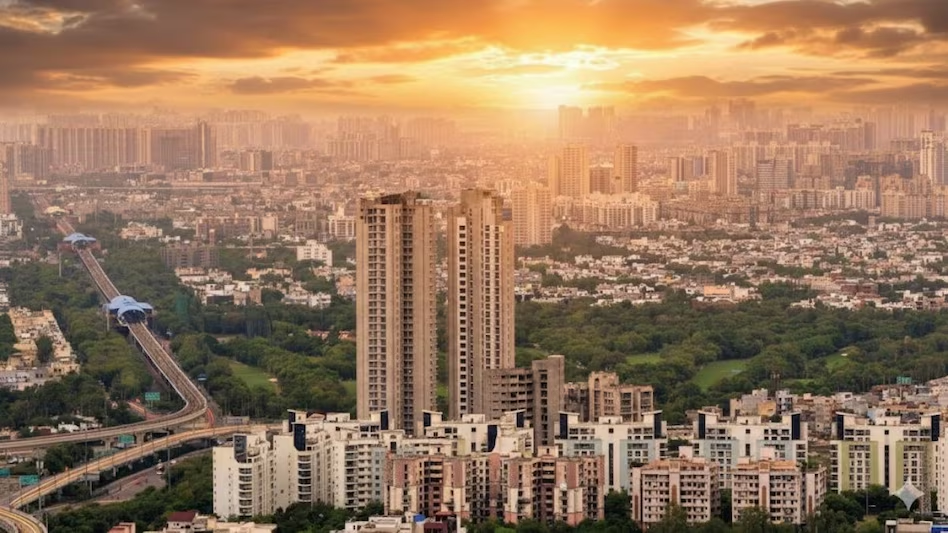
Delhi-NCR’s premium housing market is entering a new phase as a leading domestic developer partners with an international luxury design house to launch large-format residential projects across Gurugram and Noida. The combined investment, estimated at Rs 3,500 crore, reflects rising confidence in the region’s demand for branded, high-value homes and signals how global collaborations are reshaping India’s top urban real estate markets.
The development plan spans two key growth corridors. In Gurugram, a high-density luxury residential project is planned along the Dwarka Expressway, an infrastructure-led zone that has emerged as one of NCR’s fastest-transforming urban stretches. In Noida, a second project is being advanced through an associated development platform, targeting a market that has seen sustained interest from senior professionals and global investors drawn by improving connectivity and planned infrastructure. Together, the two projects will add nearly 1,000 premium homes to the NCR market, spread across more than 2.5 million square feet of built-up area. Pricing levels place these developments firmly in the ultra-luxury segment, underlining a growing appetite for large residences that combine design-led interiors with curated amenities and controlled-density planning. Urban development experts note that such branded housing projects represent more than an aspirational lifestyle offering. They reflect a broader shift in how developers position residential assets in competitive metropolitan regions. By aligning with global design and lifestyle brands, developers aim to differentiate projects in a crowded market while attracting buyers seeking long-term value rather than speculative returns.
The locations themselves are central to this strategy. The Dwarka Expressway has benefited from sustained public investment in roads, utilities and transit integration, supporting higher-density development while easing pressure on older parts of Gurugram. Noida, meanwhile, has seen steady growth driven by its planned sector layout, expanding metro network and proximity to employment hubs across the wider NCR. However, planners caution that the expansion of ultra-luxury housing must be balanced with inclusive urban growth. High-value residential projects bring capital inflows and job creation, but they also increase demands on water, energy and transport systems. Ensuring that new developments adopt efficient building design, resource management and climate-responsive planning will be critical as NCR continues to densify. Market analysts add that branded luxury homes often set new benchmarks for construction quality and sustainability standards, which can influence wider market practices over time. Features such as energy-efficient façades, water recycling systems and improved open-space planning are increasingly expected by buyers at the top end of the market.
As Delhi-NCR evolves into a more complex, multi-nodal urban region, projects of this scale highlight the changing nature of housing demand. The next phase of growth will depend not just on luxury positioning, but on how well such developments integrate with surrounding communities, infrastructure networks and long-term urban resilience goals.
Also Read: Mumbai Powai Sees Landmark Global Bank Office Lease
Delhi NCR Real Estate Draws Global Design Partnerships
