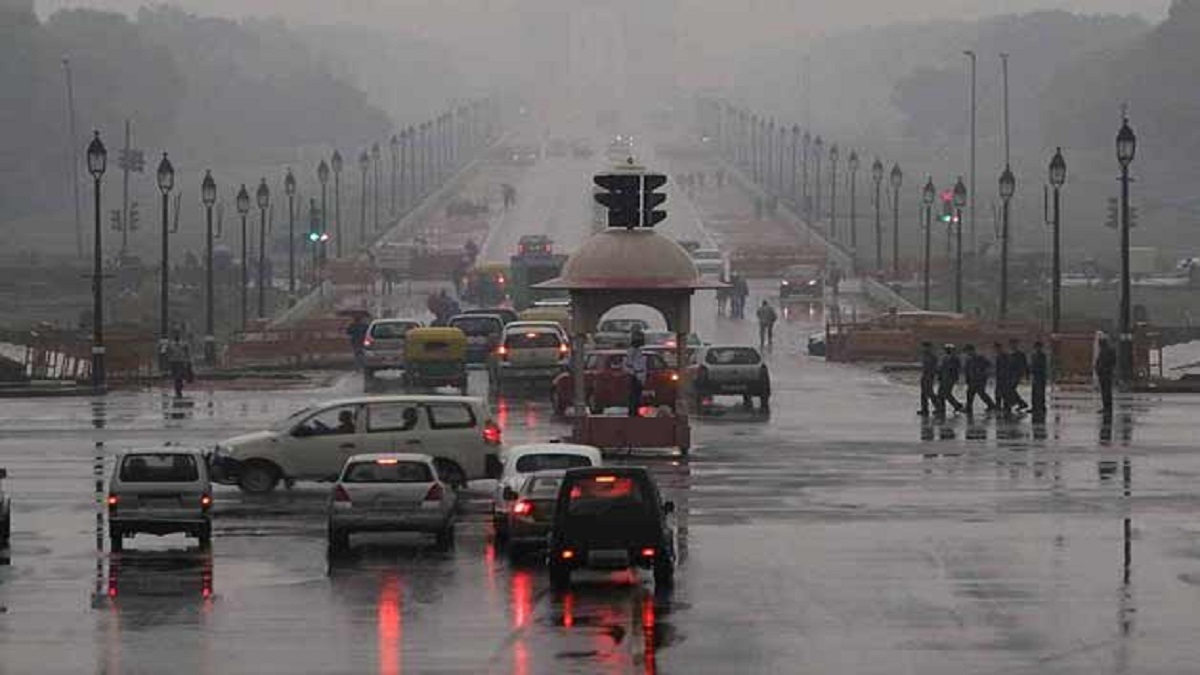
Delhi-NCR once again came to a standstill on Friday as light to moderate rainfall led to widespread waterlogging and traffic chaos, underscoring the capital region’s fragile urban infrastructure. While the downpour was not unprecedented, its impact revealed how even moderate monsoon spells can trigger significant civic disruption in one of India’s most economically vital zones.
Commuters navigating through Gurugram’s arterial routes, particularly the Narsinghpur stretch along National Highway 48, faced hours of gridlock as vehicles moved at a crawl through inundated stretches. Residents and office-goers across Delhi and neighbouring cities reported long delays and increasing frustration as poorly drained roadways turned into temporary water channels.Meteorological officials attributed the rainfall to the presence of convective cloud systems stretching across North India, including parts of Uttarakhand, Haryana, Uttar Pradesh, and Rajasthan. Experts note that while such cloud activity is common in late August, the recurring urban paralysis caused by it is avoidable if drainage networks, green buffers, and sustainable water management systems are prioritised.Urban planners argue that Delhi-NCR’s recurring waterlogging problem is less about extreme rainfall and more about systemic neglect in infrastructure planning.
With most of the city’s stormwater drains either silted, encroached, or unable to handle even moderate precipitation, rainfall often translates into flooding within minutes. The economic cost is mounting lost productivity, stalled logistics on critical freight corridors, and strain on emergency services.In the larger sustainability discourse, experts see this as a pressing reminder for cities like Delhi to adopt climate-resilient infrastructure. Urban hydrologists emphasise that solutions such as permeable pavements, rainwater harvesting, and eco-friendly drainage systems can drastically reduce flooding. Cities worldwide are investing in nature-based solutions restoring wetlands, expanding green cover, and designing equitable drainage systems that not only mitigate waterlogging but also combat heatwaves and pollution.
From a governance standpoint, officials maintain that contingency teams were deployed quickly, but residents argue the city’s responses remain reactive rather than preventive. The pattern of annual disruption raises questions on whether urban policies are keeping pace with the realities of climate change and rapid urbanisation.For millions in Delhi-NCR, Friday’s downpour was more than an inconvenience; it was a reminder of how vulnerable the national capital remains to basic climate events. Unless urban renewal strategies integrate sustainability and resilience at their core, such episodes will continue to repeat with escalating socio-economic costs.
Delhi NCR rain causes waterlogging, traffic chaos across key areas