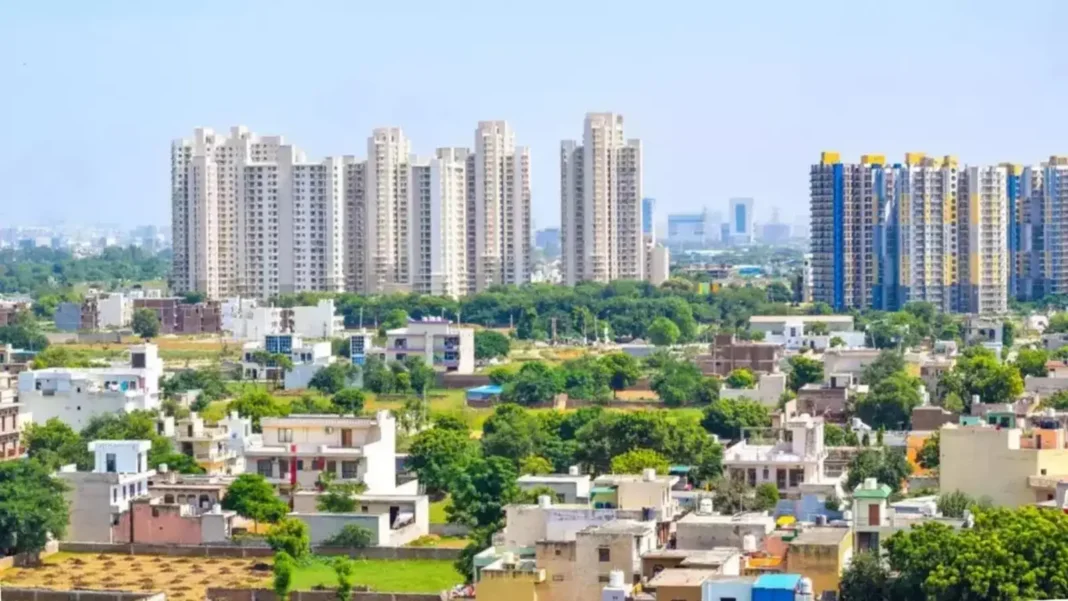
Residential values across the capital region recorded measured growth last year, signalling a shift from the sharp post-pandemic surge to a more calibrated cycle. Latest market data show Delhi NCR housing prices rose by about 6 per cent year-on-year in 2025, a slower pace compared to the steep escalation witnessed during the 2022–2024 period. The moderation reflects demand fatigue after rapid appreciation and a more disciplined supply environment.
The average residential rate in Delhi-NCR moved to approximately ₹8,570 per sq ft, up from ₹8,105 per sq ft a year earlier. While prices continue to edge upward, transaction volumes have softened, suggesting buyers are reassessing affordability amid elevated capital values and borrowing costs. Industry analysts describe the current phase as a consolidation period. Developers, they note, have largely avoided aggressive discounting despite slower bookings. Instead, project launches have been aligned more cautiously with absorption levels. This supply calibration has helped maintain pricing stability, preventing abrupt corrections that could disrupt balance sheets or buyer sentiment.
The deceleration in Delhi NCR housing prices comes after cumulative double-digit gains during the preceding growth cycle, when infrastructure expansion, improved connectivity and post-pandemic lifestyle shifts drove strong end-user demand. Metro extensions, expressway upgrades and the emergence of new business districts widened the residential catchment of the capital. However, sustained price escalation has begun to test affordability thresholds, particularly for first-time buyers. Across the top eight metropolitan markets nationally, average annual appreciation slowed to mid-single digits. In comparison, Bengaluru recorded the strongest gains at 13 per cent, while Chennai remained largely flat. Mumbai Metropolitan Region and Pune posted modest increases. Market observers say Delhi-NCR’s performance sits within this broader pattern of stabilisation.
For urban planners, the transition to steadier price growth may be constructive. Rapid spikes in land and housing values can widen inequality and push lower-income households to peripheral locations with weaker infrastructure. A moderate growth trajectory allows policymakers to align affordable housing supply, transit-oriented development and climate-resilient urban expansion more effectively.
The capital region continues to attract both end-users and investors due to its diversified employment base spanning government, services, manufacturing and emerging technology sectors.
Yet experts caution that long-term sustainability will depend on improving liveability indicators including air quality, green spaces and reliable public transport rather than relying solely on price momentum. As 2026 approaches, the outlook for Delhi NCR housing prices hinges on interest rate movements, infrastructure delivery timelines and household income growth. A stable pricing environment, coupled with responsible project execution, could support healthier market conditions balancing developer viability with broader access to home ownership in one of India’s most complex urban regions.
Delhi NCR Property Market Steadies