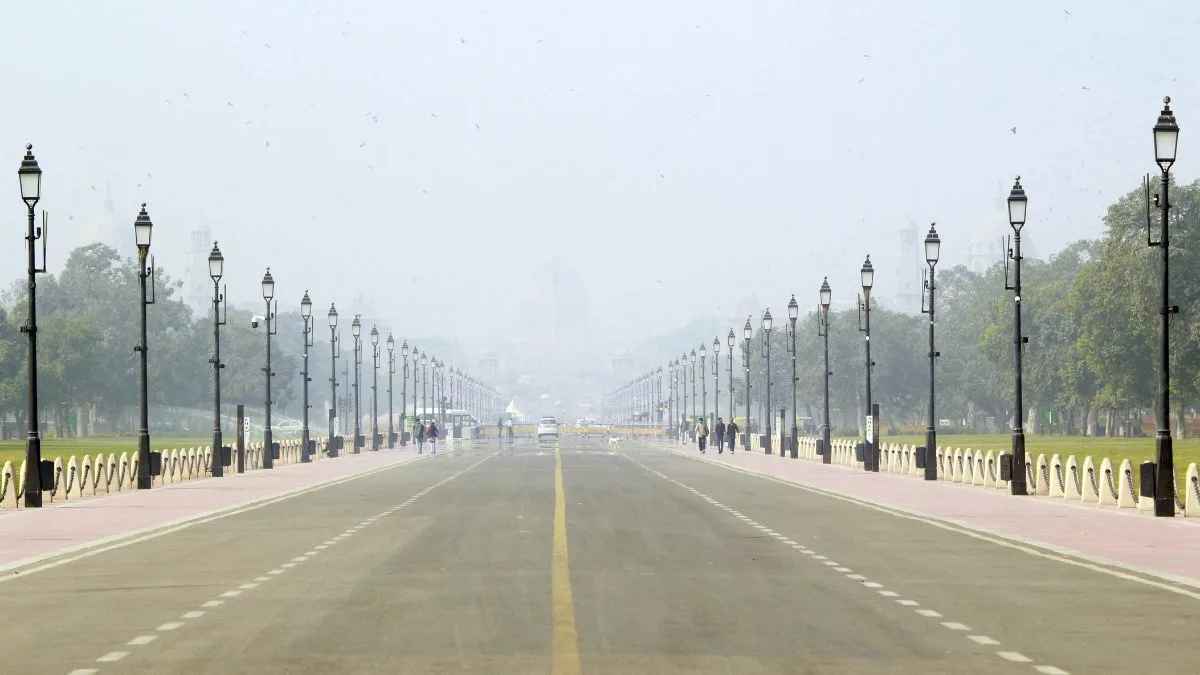
Delhi and its surrounding urban region entered the new year with a temporary easing of pollution controls after a sharp improvement in air quality allowed authorities to scale back emergency measures. Regulators withdrew the most restrictive stage of the Graded Response Action Plan (GRAP) across the National Capital Region (NCR), signalling short-term relief for construction, transport, and industry, while keeping foundational safeguards in place to prevent a rebound in pollution levels.
Air quality readings across the region showed a decisive shift over a 24-hour period, moving from severe conditions to a level categorised as ‘poor’. Officials tracking atmospheric conditions attributed the improvement to stronger surface winds and improved dispersion, which helped clear accumulated pollutants after weeks of stagnant winter air. For residents and businesses, the change translated into clearer skies and a modest reduction in health risks associated with prolonged exposure to extreme smog. The decision to lift Stage III restrictions carries immediate economic implications. Construction activity, logistics operations, and certain industrial processes that were halted during the severe pollution phase can now resume, restoring employment for daily wage workers and reducing delays in housing and infrastructure projects. Real estate developers say repeated winter shutdowns have increasingly affected project timelines and costs, particularly in high-density growth corridors across the NCR.
However, regulators have opted for a cautious approach. Preventive measures under the first two stages of GRAP remain active, including controls on dust, fuel quality enforcement, and restrictions on highly polluting vehicles. Urban policy experts note that this calibrated response reflects an evolving governance strategyone that balances public health priorities with the need to sustain economic activity in a region that contributes significantly to national output.The NCR’s recent pollution spike was driven by a familiar mix of factors: calm winds, low temperatures, and high emissions from transport, construction, and industrial clusters. While emergency curbs are designed to blunt the worst impacts, planners emphasise that weather-led improvements are inherently fragile. Without structural changes in mobility, energy use, and construction practices, air quality gains are unlikely to last through the peak winter season.
From an urban development perspective, the episode underscores the importance of cleaner building technologies, better waste management, and regionally coordinated transport planning. Cities that rely heavily on reactive controls face recurring disruptions, while those investing in low-emission infrastructure and climate-resilient design are better positioned to protect both livelihoods and public health. Forecasts suggest that air quality may continue to fluctuate in the coming days, depending on wind patterns and temperature trends. Authorities have indicated they will closely monitor conditions and reinstate stricter measures if pollution levels rise again. For Delhi NCR, the easing of curbs offers breathing space—but also a reminder that lasting improvements in Delhi air quality will depend on sustained, long-term reforms rather than temporary meteorological relief.
Delhi NCR Lifts Emergency Curbs On Cleaner Air