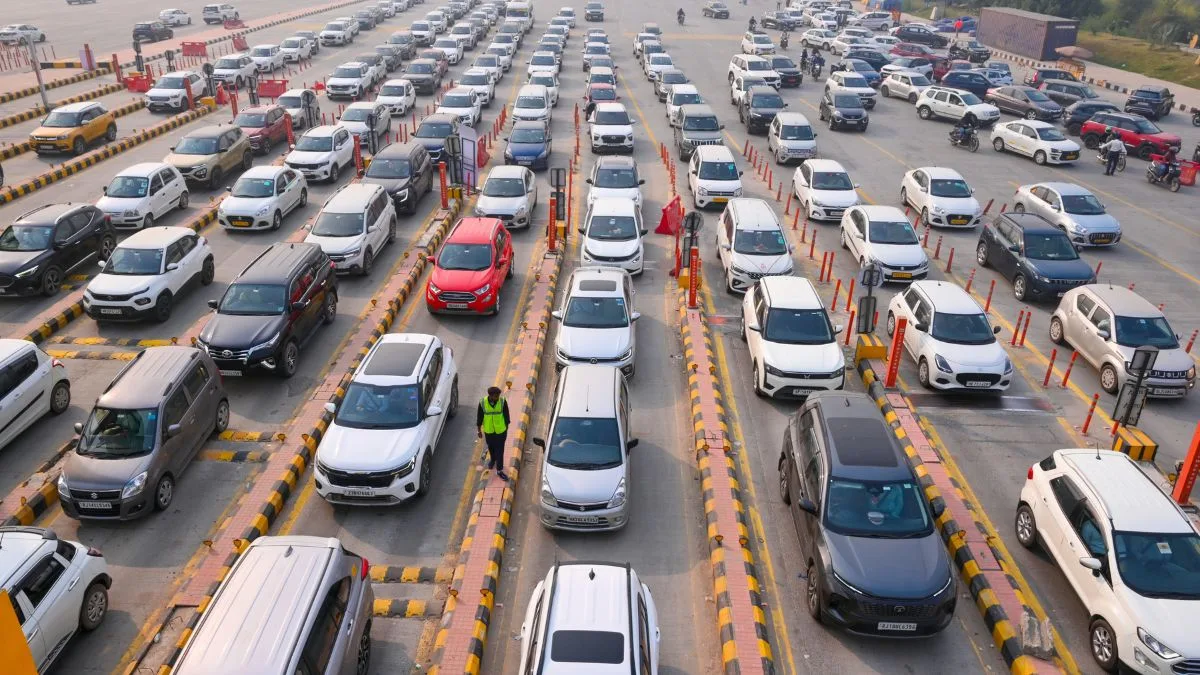
India’s national highway network is witnessing a behavioural shift in how private motorists pay tolls, with the FASTag annual pass gaining rapid traction across major urban and intercity corridors. Recent transport ministry data indicates that the strongest uptake is emerging from the Delhi National Capital Region and southern states, signalling changing commuter preferences and growing reliance on predictable, subscription-based mobility costs.
Usage patterns show that northern urban clusters remain at the forefront. Chandigarh accounts for the highest share of annual pass transactions nationwide, closely followed by Tamil Nadu and Delhi. Within the Delhi NCR, adoption is particularly pronounced at key entry and exit points used by daily and weekly commuters. Several toll plazas along arterial national highways report that more than half of private vehicle crossings are now using the FASTag annual pass, underscoring its appeal among frequent travellers.
The annual pass, introduced last year for non-commercial private vehicles, allows motorists to prepay a fixed amount for either a year-long validity or a capped number of toll crossings. Transport economists note that this model reduces transaction friction and offers cost certainty, especially for residents of satellite towns who depend on national highways for work and business travel. For urban regions with dispersed employment hubs, such predictability is increasingly valued. Since its rollout, the FASTag annual pass has crossed the 50 lakh user mark, recording hundreds of millions of toll transactions in under a year. Officials tracking the programme say that nearly a third of private car movements on national highways are now being processed through the annual pass mechanism, a significant change for a system that was historically dominated by pay-per-trip payments.
The shift also reflects the maturity of India’s electronic toll collection ecosystem. With FASTag penetration now near-universal among private vehicles, policy attention has moved from enforcement to optimisation. Annual passes reduce congestion at toll plazas by limiting recharge-related delays, a factor that has both economic and environmental implications. Smoother vehicle flow translates into lower idling time, reduced fuel consumption, and marginal emissions savings along high-traffic corridors. From an infrastructure financing perspective, the model offers improved revenue visibility for highway operators while lowering administrative overheads. Analysts point out that predictable toll inflows can support better maintenance planning and long-term upgrades across the national highway network, which spans tens of thousands of kilometres.
The strong response from southern states and the NCR also highlights regional mobility patterns. These areas combine high vehicle ownership with frequent intercity movement, driven by industrial clusters, logistics hubs, and expanding residential suburbs. As cities continue to sprawl beyond municipal boundaries, reliance on national highways for daily mobility is expected to rise. Looking ahead, transport planners see scope to integrate the FASTag annual pass with broader smart mobility platforms, including congestion management and data-led traffic planning. While the system is not a substitute for mass transit, its adoption suggests that digital tolling reforms can meaningfully improve travel efficiency as India balances highway expansion with sustainable urban growth.
Delhi NCR leads FASTag Annual Pass Usage