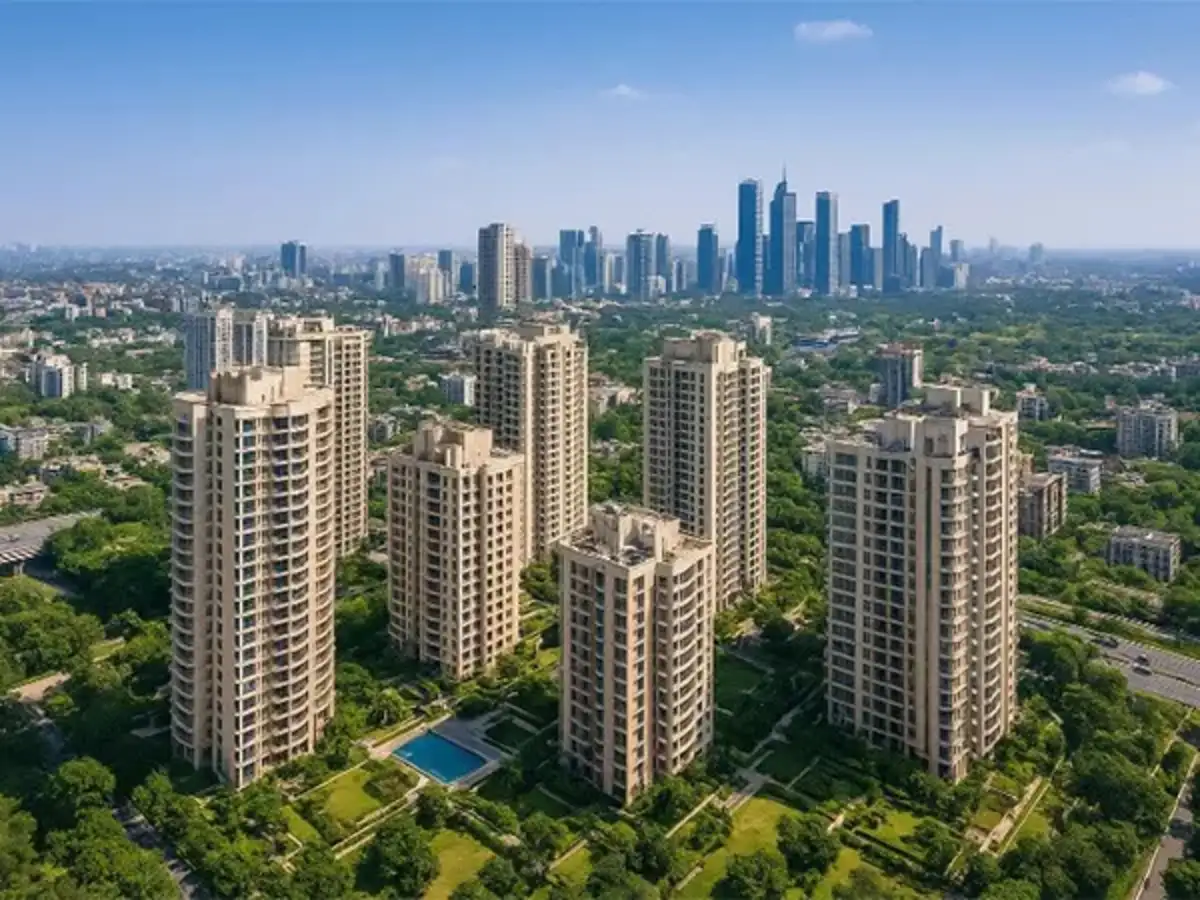
The Delhi NCR housing supply landscape showed relative stability in 2025 despite cautious market sentiment, with developers launching around 42,500 residential units across the region. The marginal annual decline in new launches suggests that builders are adjusting project pipelines in response to slower sales activity while continuing to focus on high-demand urban corridors. Property market data indicates that nearly 12,000 new homes entered the market during the final quarter of the year, contributing to the overall annual supply figure. Although the yearly launch volume recorded a slight dip compared with the previous year, analysts note that the overall development activity reflects a balanced market rather than a sharp contraction.
Urban growth patterns across the National Capital Region continue to be shaped by the expansion of infrastructure networks and the emergence of new residential clusters beyond the core city. Gurgaon and Noida together accounted for a substantial share of the Delhi NCR housing supply, reinforcing their position as key growth engines in the region’s residential property market. Several fast-growing micro-markets are drawing sustained interest from developers and buyers alike. Areas such as Dwarka Expressway, Sohna Road, New Gurgaon, the Yamuna Expressway corridor and parts of Ghaziabad have witnessed significant project activity in recent years. Improved road connectivity, expanding metro networks and proximity to employment centres are among the factors influencing residential development in these corridors. While new supply remained relatively steady, residential sales across the region experienced a notable slowdown during the year. Market observers say that total home purchases fell compared with the previous year, reflecting a moderation in buyer activity after several years of strong post-pandemic demand.
Gurgaon continued to account for the largest share of housing transactions in the region, followed by Noida and Ghaziabad. These submarkets have benefited from a combination of improved infrastructure and ongoing commercial development, which supports residential demand from professionals and new urban households. Despite the moderation in sales, property values in several NCR markets continued to rise over the past year. Analysts attribute the price growth to limited supply in prime locations and the continued preference for larger homes in well-connected suburbs. Some peripheral markets recorded stronger appreciation as infrastructure upgrades improved accessibility and enhanced their attractiveness to homebuyers. However, industry experts expect price momentum to stabilise in the near term as developers respond to softer sales volumes by moderating new launches. Rental growth may also slow as additional housing supply gradually enters the market. Urban planners note that the evolving Delhi NCR housing supply pattern reflects the region’s transition toward polycentric development, where multiple urban hubs support residential growth rather than relying solely on the historic city core. This shift is closely tied to infrastructure expansion, including expressways and transit systems connecting emerging residential zones to employment centres.
Looking ahead, real estate analysts expect new residential supply to remain concentrated in Gurgaon, Noida and parts of Ghaziabad, where land availability and infrastructure investment continue to support long-term urban expansion. The challenge for developers and city planners alike will be ensuring that housing growth is supported by sustainable infrastructure, mobility networks and inclusive urban services.