


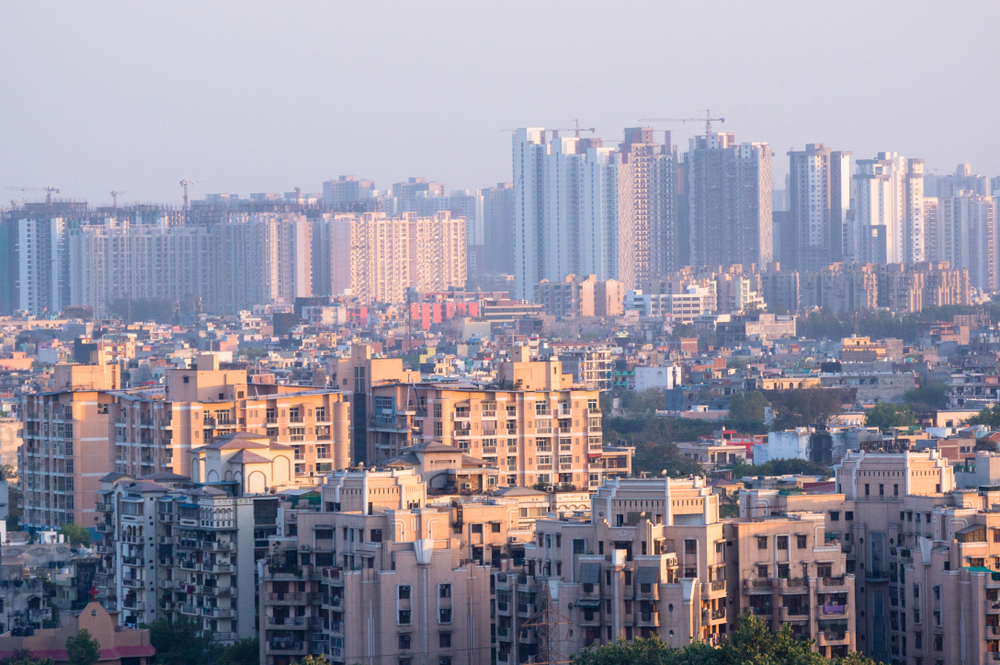
Residential construction activity across the Delhi National Capital Region gathered strong momentum in the final quarter of 2025, with developers significantly scaling up new housing supply in response to infrastructure-led demand. Fresh project launches rose sharply during the quarter, underlining how transport upgrades and peripheral connectivity are reshaping housing markets across North India’s largest urban cluster.
Market data compiled from regulatory filings and industry tracking shows that more than 14,000 new homes were introduced between October and December, pushing annual residential launches in the region past 41,000 units. This marks a notable acceleration compared to previous quarters and reflects growing confidence among developers in sustained end-user demand rather than speculative activity. Gurugram emerged as the largest contributor to new supply, accounting for nearly half of all launches during the quarter. Noida and Ghaziabad followed, with both markets benefiting from expanding road networks and improving access to employment hubs. Urban planners note that much of the new development is concentrated along emerging corridors rather than established city cores, signalling a continued outward shift in residential growth. Key infrastructure projects have played a decisive role in this expansion. The operationalisation of major expressways and arterial roads has reduced travel times between residential districts, commercial centres, and airports. Peripheral belts such as the Dwarka Expressway, New Gurgaon, and stretches along the Yamuna Expressway have become focal points for new housing, supported by comparatively lower land costs and planned urban layouts. The composition of new supply also offers insight into evolving buyer preferences. Mid-income housing dominated launches during the quarter, reflecting demand from salaried households seeking larger homes and improved amenities without premium pricing. Higher-end and luxury projects continued to enter the market but formed a smaller share of overall supply, indicating a cautious approach amid broader economic uncertainties.
Industry experts suggest that the current phase of growth is structurally different from past cycles. Rather than being driven by short-term investor sentiment, demand is increasingly linked to employment stability, improved urban services, and lifestyle shifts following the pandemic. Integrated developments with access to schools, healthcare, and public transport are seeing stronger traction, particularly among first-time buyers and upgrading families. The momentum in residential construction is also intertwined with the region’s commercial real estate outlook. Office leasing activity has remained resilient, supported by corporate expansion and gradual return-to-office trends. This has reinforced housing demand in locations offering proximity to employment clusters, while also encouraging mixed-use planning across newer micro-markets. Urban economists caution, however, that sustaining this growth will require parallel investments in social infrastructure, water management, and public transit. Rapid housing supply without commensurate civic capacity could strain local ecosystems and undermine liveability.
As Delhi NCR continues to expand outward, the latest surge in residential launches highlights how infrastructure investment can unlock housing supply at scale. The next challenge for policymakers and developers alike will be ensuring that growth remains inclusive, well-serviced, and resilient in the face of long-term urban and climate pressures.
Also Read: Mumbai Bandra Society Redevelopment Highlights Urban Transition
Delhi NCR Housing Launches Accelerate On Infrastructure Expansion
