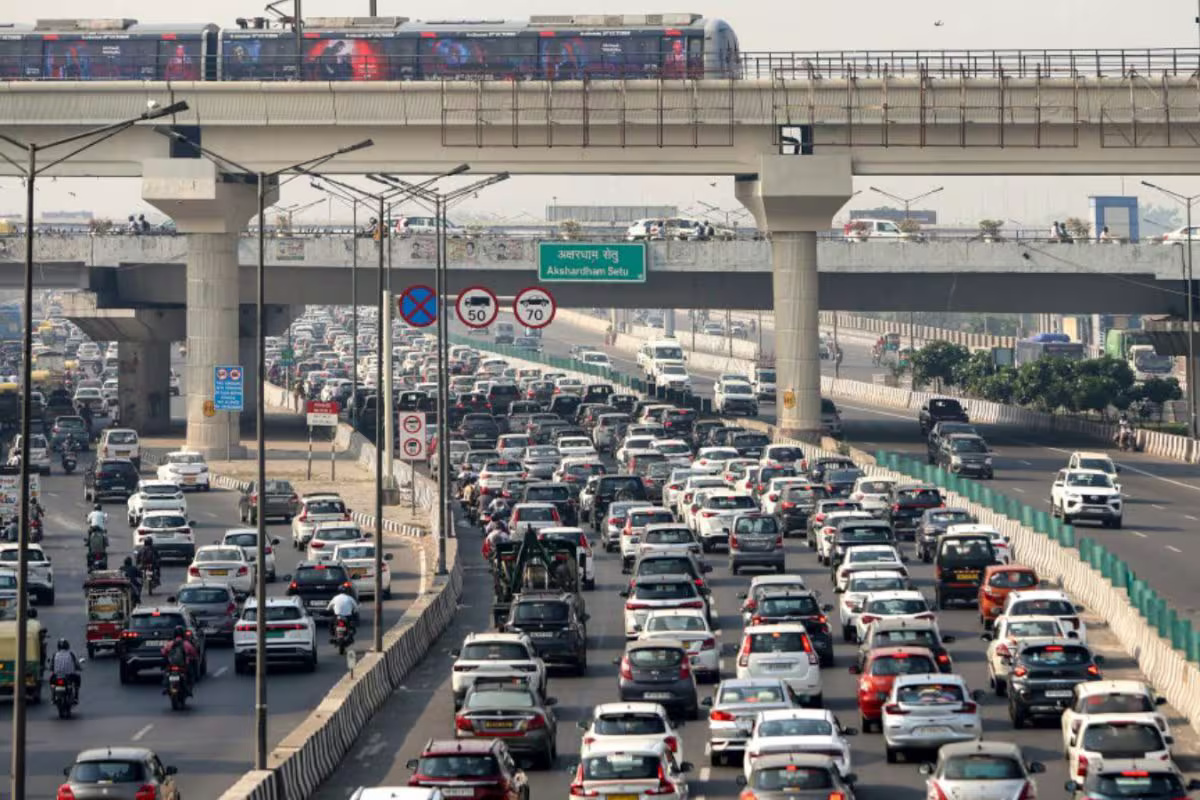
Authorities are advancing plans to transform several heavily used corridors in the National Capital Region into uninterrupted traffic routes, a move expected to significantly reduce congestion and improve travel efficiency between Delhi and neighbouring cities. The proposed Delhi NCR Signal Free Highways initiative focuses on redesigning three major highway stretches that currently experience persistent bottlenecks due to traffic signals and dense urban traffic. Transport planners say the initiative will prioritise the corridors connecting Ashram to Badarpur, Mehrauli to Gurugram, and Punjabi Bagh to the Tikri border. These routes serve thousands of daily commuters travelling between Delhi and surrounding economic centres such as Gurugram and western NCR districts. By redesigning junctions and constructing grade-separated infrastructure such as flyovers and ramps, authorities aim to create continuous traffic movement across these corridors.
Officials involved in the project indicate that detailed project reports are currently being prepared to determine the engineering and traffic management measures required to deliver the Delhi NCR Signal Free Highways plan. The redesign is expected to involve bypass structures at key intersections, allowing vehicles to cross junctions without stopping at traffic lights. Urban mobility specialists say such upgrades could deliver substantial time savings for commuters. The corridor connecting Mehrauli with Gurugram is one of the most congested urban links in the region, often witnessing long queues during peak hours due to heavy commercial traffic and office commutes. Transport analysts estimate that uninterrupted movement on this stretch could dramatically shorten travel times and reduce the unpredictability of daily journeys. Similarly, the Ashram–Badarpur corridor is a critical gateway linking south Delhi with Faridabad and eastern NCR regions. Frequent signalised intersections currently slow down vehicle movement and contribute to traffic build-up. Plans for new flyovers along this corridor are intended to streamline traffic flow while reducing delays caused by signal cycles.
Another key route under consideration is the Punjabi Bagh to Tikri border corridor, which connects Delhi with industrial and residential zones in western NCR and Haryana. The transformation of this route into part of the Delhi NCR Signal Free Highways network is expected to ease congestion on one of the busiest entry points to the capital. Urban planners point out that while signal-free corridors can improve traffic efficiency, their design must also account for pedestrian access, public transport integration and safe crossings. Experts say balancing vehicle mobility with inclusive urban infrastructure is essential to ensure that road upgrades support broader sustainability and accessibility goals. Infrastructure analysts also note that faster intercity road connectivity can influence real estate patterns and regional economic activity. Improved travel times between Delhi and surrounding urban centres could support residential expansion in satellite towns while strengthening logistics and business connectivity across the NCR.
If implemented effectively, the Delhi NCR Signal Free Highways initiative could reshape everyday commuting for thousands of residents while highlighting the growing importance of integrated regional transport planning in India’s rapidly expanding metropolitan regions.