Delhi and the National Capital Region entered a fragile weather transition this week, with marginal relief from the cold wave offset by persistent fog, disrupted rail operations and a sharp deterioration in air quality. As winter temperatures fluctuate and visibility remains low during morning hours, the combined impact on mobility, public health and economic activity is again testing the city’s urban resilience.
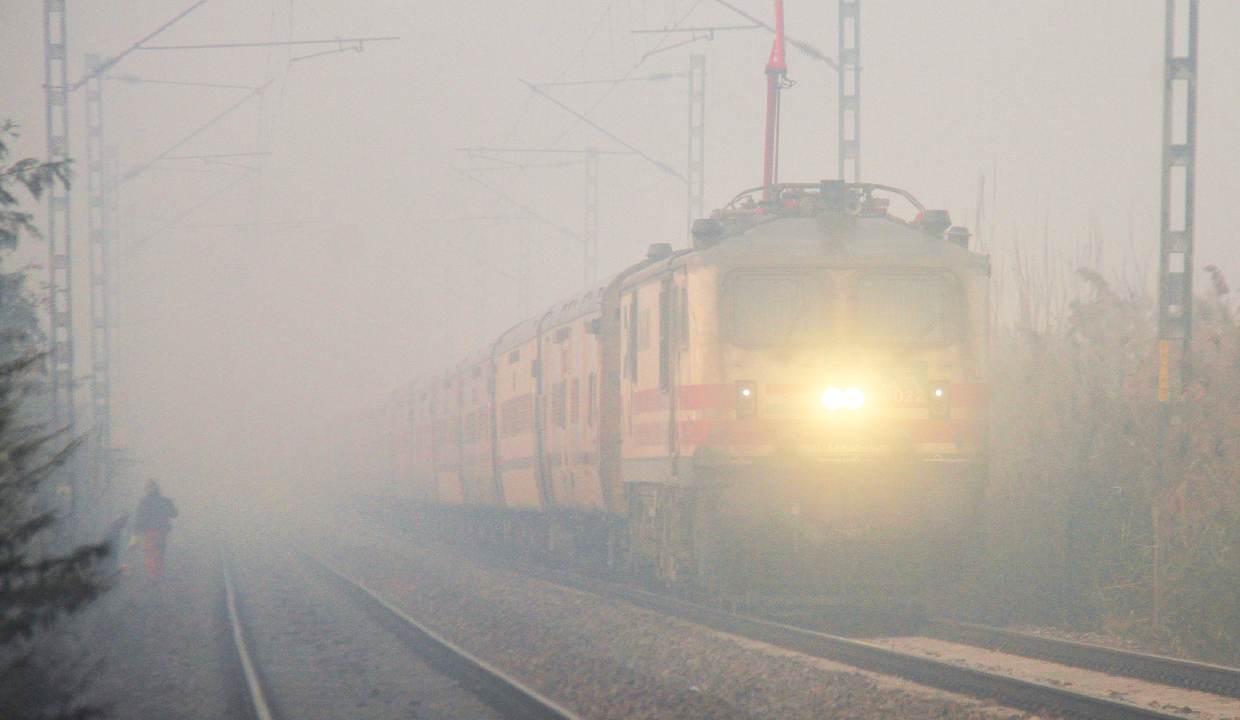
Railway operations across Delhi continued to face delays on Tuesday as dense fog forced trains to operate at reduced speeds for safety. Several long-distance services arrived more than an hour behind schedule at key terminals, including New Delhi, Hazrat Nizamuddin, Anand Vihar and Old Delhi. Officials confirmed that low visibility remains the primary constraint, particularly during early morning arrivals, when fog layers are at their thickest. A senior railway official said the slowdown is a necessary safety measure for loco pilots navigating poor sightlines. While such delays are seasonal, transport planners note that repeated winter disruptions expose structural vulnerabilities in intercity rail scheduling and passenger communication systems. For commuters and long-distance travellers, these delays translate into missed connections, lost work hours and unpredictable travel costs, especially for lower-income passengers who rely on affordable rail mobility.
Weather data shows that while night-time temperatures remain close to seasonal norms, daytime warmth has climbed sharply. The city recorded a maximum temperature well above average, driven by clear afternoon skies. Urban climatologists say such rapid temperature swings, combined with stagnant air, worsen pollution retention near the surface, compounding health risks for vulnerable populations. The more pressing concern, however, remains air quality. Delhi NCR’s Air Quality Index (AQI) stayed in the “Very Poor” category on Wednesday morning, with readings hovering around the mid-300s across much of the region. Several industrial and high-traffic zones recorded AQI levels approaching the “Severe” threshold, including parts of north-west, east and central Delhi.
Environmental experts warn that such pollution levels significantly increase the risk of respiratory and cardiovascular stress, particularly for children, senior citizens and outdoor workers. Despite a marginal improvement from earlier in the week, the overall trend remains hazardous. Analysts say that stagnant winter winds, vehicular emissions, construction dust and biomass burning continue to combine into a toxic urban smog. The Commission for Air Quality Management recently eased the highest tier of emergency restrictions under the Graded Response Action Plan, but lower-stage measures remain in force. These include limits on diesel generators, construction activity controls and tighter industrial emission checks. Urban policy specialists caution that short-term regulatory rollbacks, without structural emission reductions, risk creating a cycle of repeated pollution spikes each winter.
From a sustainability standpoint, the convergence of transport disruption and air pollution highlights the need for climate-resilient urban planning. Rail electrification, cleaner freight corridors and real-time passenger information systems could reduce seasonal bottlenecks, while expanded public transport, green construction norms and stricter vehicle emission enforcement are seen as critical to stabilising air quality. Real estate and infrastructure stakeholders are also watching closely. Prolonged pollution episodes affect construction schedules, outdoor labour productivity and housing demand patterns, particularly in pollution hotspots. Over time, urban livability metrics increasingly influence residential preferences, rental values and corporate office location decisions.
As Delhi NCR moves deeper into the late-winter phase, meteorologists expect foggy mornings to persist, with daytime temperatures remaining above normal. Authorities are urging residents to limit outdoor exposure, monitor pollution advisories and plan travel with real-time updates. The coming weeks will test whether incremental weather improvement and regulatory vigilance can stabilise both air quality and transport reliability. For a city striving toward cleaner, more resilient urban systems, the current convergence of fog, pollution and infrastructure strain underlines the urgency of long-term, integrated solutions rather than seasonal firefighting.
Delhi NCR fog disrupts trains