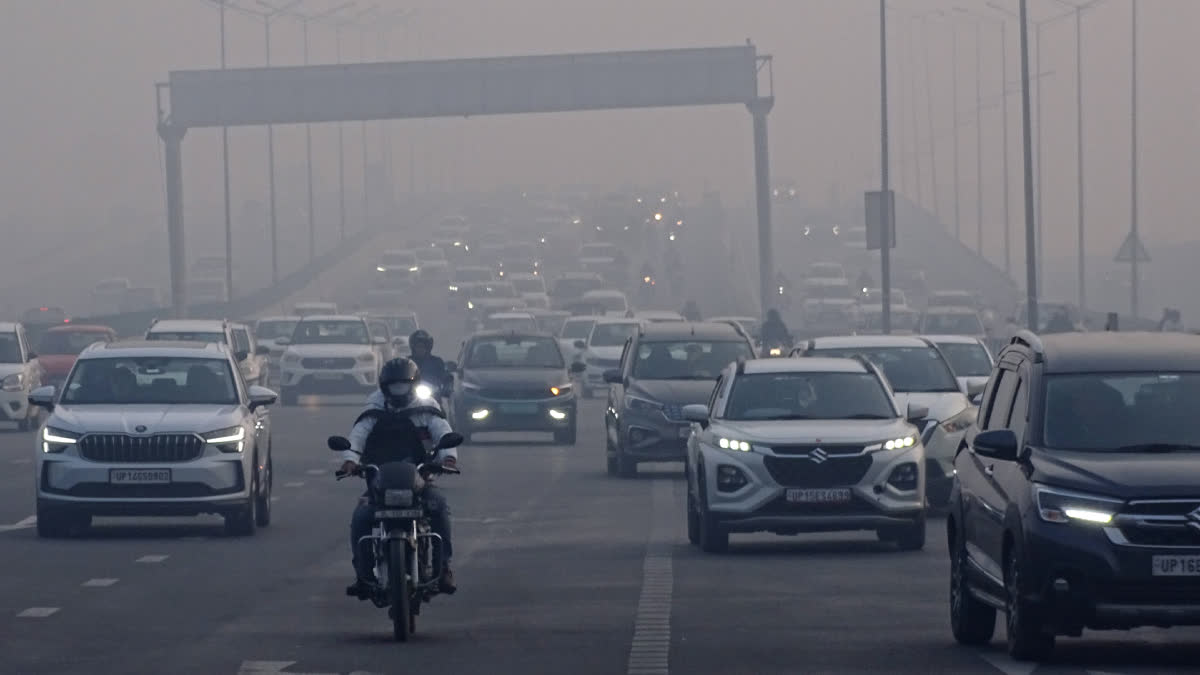
Large parts of Delhi and the National Capital Region began Tuesday under a thick blanket of winter fog, sharply reducing visibility and compounding existing air quality stress across one of India’s most densely populated urban clusters. The twin challenges of low visibility and elevated pollution levels disrupted daily mobility, delayed transport services, and highlighted the capital region’s continued vulnerability to seasonal climate and pollution cycles.
Air quality readings across Delhi showed wide variation, ranging from moderate to very poor categories at multiple monitoring locations. High-density transport corridors and residential zones in eastern and central Delhi recorded the weakest air quality levels, while southern and airport-adjacent areas fared marginally better. Urban planners note that such spatial disparity reflects differences in traffic load, construction density, and local meteorological conditions rather than uniform improvement. The fog event significantly impaired visibility, dropping to under 50 metres in several stretches of Delhi and NCR. Key arterial routes linking east Delhi to central business districts experienced slower vehicular movement, while expressway commuters connecting neighbouring NCR cities faced prolonged travel times during peak morning hours. Transport authorities issued advisories urging cautious driving, particularly along high-speed corridors connecting satellite cities to the capital.
Transit systems were also affected. Aviation and rail operations reported scheduling disruptions as fog lingered beyond sunrise, delaying departures and arrivals. While such winter interruptions are not unusual, transport experts point out that the increasing frequency of fog-related delays raises questions about the region’s preparedness for climate-linked variability in urban mobility. Meteorologists attribute the conditions to a combination of falling night-time temperatures, low wind speeds, and moisture accumulation, which together trap pollutants closer to the ground. These conditions often create a feedback loop where stagnant air worsens pollution levels, further intensifying fog formation. According to environmental analysts, this pattern has become more pronounced in recent years, especially across fast-urbanising NCR districts.
Looking ahead, weather models suggest that morning fog is likely to persist over the coming days, even as daytime temperatures gradually rise. Additional western disturbances forecast later in the week may bring cloud cover and isolated drizzle, potentially offering temporary relief but also introducing fresh variability into air quality trends. Beyond short-term inconvenience, the episode underscores longer-term planning challenges for Delhi NCR. Urban climate specialists stress that resilient cities require integrated responses cleaner transport systems, better traffic dispersion, and stronger coordination between land use and mobility planning.
Without these, seasonal weather events will continue to magnify existing environmental and infrastructure pressures. As NCR continues to expand as a regional economic engine, managing air quality and climate-linked disruptions will remain central to sustaining productivity, protecting public health, and ensuring equitable access to safe mobility across the metropolitan region.
Delhi NCR Fog Disrupts Mobility Air Quality Slips