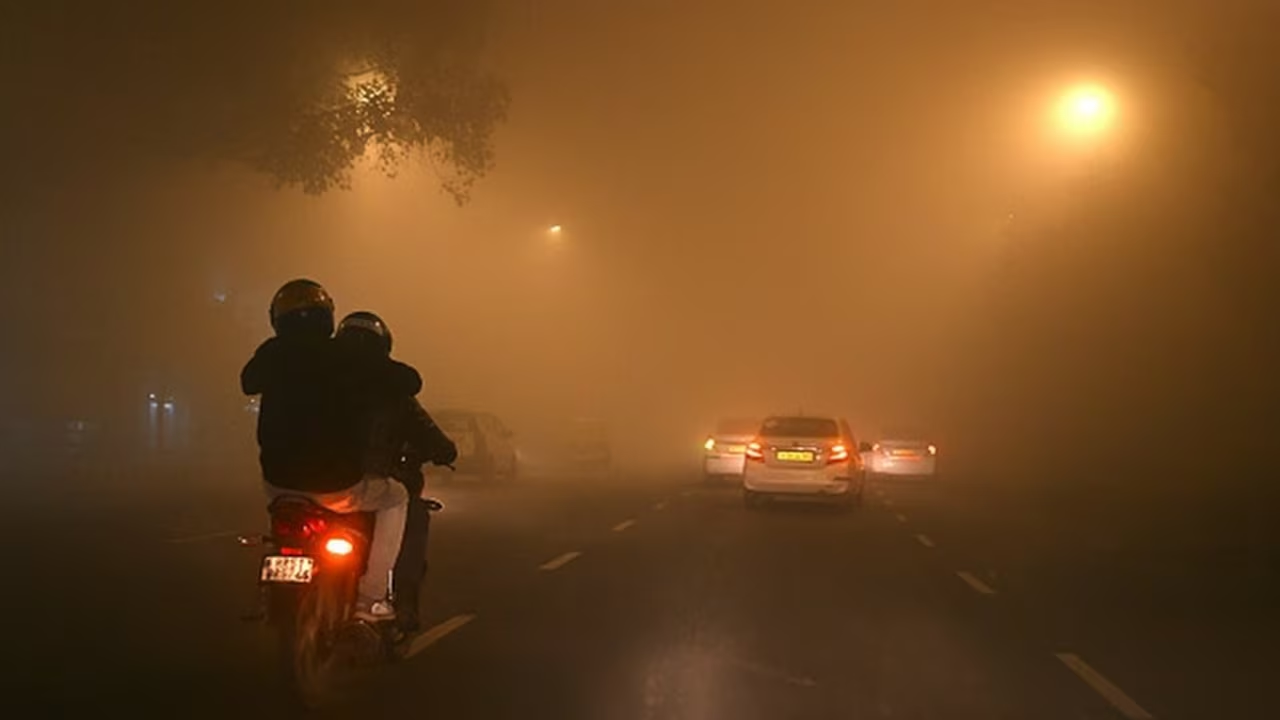
Delhi and the wider National Capital Region entered Saturday under heightened weather watch after the national meteorological agency issued a yellow alert for dense fog, warning of sharply reduced visibility during early morning hours. The advisory matters beyond daily inconvenience: fog-driven disruption tests the resilience of urban transport systems at a time when winter pollution, climate variability and peak travel demand converge in India’s largest metropolitan economy.
Forecasts indicate minimum temperatures slipping to between six and eight degrees Celsius, a clear cooling trend from the previous day. Such conditions typically intensify radiation fog, particularly in low-lying corridors and along arterial roads, rail tracks and airport perimeters. For commuters and logistics operators, even brief visibility loss can cascade into delays, missed connections and safety risks across road, rail and aviation networks. Airlines operating in northern and eastern India have already flagged possible schedule volatility, advising passengers to monitor flight status closely. Aviation analysts note that fog episodes increasingly affect operational reliability during winter, forcing carriers to pad schedules, deploy specialised landing systems and absorb higher fuel and crew costs. While these measures prioritise safety, they also underline the economic friction created by weather-sensitive infrastructure.
Rail and road users face similar challenges. Dense fog often slows train movements through signalling constraints and heightens accident risk on highways, particularly for freight vehicles entering the city overnight. Urban mobility experts point out that such episodes disproportionately affect shift workers, informal sector employees and peri-urban residents who rely on early-morning travel, exposing the equity dimension of climate-linked disruptions. The weather alert coincides with a notable, if fragile, improvement in air quality. Following a sharp drop in particulate levels, regulators recently eased the most stringent stage of emergency pollution controls. City authorities, however, have maintained enforcement drives against vehicular emissions, waste dumping and construction debris, signalling that cleaner-air gains remain vulnerable to reversal. Fog can trap pollutants close to the surface, meaning even short spikes in emissions may quickly degrade local air quality.
From a planning perspective, the Delhi weather update reinforces the need for climate-responsive urban systems. Transport planners argue for wider adoption of low-emission public transport, better last-mile connectivity and digital passenger information systems that can adapt to real-time disruptions. Aviation and rail infrastructure upgrades, including advanced signalling and navigation aids, are also seen as essential to maintain reliability as weather volatility increases. Real estate and construction stakeholders are watching closely as well. Winter fog and temperature dips often slow project execution and site productivity, with knock-on effects for delivery timelines.
Developers are increasingly factoring seasonal climate risks into project planning, a shift that aligns with broader moves towards resilient, low-carbon urban development. As winter deepens, authorities and operators face a familiar but intensifying challenge: keeping a megacity moving under constrained visibility while protecting air quality gains. The coming weeks will test how effectively Delhi can translate weather alerts into coordinated, people-first responses that safeguard mobility, safety and economic continuity.
Delhi NCR fog alert raises mobility risks