


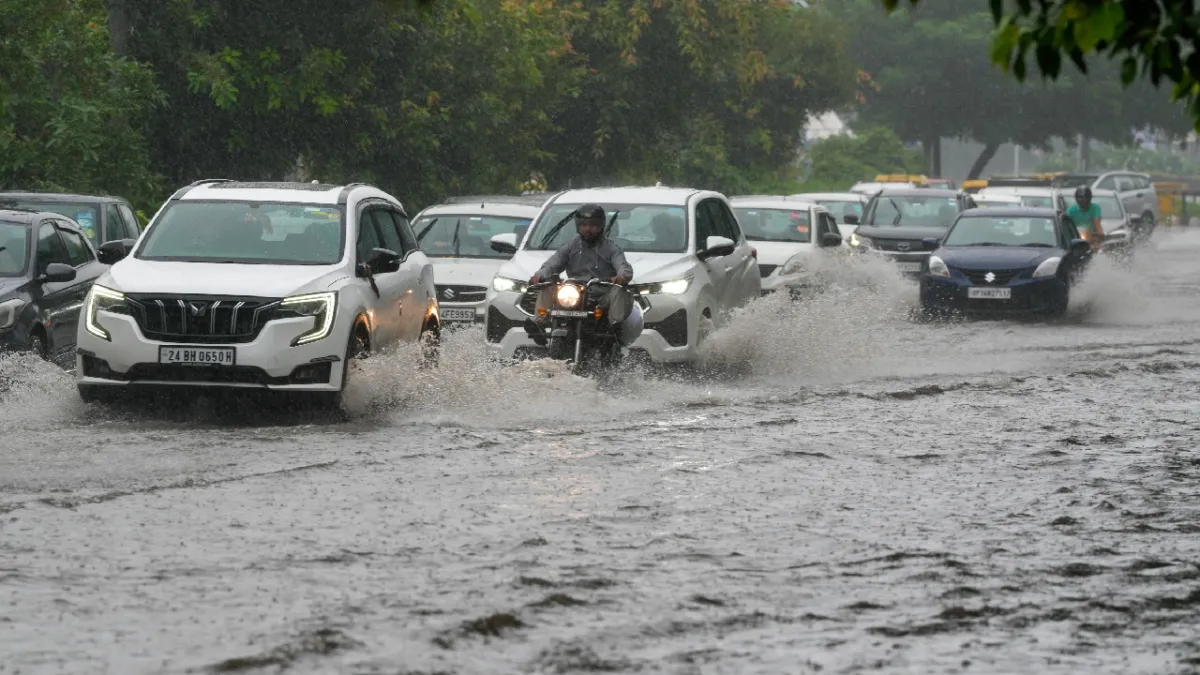
Delhi and neighbouring parts of the National Capital Region (NCR) woke up Thursday to heavy rainfall, prompting the India Meteorological Department (IMD) to issue a red alert. Rainfall commenced around 2 am and continued through the morning, leading to significant water accumulation on key arterial roads and disruptions across the city.
IMD data indicates that Ayanagar recorded 57.4 mm of rain, Palam 49.4 mm, Mayur Vihar 17.5 mm, and Ridge 17.4 mm by 8:30 am. Forecasts suggest intermittent light to moderate showers will persist throughout the day, accompanied by thunderstorms, lightning, and wind gusts up to 40 km per hour, especially affecting Southwest, South, Southeast Delhi, and central areas. Officials reported that traffic movement was heavily impacted, particularly on Outer Ring Road near Subroto Park and Rao Tula Ram Marg, where waterlogging caused congestion. A walkathon organised by the Delhi government from Rouse Avenue to Connaught Place ahead of Independence Day celebrations was cancelled in response to the downpour.
The Delhi Traffic Police issued advisories, warning commuters to avoid Old GT Road due to flooding near GTK Depot, Jahangirpuri, and Adarsh Nagar. Additional disruptions were reported along Ring Road from Ashram to Moolchand following vehicle breakdowns exacerbated by waterlogged roads. In Gurgaon, 44 mm of rainfall was recorded by 8 am, with low-lying sectors such as Palam Vihar, Ashok Vihar Phase 3, and Sector 23A experiencing moderate to heavy waterlogging. Metropolitan Development Authority officials stated that drain clearance operations are ongoing and additional pump sets are being deployed to mitigate flooding in persistent areas. Municipal workers have been mobilised to address localized issues and restore road usability.
Public health concerns were raised due to stagnant water mixed with debris, posing risks of water-borne and vector-borne diseases. Experts emphasised that adequate sanitation and rapid drainage are essential to prevent potential health crises in inundated neighbourhoods. IMD highlighted the risks associated with heavy rainfall, including road flooding, underpass closures, reduced visibility, traffic delays, damage to vulnerable structures, and harm to plantations. Residents were advised to follow traffic advisories, avoid travel where possible, remain indoors, seek safe shelter, and maintain distance from open electrical connections.
The minimum temperature in Delhi was recorded at 23.6°C, approximately three degrees below the seasonal average. Authorities are monitoring weather conditions closely, and emergency preparedness measures have been activated across affected areas. As monsoon patterns intensify, urban resilience remains critical. Officials emphasised that improving drainage, public awareness, and real-time monitoring will be vital in managing the dual challenges of heavy rainfall and urban flooding while ensuring equitable access to safe mobility across Delhi NCR.
Also Read : MMRDA Awards 250 Crore Contract To Aurionpro For Mumbai Metro Fare System
