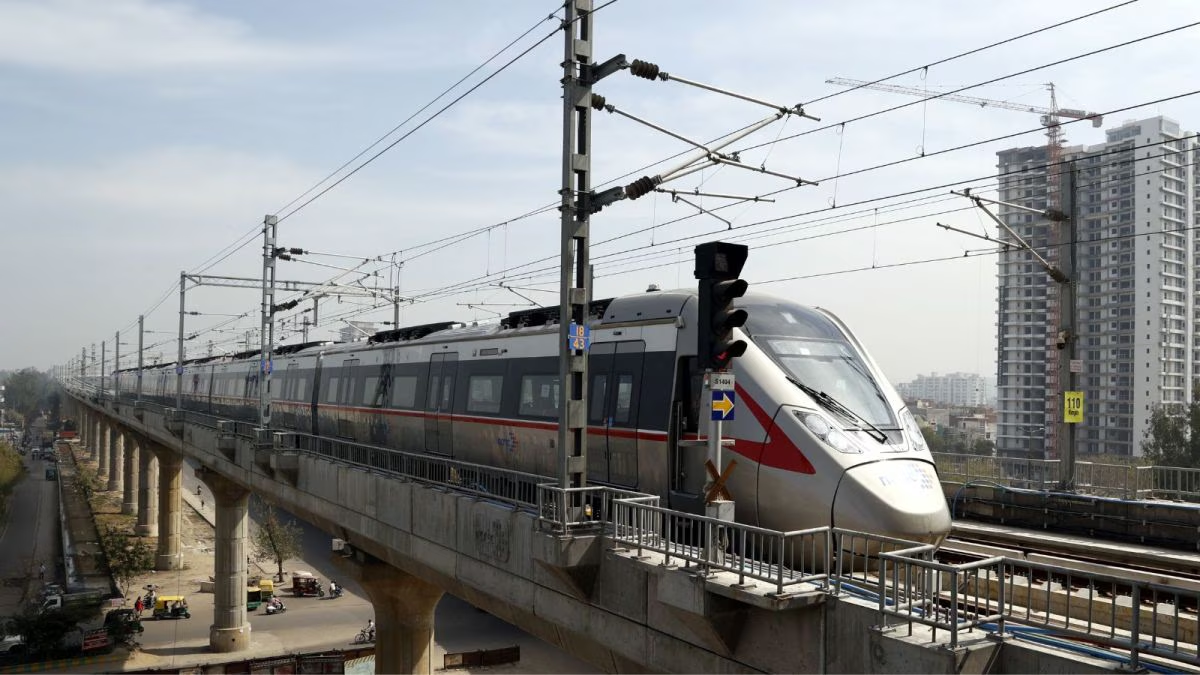
A new chapter in regional mobility planning is set to unfold with central clearance for a high-speed rapid rail corridor connecting Delhi to Bawal in southern Haryana. The approval positions the Delhi–Bawal RRTS corridor as a priority transport spine aimed at improving access between the national capital and one of Haryana’s fastest-growing industrial clusters, while easing pressure on already congested road networks.
The decision follows a reworking of earlier alignment plans that had proposed a Delhi–Dharuhera route. Urban transport planners say the revised corridor better reflects current freight movement patterns, workforce commuting needs, and land-use realities along the southern National Capital Region. The updated alignment had earlier received state-level endorsement before being placed before the Union government for final consideration. The Delhi–Bawal RRTS corridor will form the initial segment of a larger rapid rail network planned under the NCR’s long-term mobility strategy. Conceived as a semi-high-speed system, the corridor is expected to significantly cut travel times between Delhi and manufacturing zones clustered around Rewari district, which host automotive suppliers, logistics parks, and export-oriented units.
Officials familiar with the planning framework note that the project aligns with the NCR’s 2032 functional transport vision, which emphasises shifting long-distance commuting away from private vehicles. By offering high-capacity, electric-powered transit, the corridor is designed to reduce vehicular emissions, improve air quality, and support climate-resilient urban growth across the region. The planned route will originate from Sarai Kale Khan, already emerging as a multi-modal transport hub integrating intercity rail, metro, and rapid rail services. From there, the line will extend south-west towards Haryana’s industrial belt, with future expansion proposed deeper into Rajasthan as part of a second construction phase. This phased approach allows infrastructure investment to be aligned with demand growth and fiscal planning.
Urban economists suggest the project could reshape real estate and labour markets along the corridor. Improved connectivity is likely to expand the viable commuting radius for workers, ease housing pressure in Delhi, and support more balanced regional development. Industrial estates around Bawal are also expected to benefit from better talent access and faster business travel links. However, transport experts caution that successful outcomes will depend on seamless last-mile integration, fare affordability, and coordination between multiple planning agencies.
Land acquisition, station-area development, and environmental safeguards will be closely watched as the project moves into detailed design and execution.
As construction timelines and financing structures take shape, the Delhi–Bawal RRTS corridor will serve as a test case for how rapid regional transit can anchor economic growth while advancing cleaner, more inclusive urban mobility across the NCR.
Delhi NCR Expands Rapid Rail To Bawal