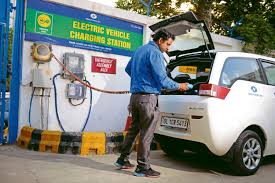
A proposal to transition the National Capital Region into a fully electric vehicle market within the decade is triggering a sharp debate between policymakers and the automotive industry.
The proposed Delhi NCR EV mandate—aimed at cutting transport emissions in one of the world’s most polluted urban regions—has drawn caution from automakers who warn that infrastructure, supply chains and consumer readiness may not yet match the pace of regulatory ambition. The plan under consideration by the region’s air quality regulator outlines a phased shift towards electric mobility, eventually requiring that all new vehicles sold across Delhi-NCR be electric by April 2030. Earlier stages of the roadmap include gradually increasing electric vehicle sales targets for manufacturers and introducing sector-specific requirements such as electrifying new taxi fleets by 2027.
Regulators argue that the Delhi NCR EV mandate is necessary to tackle transport-related pollution, which remains a major contributor to deteriorating air quality in the region. Urban transport emissions from conventional petrol and diesel vehicles have long been identified as a key source of particulate pollution and greenhouse gases in Delhi’s dense metropolitan environment. However, industry representatives say the proposed timeline could prove difficult to implement without significant expansion of charging infrastructure and grid capacity. Automakers and sector analysts highlight that EV adoption in India still faces structural barriers, including limited charging availability, higher upfront vehicle costs and supply-chain constraints for batteries and critical components.
Charging infrastructure remains one of the most pressing concerns. While the capital region has expanded its EV ecosystem in recent years—with thousands of public charging points and battery-swapping stations installed—experts say far larger networks will be required to support mass adoption across private vehicles, commercial fleets and public transport systems. Automakers also caution that abrupt regulatory shifts could disrupt vehicle markets and consumer behaviour. Previous regulatory transitions, such as the adoption of stricter emission standards, temporarily increased vehicle prices and altered purchasing patterns. Industry observers warn that a rapid electrification mandate without supportive financing or infrastructure could produce similar effects, potentially slowing overall vehicle sales.
Urban mobility planners, meanwhile, view the debate as part of a broader challenge facing rapidly growing cities: balancing aggressive climate targets with practical implementation. Electric mobility is widely considered essential for improving urban air quality and reducing dependence on fossil fuels. At the same time, the transition requires large-scale investment in charging networks, grid upgrades, battery supply chains and financing models for consumers. Policy experts suggest that collaborative frameworks between regulators, utilities, vehicle manufacturers and urban planners may be necessary to bridge the gap between environmental goals and market realities. Measures such as charging infrastructure mandates in new buildings, expanded battery-swapping networks and low-cost EV financing are increasingly seen as essential to accelerate adoption.
For Delhi-NCR, the proposed mandate represents more than a regulatory milestone. It signals how India’s largest metropolitan regions are grappling with the intersection of climate policy, urban mobility and industrial transformation. Whether the transition succeeds will depend not only on regulatory targets but on the speed with which infrastructure, financing and technology ecosystems evolve to support a cleaner transport future.