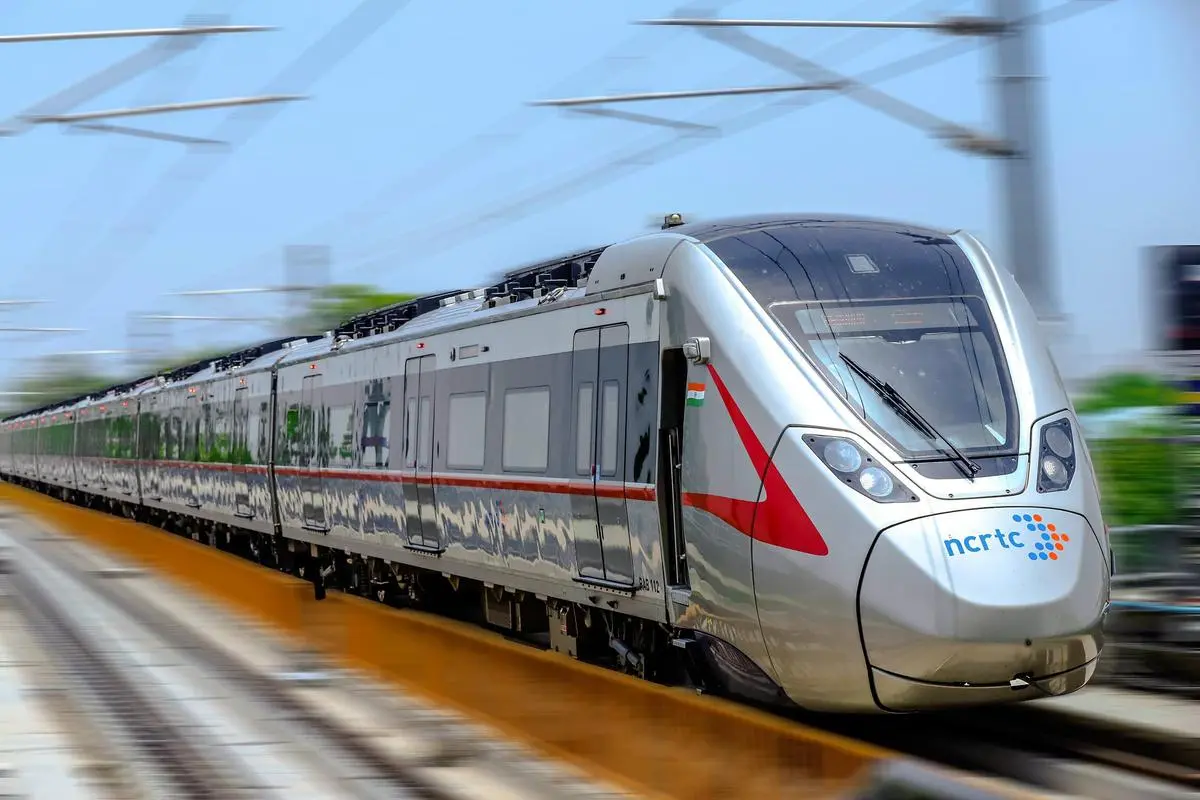
Delhi NCR Completes 82 km Rapid Rail Transit Network
Delhi NCR — The National Capital Region has reached a significant infrastructure milestone with the inauguration of the fully operational 82-kilometre rapid rail corridor that connects Delhi with key neighbouring cities, notably Ghaziabad and Meerut.
This high-speed rail link — branded as the Namo Bharat Regional Rapid Transit System (RRTS) — was officially dedicated earlier this week and is set to reshape regional mobility for daily commuters, urban planners and the broader economic landscape. The project, developed by the National Capital Region Transport Corporation (NCRTC), links Sarai Kale Khan in Delhi to Modipuram in Meerut with fast, frequent services designed to cut travel times dramatically — from several hours by road to roughly 50–60 minutes by rail. Stations along the corridor integrate with existing services, including metro lines and bus terminals, fostering multimodal connectivity across the region.
For commuters, the corridor offers a transformative alternative to congested highways. Regular travellers into Delhi — including students, professionals and service sector workers — are already reporting relief from long road journeys, as services operate at speeds averaging 90–160 km/h with modern onboard amenities such as reserved premium coaches, safety systems and frequent service intervals. Urban planners highlight that the corridor is more than a transit upgrade; it’s a structural intervention in the region’s spatial economy. By knitting together major population centres across state boundaries, the rail link supports decentralised employment patterns and creates new opportunities for satellite towns to participate in the NCR’s job markets without the need for disruptive migration to Delhi’s core.
The rail project is also part of a broader shift toward sustainable transport infrastructure in the Delhi NCR, where persistent air quality issues and road congestion have long constrained quality of life and economic productivity. Mass transit systems such as this reduce reliance on private vehicles, lowering carbon emissions and improving urban air quality — a critical objective for cities aiming to balance growth with climate resilience. From a financial and planning perspective, the corridor reflects significant intergovernmental alignment: central, state and multilateral investments converged to prioritise regional connectivity rather than siloed municipal development.
Such coordination highlights how megacity regions can leverage shared infrastructure to equitably distribute economic opportunities across adjacent states. However, implementation challenges remain. Ensuring affordable fare structures, effective last-mile connectivity and seamless integration with feeder networks will be key to sustaining ridership growth and preventing modal fragmentation. Inclusive planning — particularly for lower-income residents who are most dependent on public transit — will determine whether this infrastructure fulfils its potential as a backbone for equitable mobility.
As Delhi NCR enters this new transit era, the real-world impact of the rapid rail corridor will unfold in how it reshapes commuting patterns, urban land use and intercity economic linkages — offering a playbook for other mega regions in India and beyond seeking sustainable, integrated transport solutions.