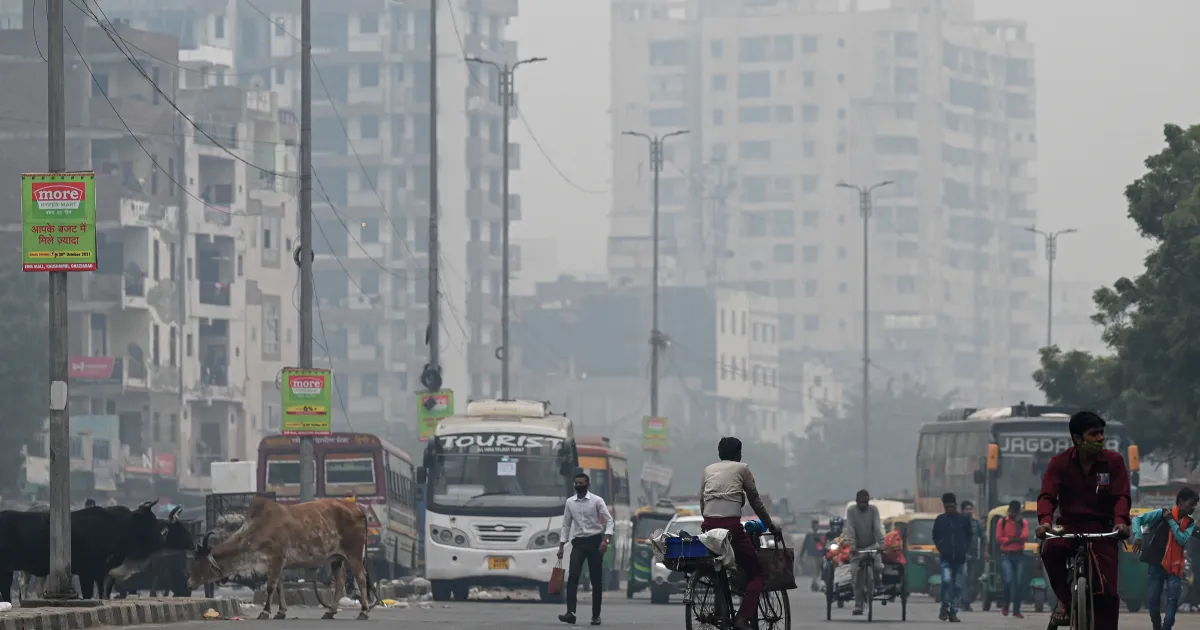
Delhi NCR pollution has returned to the centre of policy focus after the Union environment ministry directed local administrations to deliver visible air quality improvements within a week. The intervention follows sustained deterioration in winter air conditions across the National Capital Region, raising concerns over public health, productivity losses and urban liveability.
At a high-level review chaired by the Union environment minister, officials from regional governments and pollution control agencies were instructed to prioritise rapid, enforceable actions rather than long-term intent alone. Monthly ministerial reviews of regional action plans will begin from January 2026, signalling tighter political oversight of air quality governance in India’s most polluted urban cluster.
Officials familiar with the discussions said the immediate emphasis is on traffic congestion, road dust and construction debris three factors consistently flagged as major contributors to Delhi NCR pollution. Sixty-two traffic bottlenecks have been identified for urgent intervention, with directions issued to streamline vehicle movement while ensuring enforcement activity does not itself worsen congestion. Municipal agencies were also told to clear construction and demolition waste dumped along roads and public spaces, a persistent source of particulate pollution.
Industrial emissions featured prominently in the deliberations. Authorities were asked to intensify action against illegal and non-compliant manufacturing units, including tyre-burning facilities and other unpermitted operations. Polluting units, particularly in adjoining NCR districts, must install online continuous emission monitoring systems by the end of December, failing which closures and penalties are expected, according to officials. Public transport emerged as a parallel priority. Agencies were directed to improve end-to-end connectivity on high-traffic corridors and strengthen last-mile access to metro networks across NCR cities. Urban transport experts say such measures are essential not only for pollution reduction but also for building equitable mobility systems that reduce dependence on private vehicles.
Agricultural emissions were also addressed, with neighbouring states asked to accelerate replacement of defunct crop residue management machinery and expand the use of paddy straw in power generation, brick kilns and alternative fuel applications. Decentralised bioenergy solutions, including compressed biogas and ethanol plants, are being explored to create economic incentives against stubble burning. Beyond enforcement, the ministry called for coordinated grievance redressal and targeted public awareness campaigns under the regional air quality commission’s supervision.
Urban policy analysts note that sustained improvement in Delhi NCR pollution will depend on consistent coordination across municipal, transport and environmental authorities rather than episodic crackdowns. While the one-week deadline is ambitious, experts say the renewed focus on accountability, data-driven monitoring and inter-city coordination could mark a shift towards more resilient, healthier urban systems an essential step for India’s cities as they balance growth with climate responsibility.
Delhi NCR Centre Orders One Week Action To Improve Air Quality Urgently