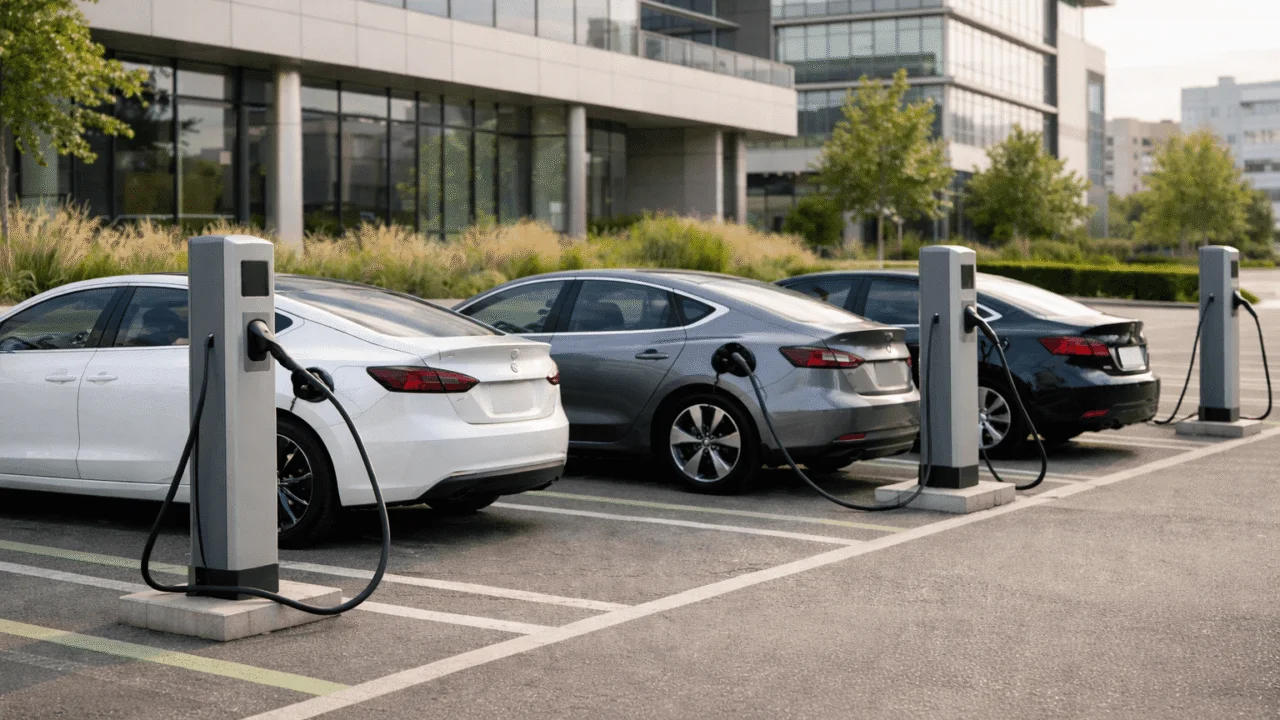
A major electric vehicle infrastructure installation has been commissioned at the Anand Vihar station on the Delhi–Meerut regional rapid transit corridor, marking a significant step in strengthening the region’s EV charging infrastructure. Transport authorities overseeing the corridor say the new facility is designed to support both passenger cars and heavy electric vehicles, reflecting the growing demand for charging capacity as electric mobility adoption accelerates across the National Capital Region. Located in East Delhi at one of the corridor’s busiest interchange points, the installation is the largest EV charging infrastructure facility currently operating along the regional rapid transit network. The station has been equipped with high-capacity fast-charging units capable of charging multiple vehicles simultaneously. Under optimal conditions, these chargers can restore a substantial portion of a vehicle’s battery capacity in under an hour, enabling quick turnaround times for drivers using the corridor.
Urban transport planners say the integration of charging infrastructure within rapid transit stations represents an emerging mobility model in Indian cities. Rail hubs are increasingly being designed as multi-modal mobility centres where public transport, private vehicles and shared mobility services converge. Providing charging facilities at these locations encourages commuters to shift toward cleaner vehicles while maintaining access to high-capacity public transit. The installation also includes dedicated charging provisions for larger commercial electric vehicles, a segment that remains underserved in many urban charging networks. Logistics vehicles, electric buses and commercial fleets typically require higher power charging solutions, and their inclusion in the station’s design indicates a broader strategy to support electrification across freight and passenger mobility. Digital access forms another element of the facility’s operations. Users can book charging slots, monitor charging progress and complete payments through a dedicated mobile application.
Transport officials say the system is intended to streamline the charging process while minimising the need for manual intervention at the station. With the commissioning of the Anand Vihar facility, several stations along the regional transit corridor now feature operational EV charging infrastructure. Charging points have already been activated at multiple stops along the route connecting Delhi with western Uttar Pradesh, forming a distributed network that supports electric travel across the corridor. Infrastructure analysts note that the development comes amid wider efforts by agencies across Delhi–NCR to expand the electric vehicle ecosystem. Transport authorities and public bus operators are simultaneously investing in charging facilities at major depots and transport terminals. Such coordinated infrastructure planning is essential for reducing range anxiety and encouraging both individual users and fleet operators to transition toward electric vehicles.
As electric mobility expands across urban India, transport corridors like the Delhi–Meerut rapid rail system are increasingly being positioned as clean mobility backbones. Integrating EV charging infrastructure with high-speed public transport not only supports lower-emission travel but also strengthens the region’s long-term transition toward more climate-resilient and energy-efficient urban transport systems.