


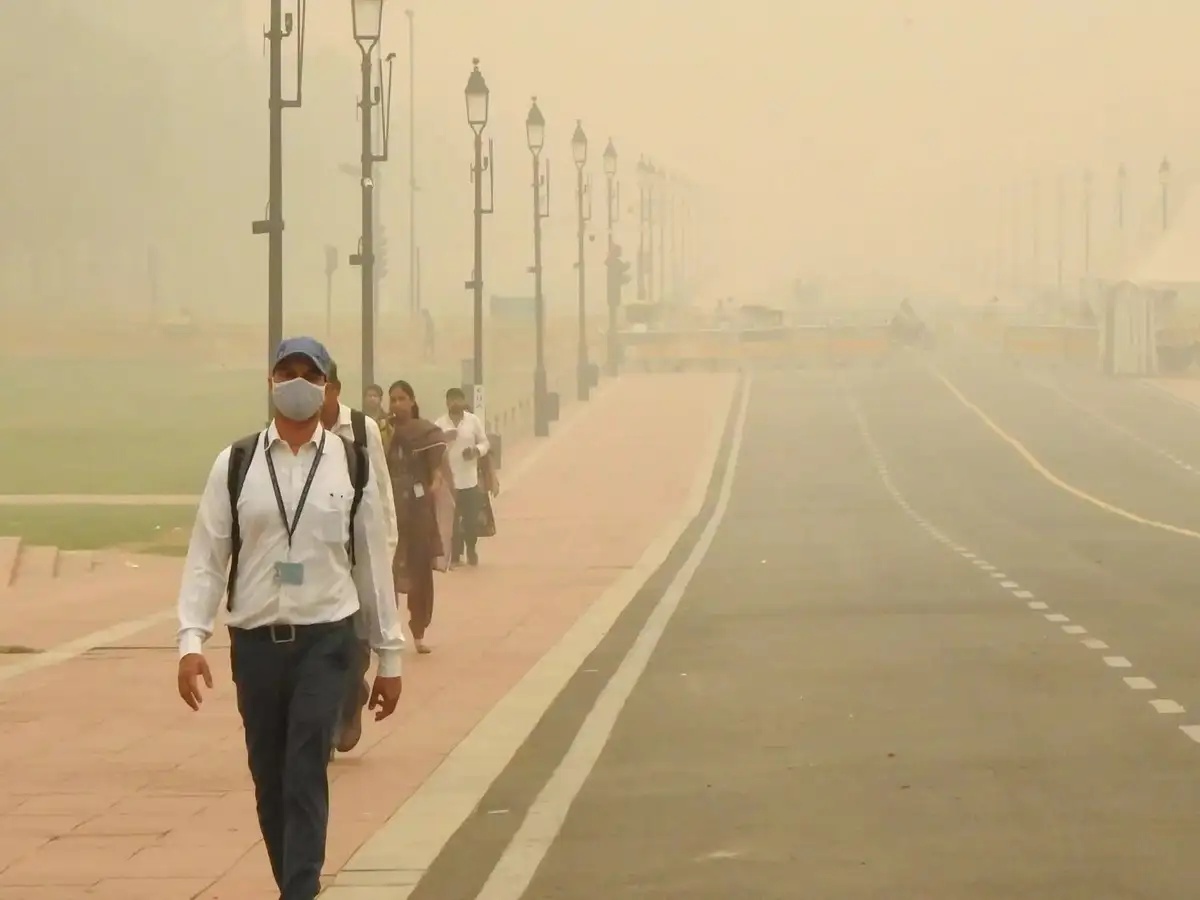
Delhi and Mumbai have emerged as the country’s most ozone-polluted regions, with the Central Pollution Control Board (CPCB) flagging a worrying rise in ground-level ozone across India’s leading metropolitan centres. In a submission to the National Green Tribunal (NGT), the board confirmed that the National Capital Region (NCR) recorded the highest exceedances of the national ozone standard, followed closely by the Mumbai Metropolitan Region (MMR).
The assessment, conducted across ten major urban regions, revealed that in 2023, 25 of NCR’s 57 ambient air quality monitoring stations registered ozone concentrations above the national eight-hour standard. Mumbai too recorded troubling levels, with 22 of its 45 monitoring stations crossing permissible limits. The national threshold for the eight-hour average is set at 100 micrograms per cubic metre, a limit breached by over two per cent in both regions. Ozone, while protective in the upper atmosphere, is highly toxic at ground level, formed through a complex interaction of nitrogen oxides (NOx), volatile organic compounds (VOCs), carbon monoxide (CO) and methane (CH₄) in the presence of sunlight. CPCB officials noted that the main sources in Indian cities remain transport emissions, thermal power plants and industrial activity, compounded by residential energy use and agricultural practices. Natural contributors such as soil-based NOx release and seasonal wildfires also intensify the problem.
The report also highlighted exceedances of the one-hour ozone standard, pegged at 180 micrograms per cubic metre. In 2023, four monitoring stations each in NCR and Mumbai, and one in Pune, crossed this limit. A follow-up assessment of the summer of 2024 showed continued breaches, with 21 stations in NCR recording unsafe one-hour ozone levels, though Mumbai reported none during the same period. Experts warn that exposure to ozone poses acute health risks including coughing, chest discomfort, throat irritation and respiratory complications, with long-term implications for vulnerable populations such as children, the elderly and those with pre-existing lung conditions. Urban health specialists argue that the silent build-up of ozone is as critical as particulate matter pollution, yet often overlooked in public discourse and policy interventions.
Officials underlined that unchecked ozone pollution not only undermines public health but also challenges India’s vision of sustainable and resilient cities. Reducing dependence on fossil fuels in transport, accelerating renewable energy adoption and ensuring stringent industrial compliance are seen as essential to mitigate the risks. The NGT had taken suo motu cognisance of rising ozone levels after a media report last year. With the CPCB’s findings now in the spotlight, calls are intensifying for coordinated regional action. Environmental experts emphasise that cities like Delhi and Mumbai, with their scale of population and economic significance, must lead in implementing zero-carbon mobility, stricter emission norms and greater urban greenery to buffer against toxic pollutants.
As India pushes towards a net-zero trajectory, the challenge of ozone underscores the urgent need for integrated policies that align air quality management with climate action. For citizens in Delhi and Mumbai, the findings are a reminder that the cost of urbanisation cannot come at the expense of breathable air.
Also Read: Navi Mumbai Airport Metro Line 8 DPR Submitted To State Government
