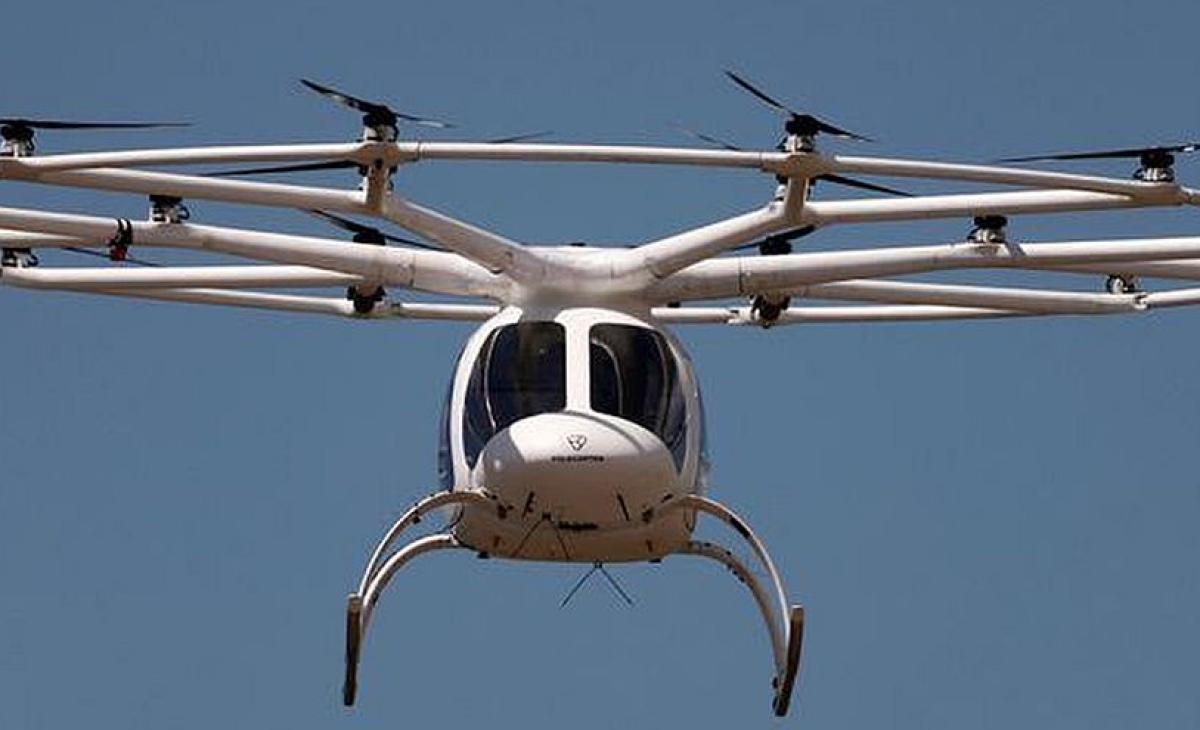
A proposed Delhi NCR air taxi corridor linking Gurugram, central Delhi and the upcoming Noida International Airport at Jewar could compress peak-hour travel from over two hours to under 30 minutes, according to a new industry assessment on Advanced Air Mobility. The concept, still at a feasibility stage, is being examined as a long-term solution to congestion across one of India’s fastest-growing urban regions.
The study models a 65–75 km aerial route connecting key commercial and aviation hubs across the National Capital Region. At present, the road journey between Gurugram and Jewar can exceed 100 km depending on the alignment and traffic conditions. Urban mobility analysts say unpredictable travel times remain a key bottleneck for business districts and airport connectivity. Under the proposed Delhi NCR air taxi framework, electric vertical take-off and landing aircraft known as eVTOLs would operate from dedicated vertiports integrated with existing urban infrastructure. These aircraft are designed to take off and land vertically, eliminating the need for long runways and allowing operations from compact sites such as rooftops or repurposed helipads.
Airspace design will be central to viability. The corridor would need to navigate restricted zones around Indira Gandhi International Airport, Delhi Cantonment and high-security government precincts. Aviation planners suggest that carefully charted northern and eastern arcs could allow compliance with civil aviation norms while maintaining operational efficiency. The Gurugram to central Delhi segment, roughly 30 km in straight-line distance, may require detours to avoid controlled airspace, extending the practical flight path. Even with adjustments, projected airborne time could remain under 15 minutes. The onward leg to Jewar, estimated at 65–70 km depending on routing into Uttar Pradesh airspace, may be completed in under 20 minutes under standard operating conditions.
Infrastructure rollout is expected to follow a phased approach. In early stages, existing helipads on commercial buildings and hospitals could be upgraded to support limited-frequency services. Longer term, purpose-built vertihubs integrated with Metro stations, business districts and airport terminals would be required. Urban development experts note that such nodes must align with zoning laws, fire safety norms and multimodal access standards. Proponents argue that electric propulsion offers zero tailpipe emissions and potentially lower noise than conventional helicopters, aligning with India’s net-zero ambitions. However, energy sourcing, battery lifecycle management and grid capacity will influence environmental outcomes. Transport economists caution that affordability and equitable access must be addressed to prevent the system from serving only premium travellers.
A multi-agency coordination mechanism has been suggested to harmonise approvals across state boundaries and central regulators. Without institutional alignment, timelines could extend. If realised, the Delhi NCR air taxi network would mark a structural shift in how the region approaches airport access and intercity mobility. The next phase will depend on regulatory clarity, infrastructure financing and public acceptance of low-altitude electric aviation in dense urban airspace.
Delhi NCR air taxi corridor proposed